

Jugetsudo
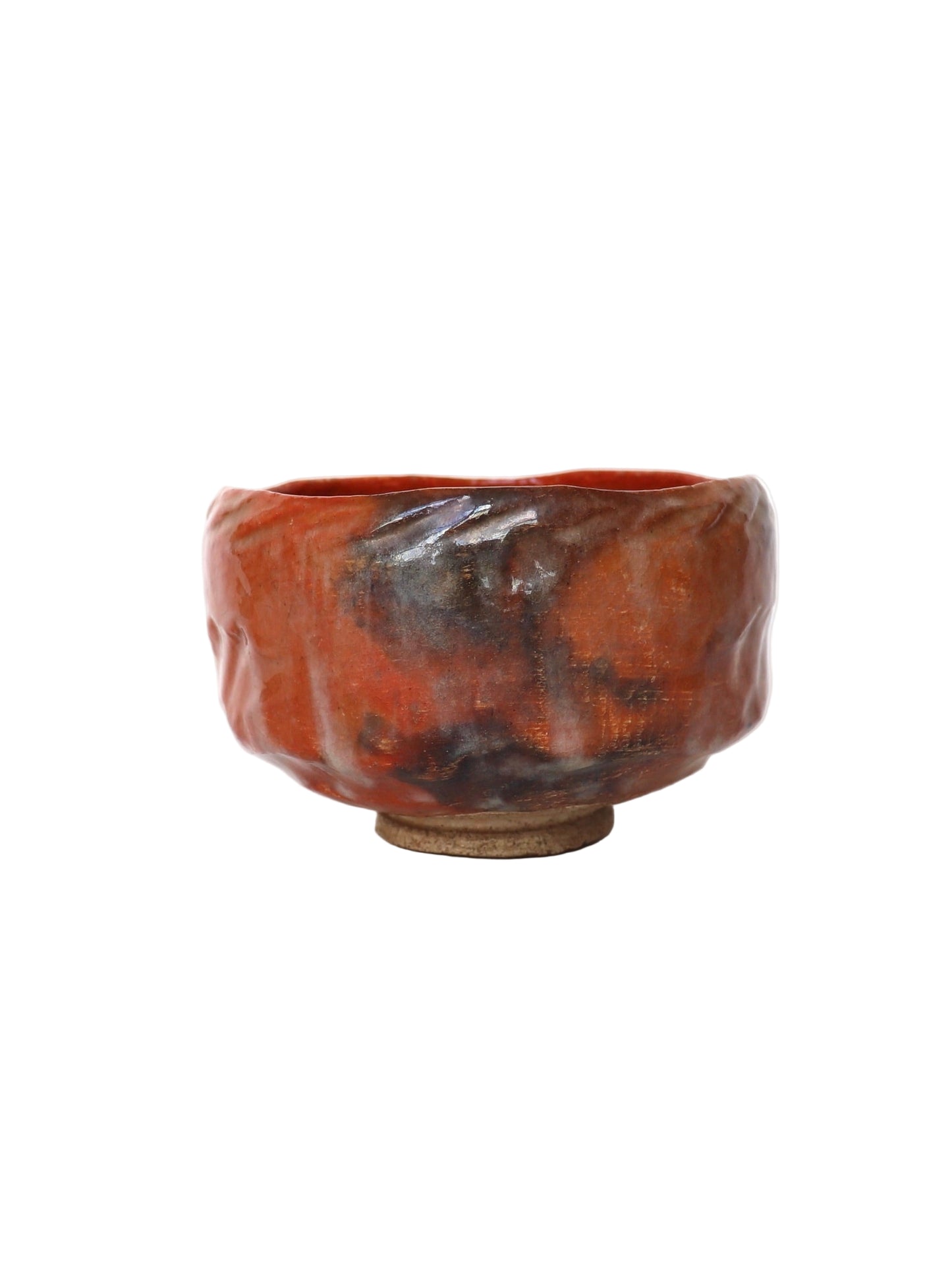
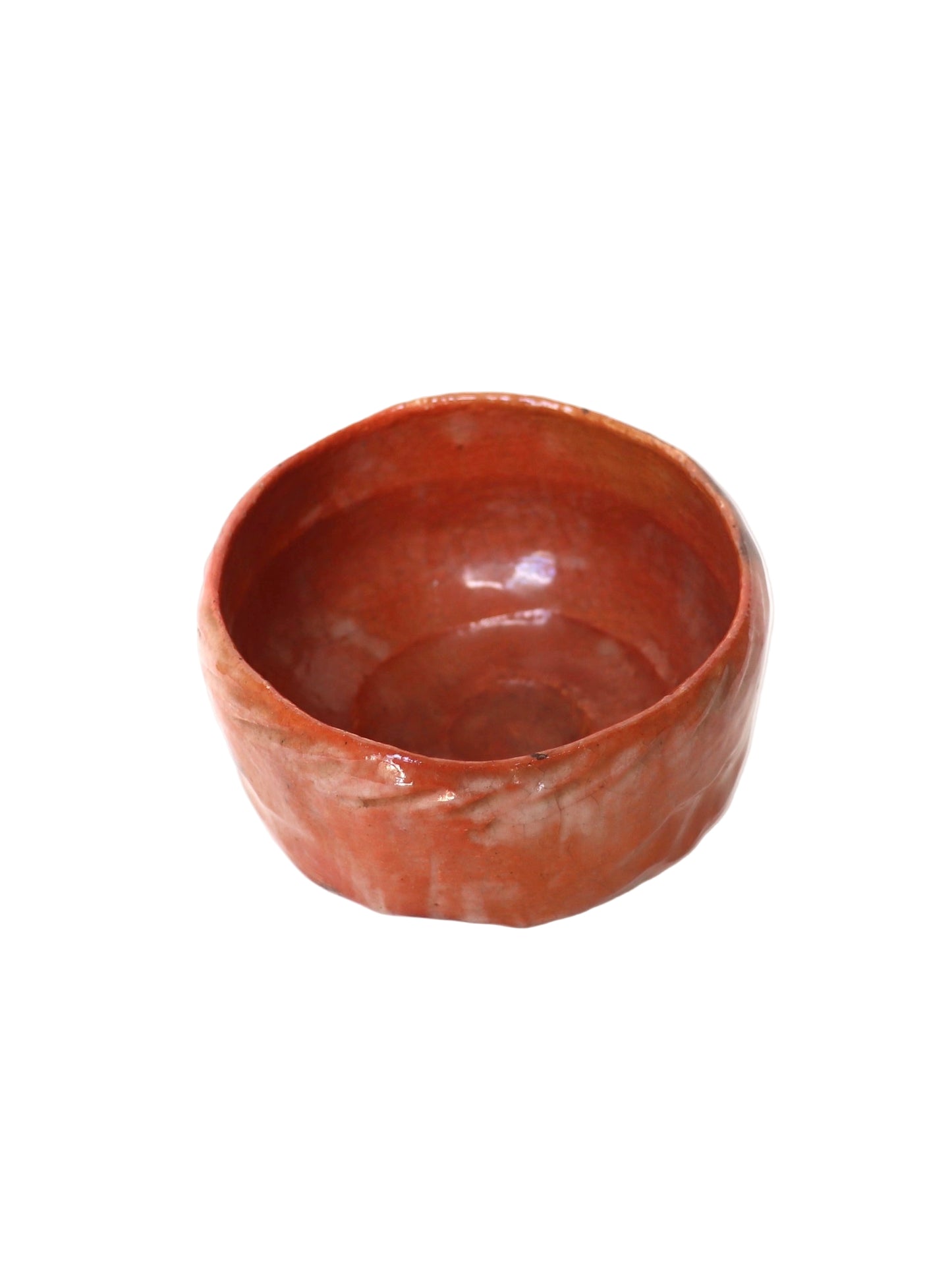
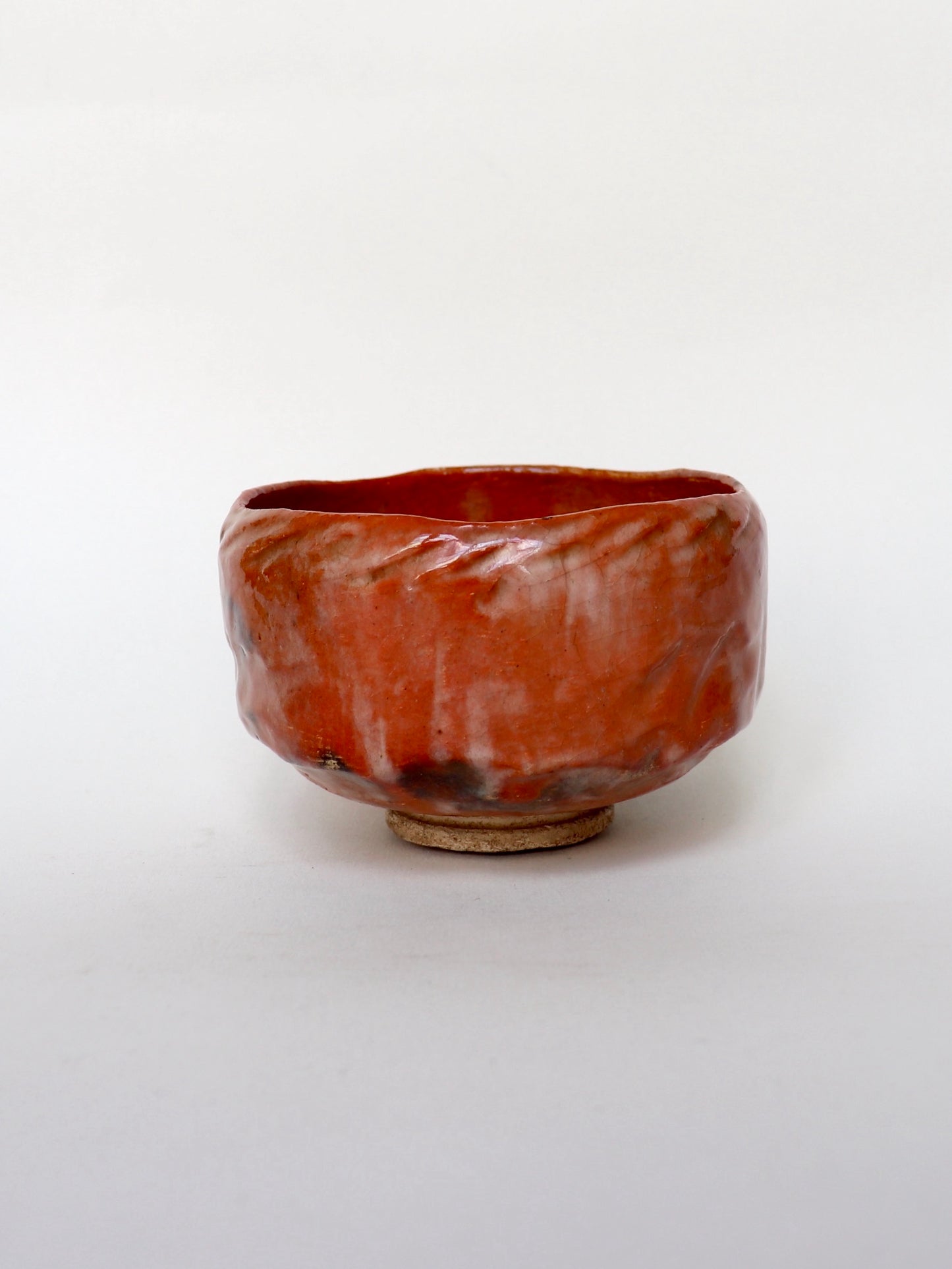
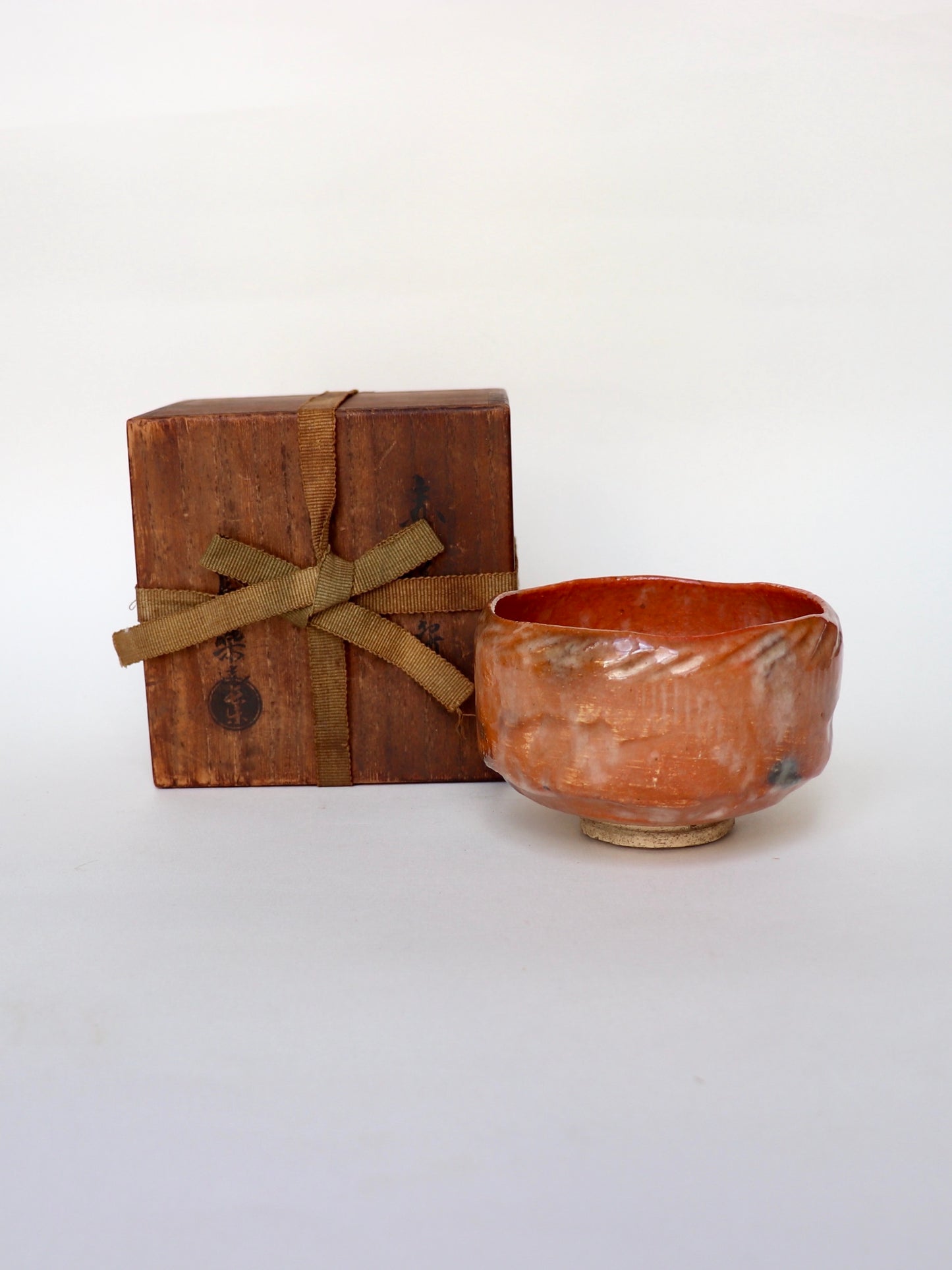
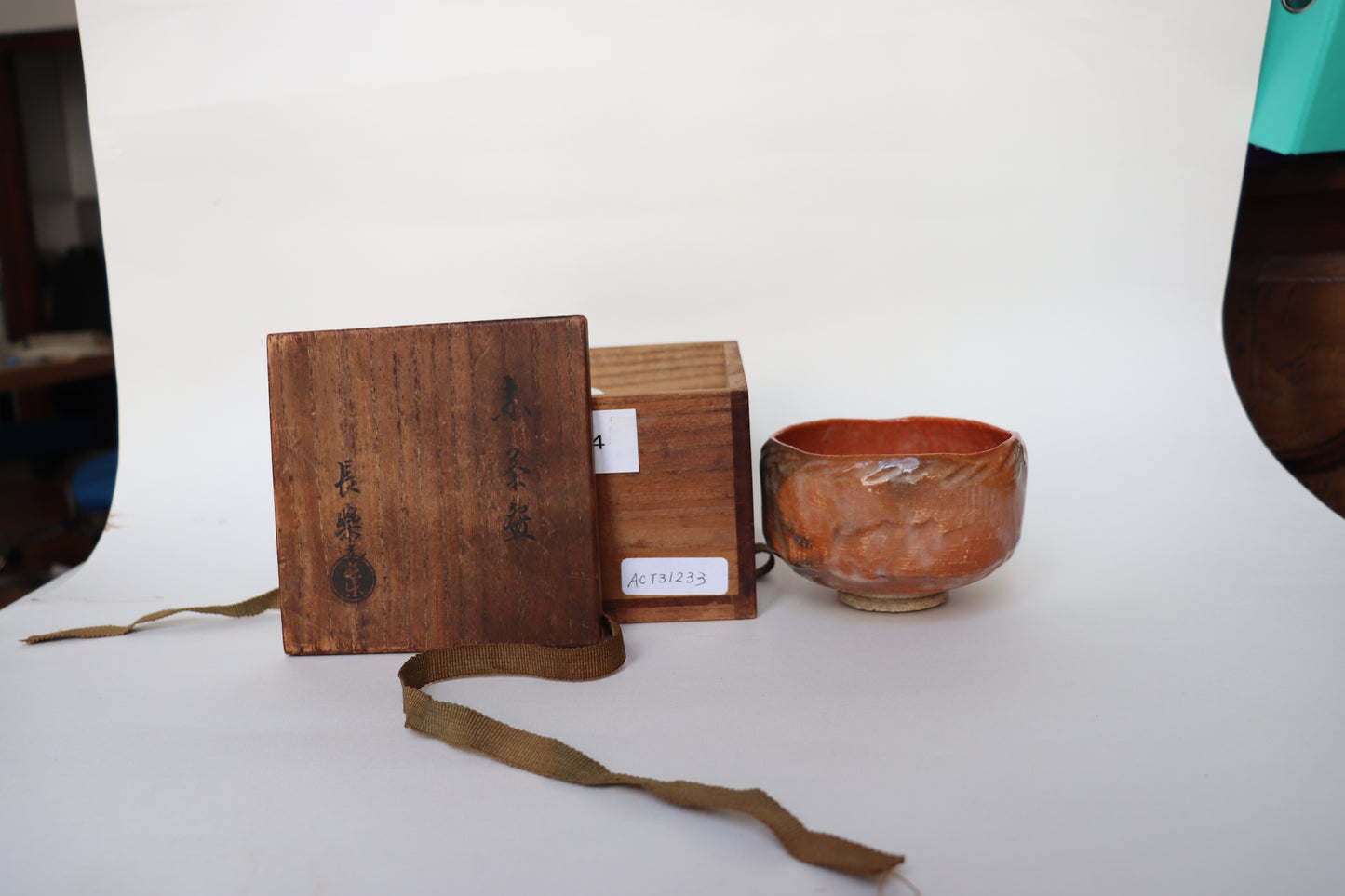
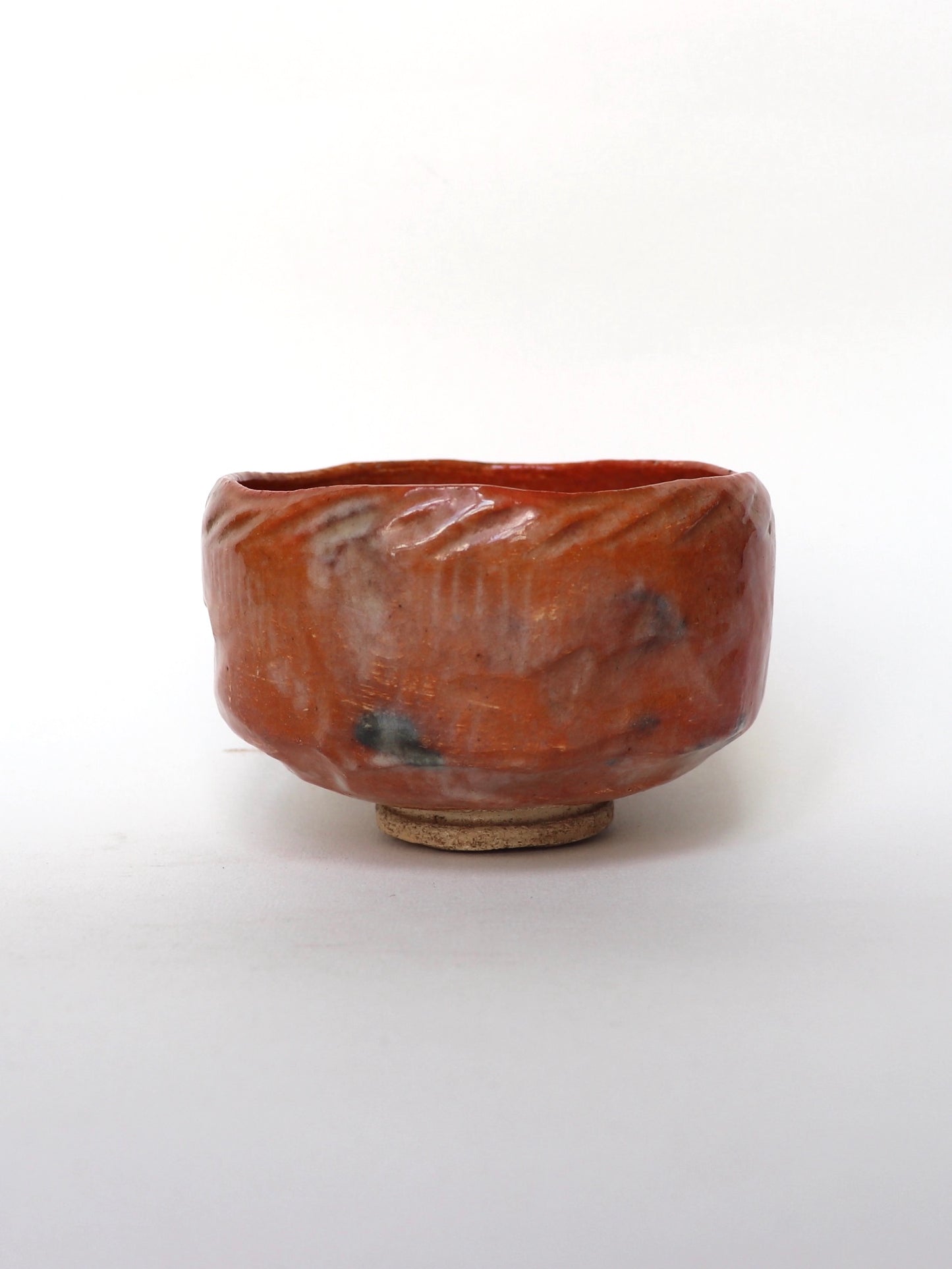
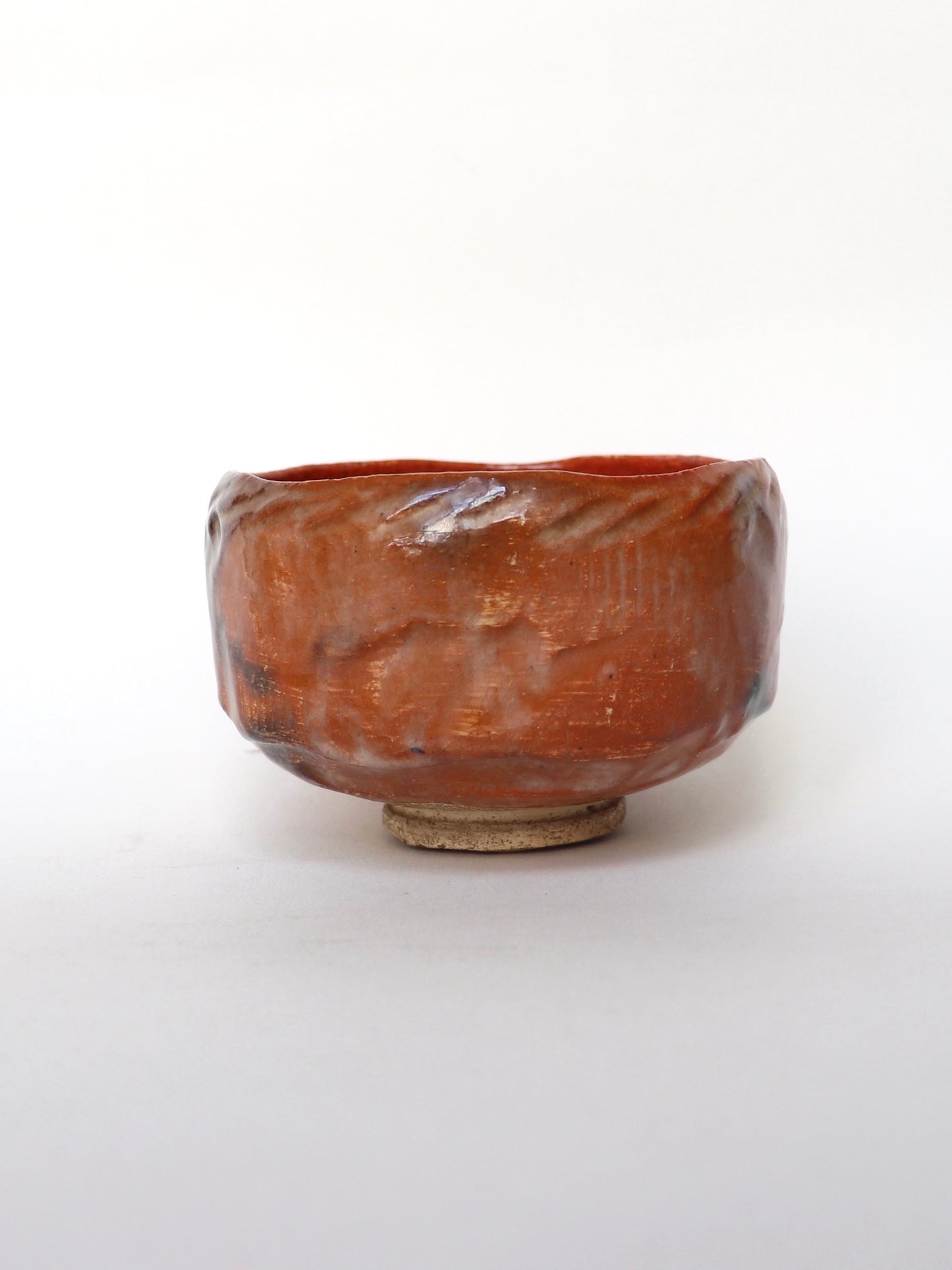
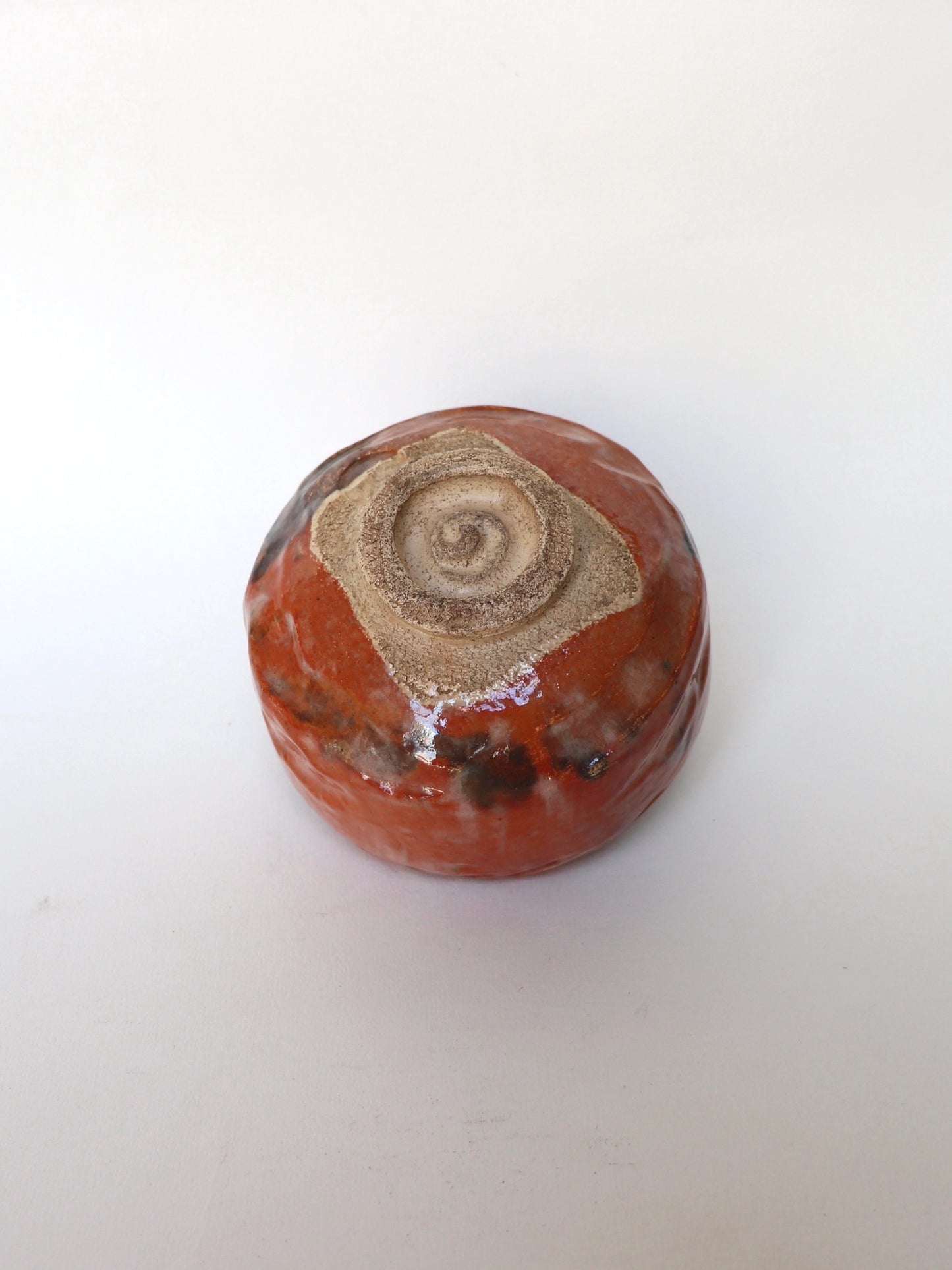
Bol à matcha / Akachawan Choraku Shodai
Bol à matcha / Akachawan Choraku Shodai
Couldn't load pickup availability
Please note, this item is a unique piece.
Bol à matcha — Raku-yaki
Ogawa Chōraku I (1874–1939) — Four Chōraku, Kyoto
This bowl matcha This piece comes from the Chōraku kiln, founded in Kyoto in 1906 by Ogawa Chōraku I, a major figure in 20th-century Raku pottery. Born in 1874 as Ogawa Daijirō, son of the potter Ogawa Sammahōgen Masayuki, he began his apprenticeship with the 11th Raku master, Keinyū, in 1886, before gaining his independence in 1904 on the recommendation of the 12th Raku master, Kichizaemon (Kōnyū). Two years later, he received the name Chōraku from the Zen master Takeda Mokurai, and the pavilion name from the 13th grand master of the Urasenke school, Ennōsai. ChōyūkenHe then founded the Chōraku kiln near the Wakamiya Hachiman shrine in Gojōzaka, the historic ceramic district of Kyoto.
Raku-yaki, or Raku ceramics, originated over 400 years ago under the influence of Sen no Rikyū, the father of Japanese tea. Hand-shaped without a potter's wheel (tezukune) and carved with an iron knife (hera kezuri), the Raku bowl is distinguished by its organic shape and soft texture, obtained by firing at a low temperature followed by rapid cooling (hikidashiEach piece is unique, imbued with the potter's hand and the philosophy of wabi-cha — beauty in simplicity and the present moment (Ichigo Ichie).
Chōraku-yaki is distinguished by its pursuit of purity in form and material. The fine clays, selected and aged for decades, reveal in the fire nuances ranging from the deep red of oxidized earth to the dense black of Kamo River stones. The red (aka-Raku) symbolizes the vitality of the earth, while black (kuro-Raku) evokes the silent power of stone and fire.
Later settling in Okazaki, Ogawa Chōraku I continued his work with an innovative approach, while preserving the teachings of his masters. His bowls, of apparent simplicity, reveal a subtle balance between power and gentleness, between intention and spontaneity—an aesthetic unique to the Chōraku lineage, passed down to this day.
Matcha Bowl — Raku Ware
Ogawa Chōraku I (1874–1939) — Chōraku Kiln, Kyoto
This matcha bowl was created at the Chōraku Kiln, founded in Kyoto in 1906 by Ogawa Chōraku I, a pivotal figure in the modern history of Raku ware. Born Ogawa Daijirō in 1874, the second son of potter Ogawa Masayuki, he apprenticed under the 11th Raku Keinyū and, with the encouragement of the 12th Raku Kichizaemon (Kōnyū), established his own kiln in 1904. Two years later, he received the artist’s name Chōraku from Zen master Takeda Mokurai and the pavilion name Chōyūken from the 13th Urasenke Grand Master, Ennōsai. He opened his kiln near Wakamiya Hachiman Shrine in Gojōzaka, the historic center of Kyoto ceramics.
Raku ware, born over 400 years ago under the aesthetic philosophy of Sen no Rikyū, is a uniquely Japanese form of pottery made without a potter’s wheel, using the hand-molding (tezukune) and carving (hera kezuri) techniques. Fired at low temperature and rapidly cooled, each piece is one-of-a-kind, embodying the spirit of wabi-cha — the tea aesthetic that celebrates imperfection, simplicity, and the fleeting moment (ichigo ichie).
Chōraku Raku is characterized by its refined balance of clay and fire. The carefully aged clay produces natural tones ranging from deep red — the color of oxidized earth — to rich black, derived from Kamo River stones ground into pigment. The red (aka-Raku) expresses warmth and life; the black (kuro-Raku) reflects stillness and introspection.
After relocating his kiln to Okazaki, Ogawa Chōraku I continued to innovate while honoring his lineage. His bowls, marked by serene asymmetry and tactile softness, embody the quiet strength and poetic restraint that define the Chōraku family’s enduring contribution to the art of Raku.