

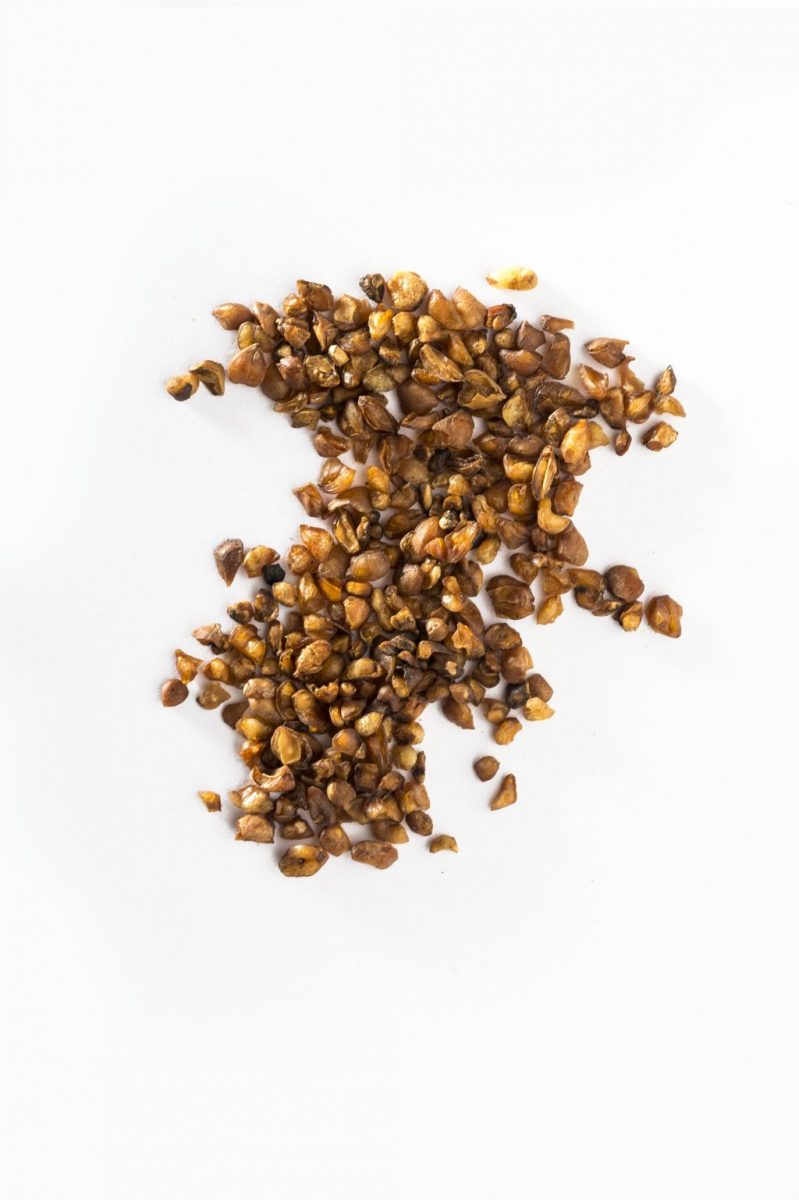
Sobacha Hida no Homare / Buckwheat Seed Infusion / 200g Loose Leaf Bag
Sobacha Hida no Homare / Buckwheat Seed Infusion / 200g Loose Leaf Bag
Quantity
Couldn't load pickup availability
Please note: this product now comes in neutral packaging, the kind used by professionals. The quantity is indeed the stated 200g, but the appearance of the bag will be different (anonymous brown packaging).
Buckwheat (soba (in Japanese) is cultivated in the Hida region of central Japan, which boasts some of the country's wildest landscapes. Thanks to the significant temperature variations between day and night, the harvested buckwheat seeds have a delicate sweetness and intense flavor. They possess the full, rounded, and slightly sweet taste of the grain, accompanied by fruity notes. The texture is smooth and supple, with a slightly sweet flavor reminiscent of praline. The buckwheat seeds are roasted slowly over a low heat. Discover their natural sweetness and rich flavor.
This infusion, very popular in Japan, contains no caffeine. It promotes good blood circulation and helps lower blood pressure. If you know you are allergic to buckwheat, avoid consuming this drink.
Furthermore, buckwheat seeds are excellent for preparing hot drinks, but also for cooking and baking.
Net weight - 200g
Ingredient - Gbuckwheat seeds
Origin - Japanese-Gifu
Specification
-
 Temperature: 100°C
-
 Time: 2-3MIN
-
 Dosage: 3g/100ml
Saveurs
-
 Bitterness: 0/5
-
 Sweetness:
3.5/5
-
 Intensity: 2/5
-
 Umami: 1/5
Blog posts
-

Discover the Exceptional Ice Creams and Frozen ...
At Jugetsudo, we are pleased to present our new ice cream creations, the fruit of our collaboration with the talented ice cream artisans Enzo & Lily (@glacier_enzolily). Their passion and...
Discover the Exceptional Ice Creams and Frozen ...
At Jugetsudo, we are pleased to present our new ice cream creations, the fruit of our collaboration with the talented ice cream artisans Enzo & Lily (@glacier_enzolily). Their passion and...
-

New Year in the world of Japanese tea
Au Japon, on dit que le nouvel an du thé a lieu en novembre et non le 1er janvier. Cela s’explique par la saisonnalité des feuilles de thé et plus...
New Year in the world of Japanese tea
Au Japon, on dit que le nouvel an du thé a lieu en novembre et non le 1er janvier. Cela s’explique par la saisonnalité des feuilles de thé et plus...
-

Maintenance and cleaning of tea utensils and ac...
Our advice for maintaining your kyusu, your chasen and other tea utensils and accessories.
Maintenance and cleaning of tea utensils and ac...
Our advice for maintaining your kyusu, your chasen and other tea utensils and accessories.