

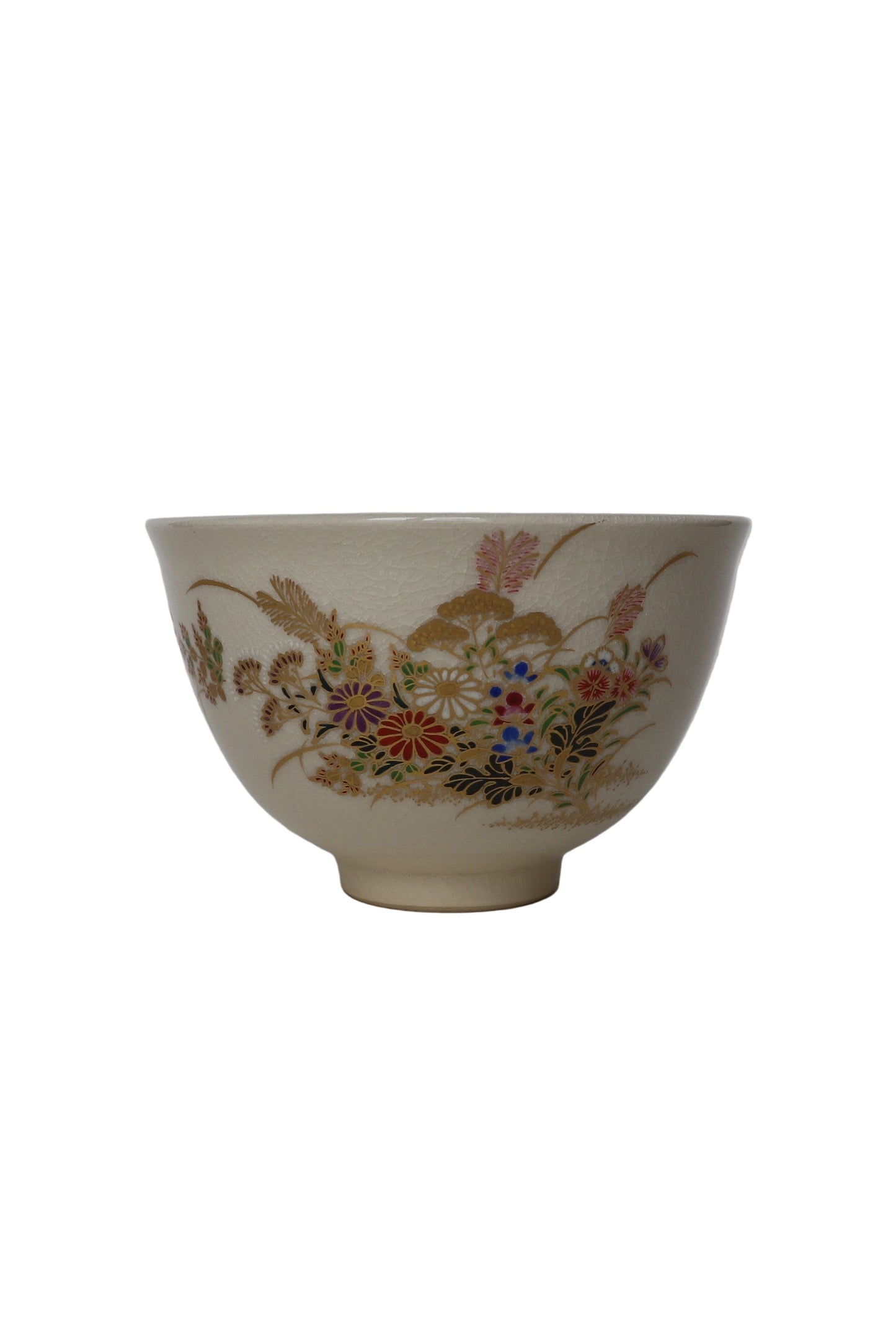
Bowl matcha / Satsuma Jukan Chin 14eme "Akikusa"
Bowl matcha / Satsuma Jukan Chin 14eme "Akikusa"
Quantity
Couldn't load pickup availability
Please note, this item is a unique piece.
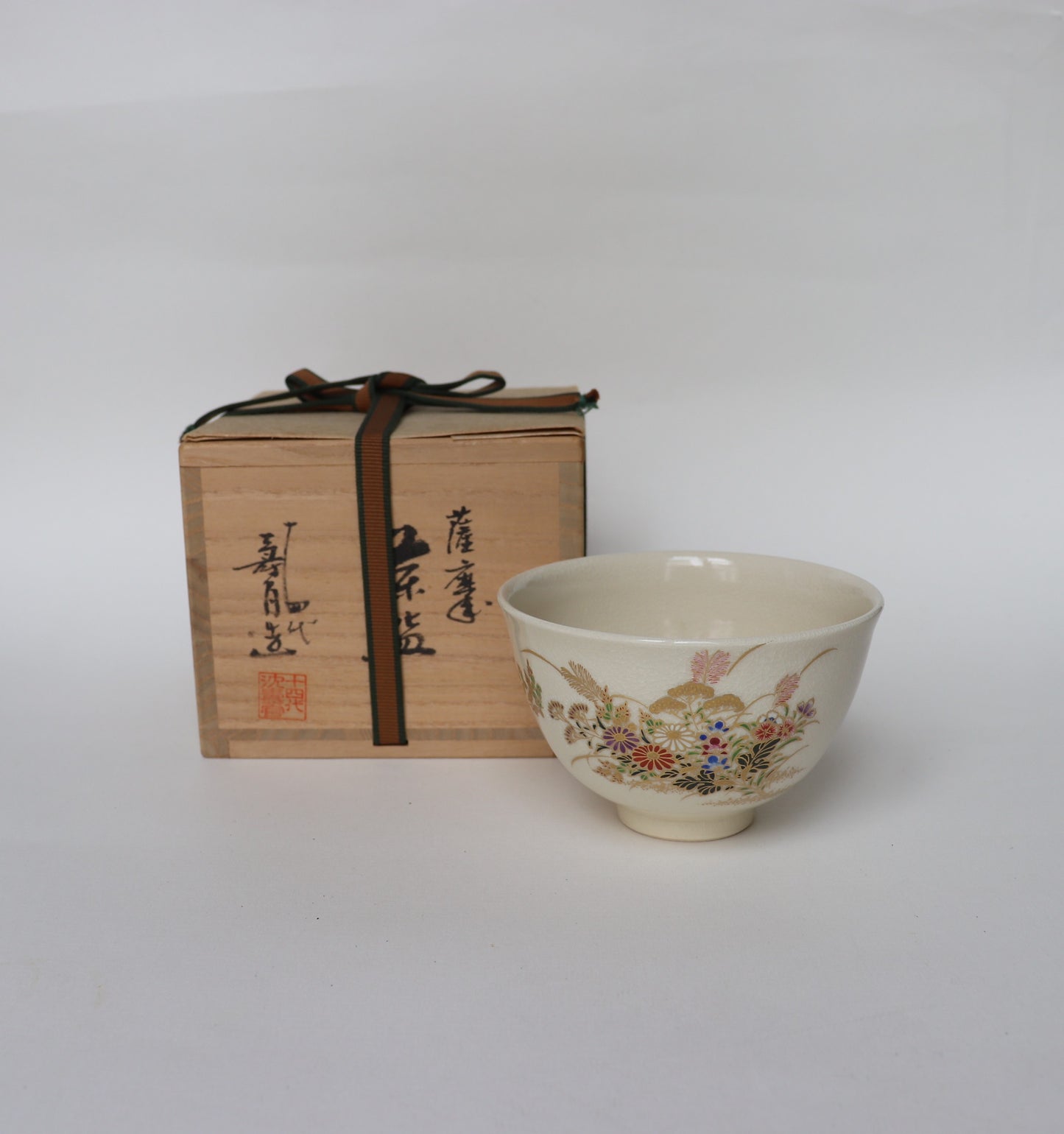
Bol à matcha — Motif d'herbes d'automne
Chin Jukan XIV — Satsuma-yaki
This bowl matcha This pottery comes from the prestigious Chin Jukan workshop, one of the oldest and most respected Satsuma-yaki kilns, located in Kagoshima. The Chin lineage traces back to Chin Tōkichi, the first of that name, a Korean master potter deported to Japan in 1598 during Toyotomi Hideyoshi's second Korean expedition. Originally from an illustrious family in the Gyeongsangbuk-do region, he was brought to Satsuma by Lord Shimazu Yoshihiro. From this forced migration arose one of Japan's most refined ceramic traditions: Satsuma-yaki.
Settled in the village of Naeshirogawa, Korean potters developed unique techniques, adapting local materials to their ancestral knowledge. The Shimazu granted them a special status: they were allowed to retain their names and customs while being protected by the domain. This exceptional environment enabled the Chin family to pass on their art uninterrupted for more than fifteen generations.
Among them, the twelfth, Chin Jukan (1835–1906), profoundly marked the history of Satsuma-yaki. Director of the official kilns of the Satsuma clan at the end of the Edo period, he brought this ceramic style to prominence both in Japan and abroad. In 1873, he exhibited a pair of monumental vases, nearly 1.80 meters tall, at the Vienna World's Fair, where they received a triumphant reception. From then on, "Satsuma" became synonymous with Japanese ceramics worldwide. An uncompromising artist, he refused to conform to Western tastes, maintaining the purest Japanese aesthetic in his works.
His successors perpetuated this spirit. The thirteenth Chin Jukan consolidated the tradition in the face of the upheavals of the 20th century, while the fourteenth Chin Jukan (1923–2004) reaffirmed Satsuma-yaki's identity on the international stage, notably receiving the Cultural Medal of Honor from the Republic of Korea for his role in fostering artistic rapprochement between Japan and Korea. Today, the fifteenth Chin Jukan continues this lineage, reconciling heritage and modernity.
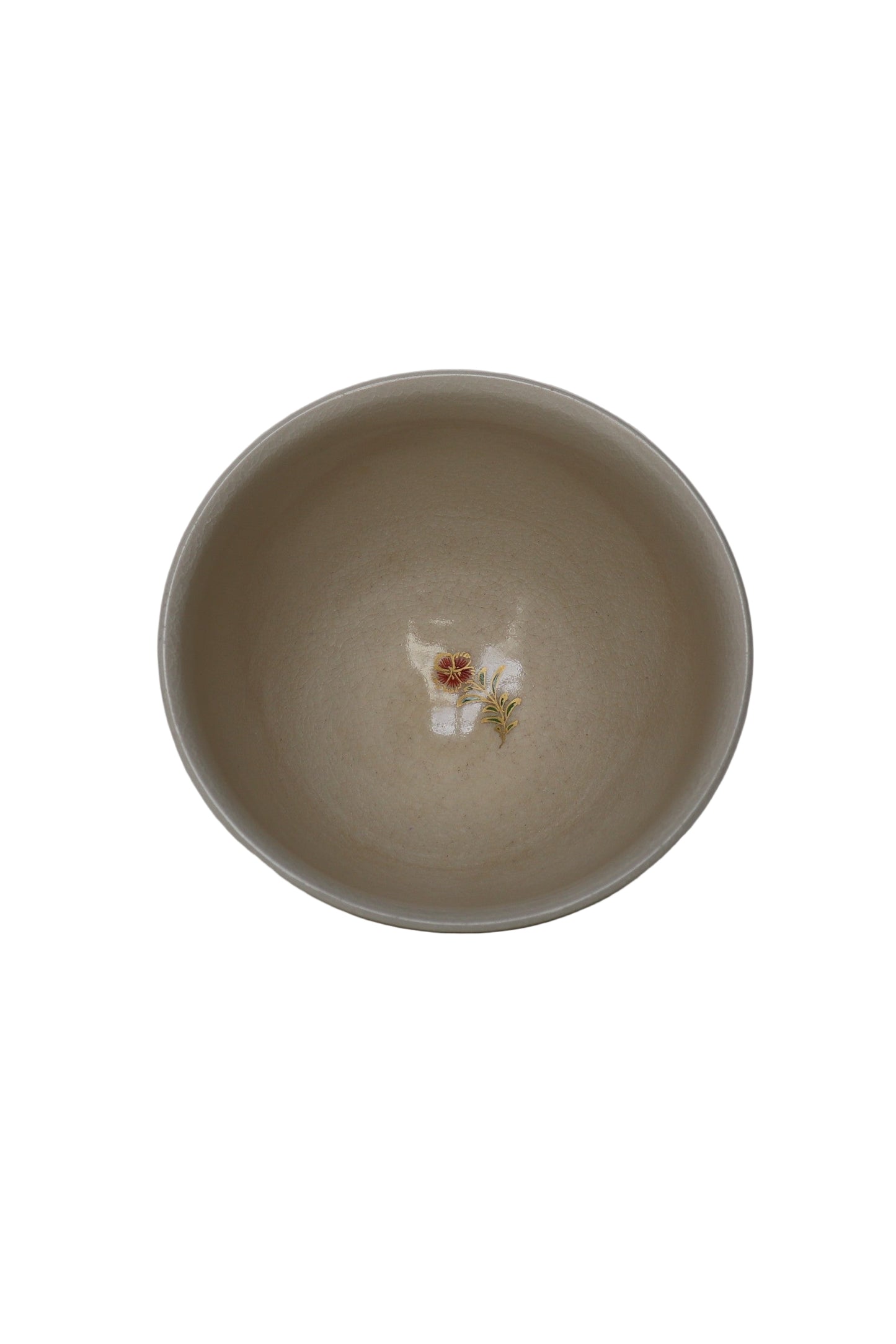
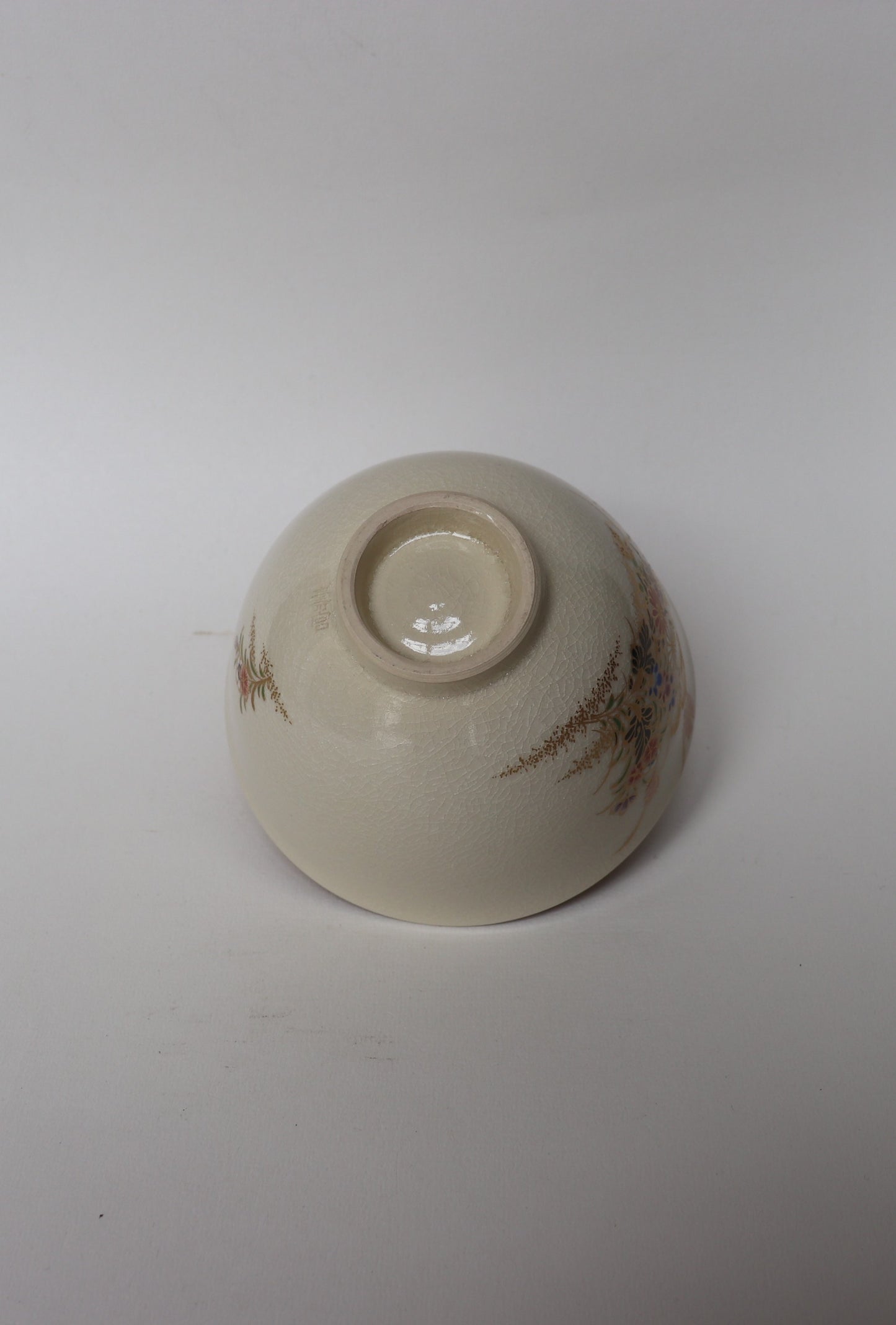
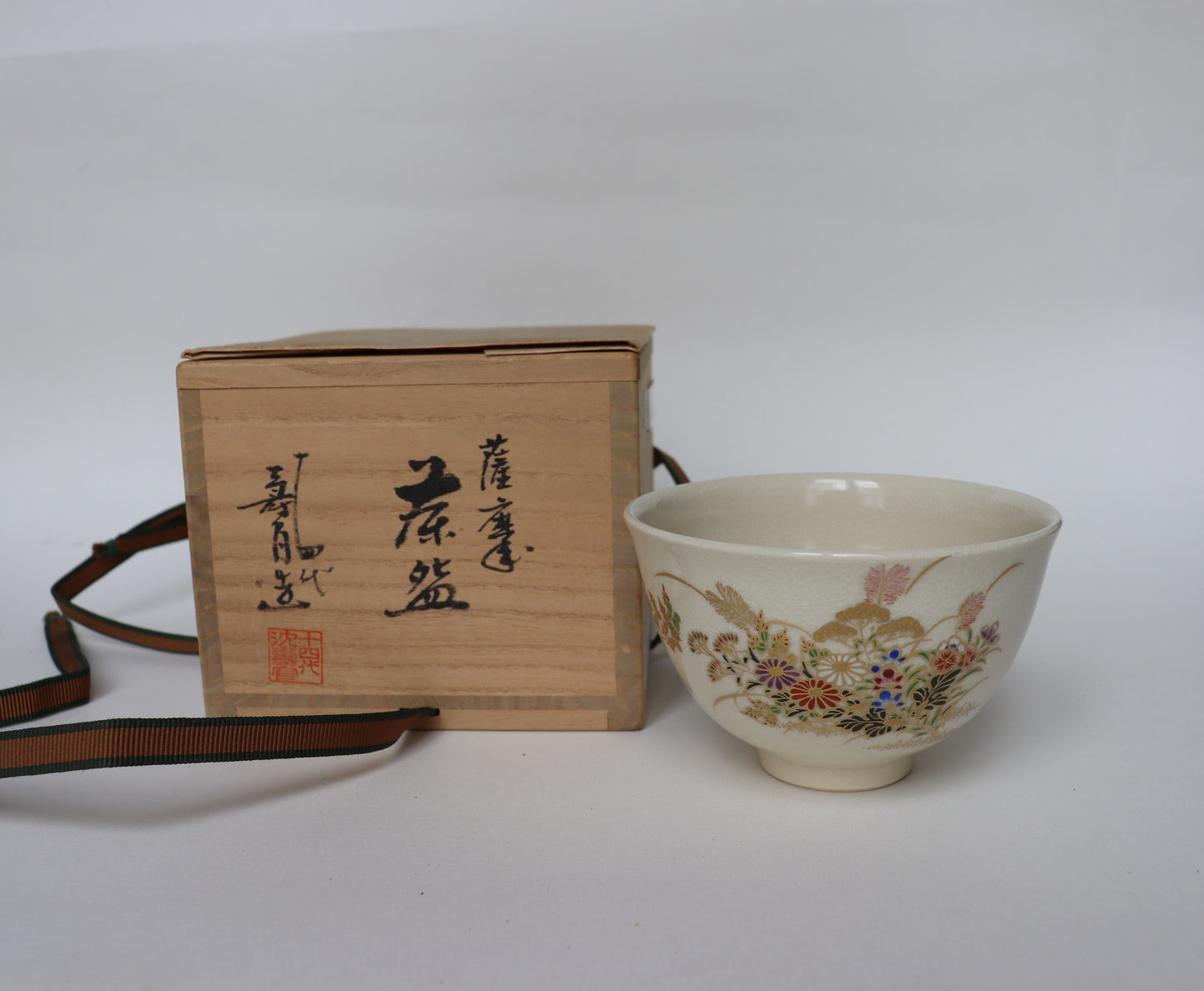
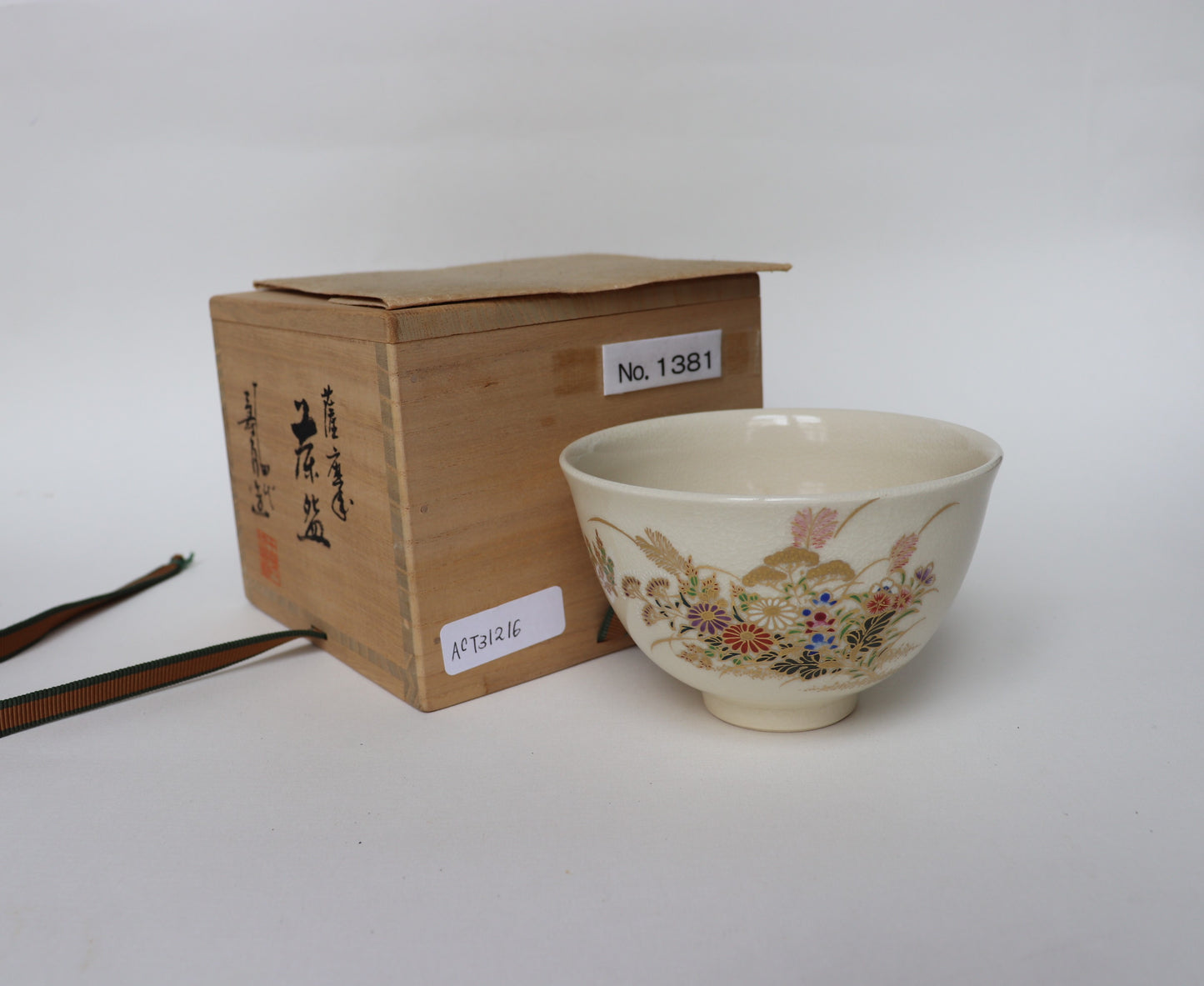
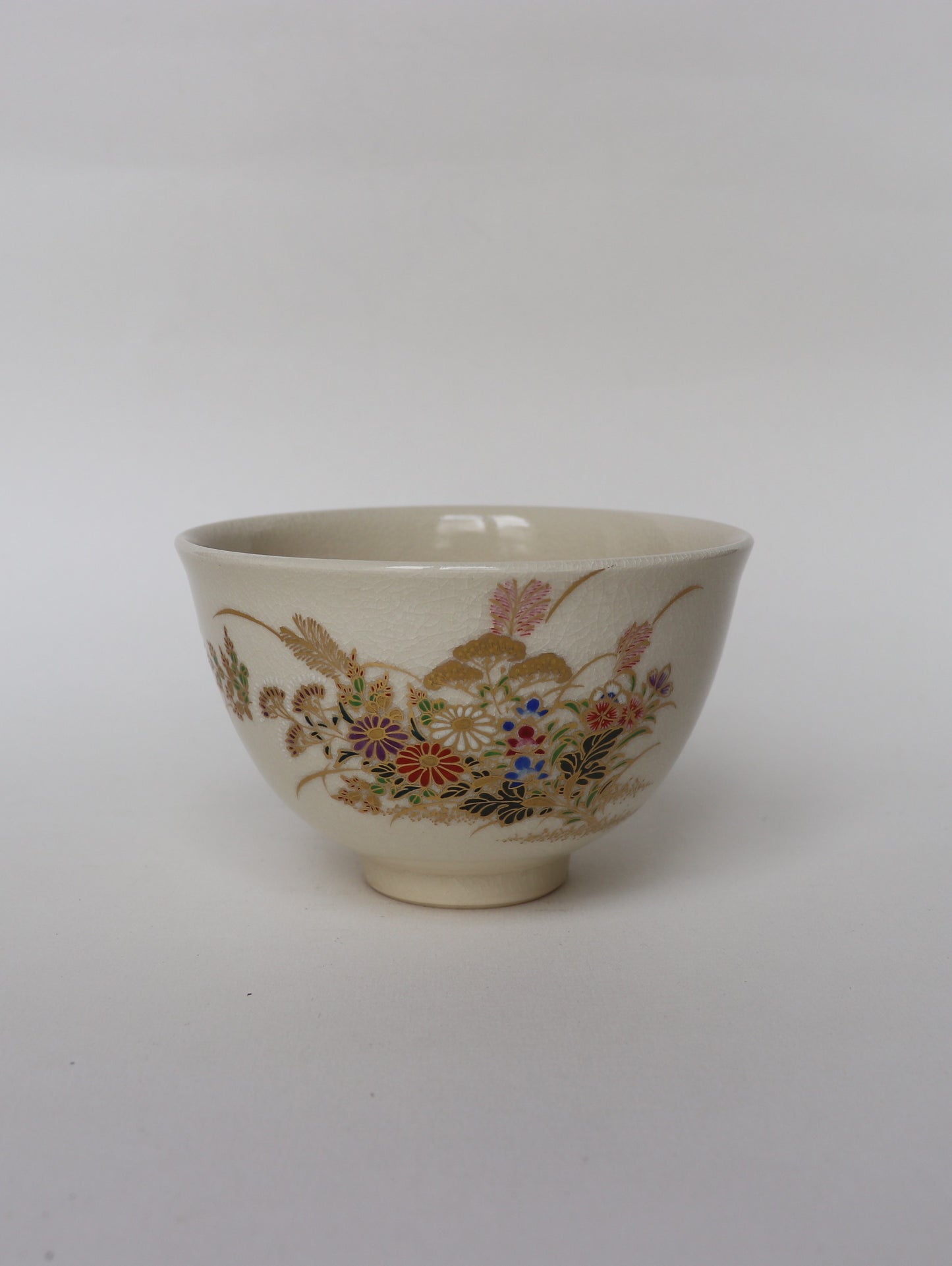
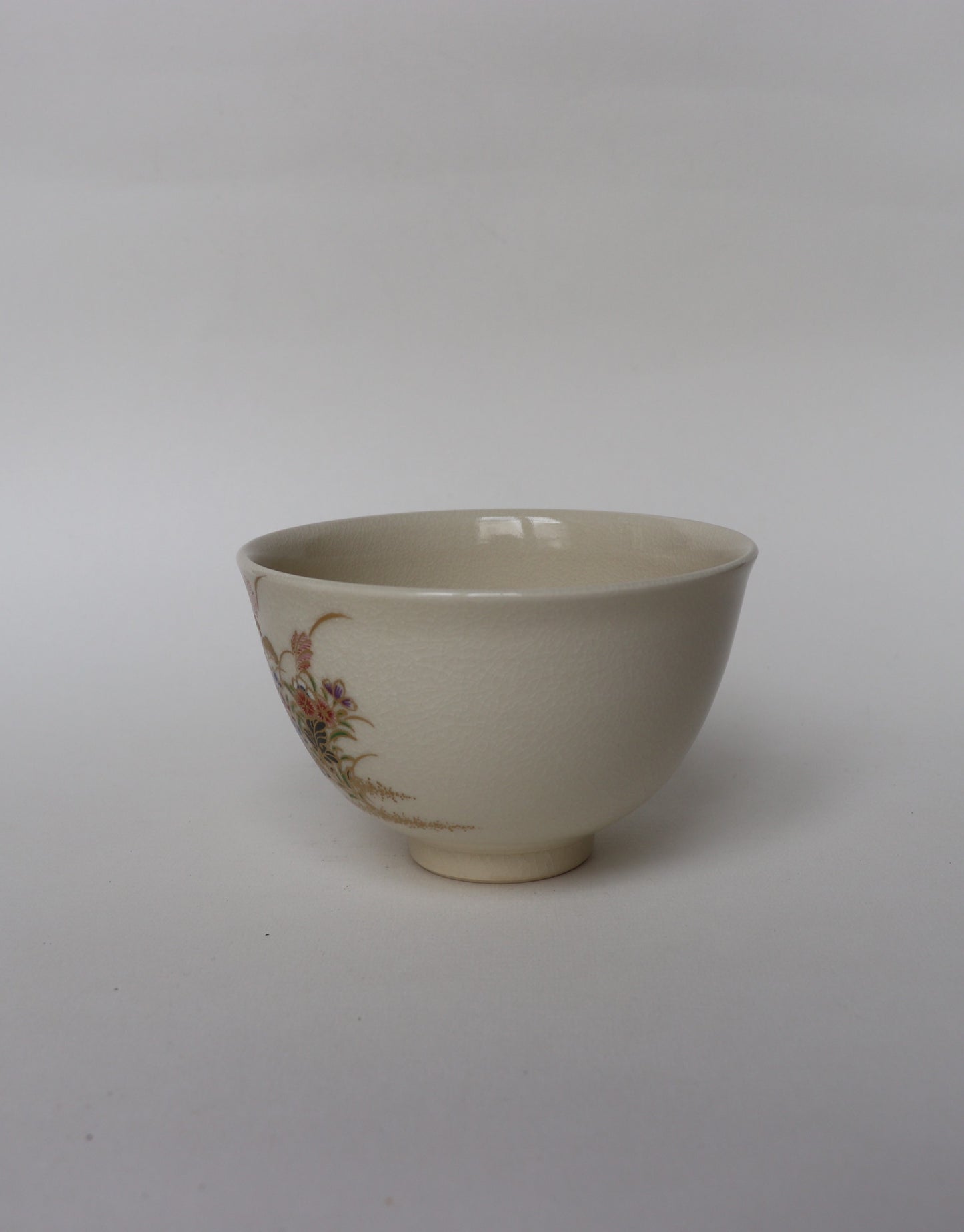
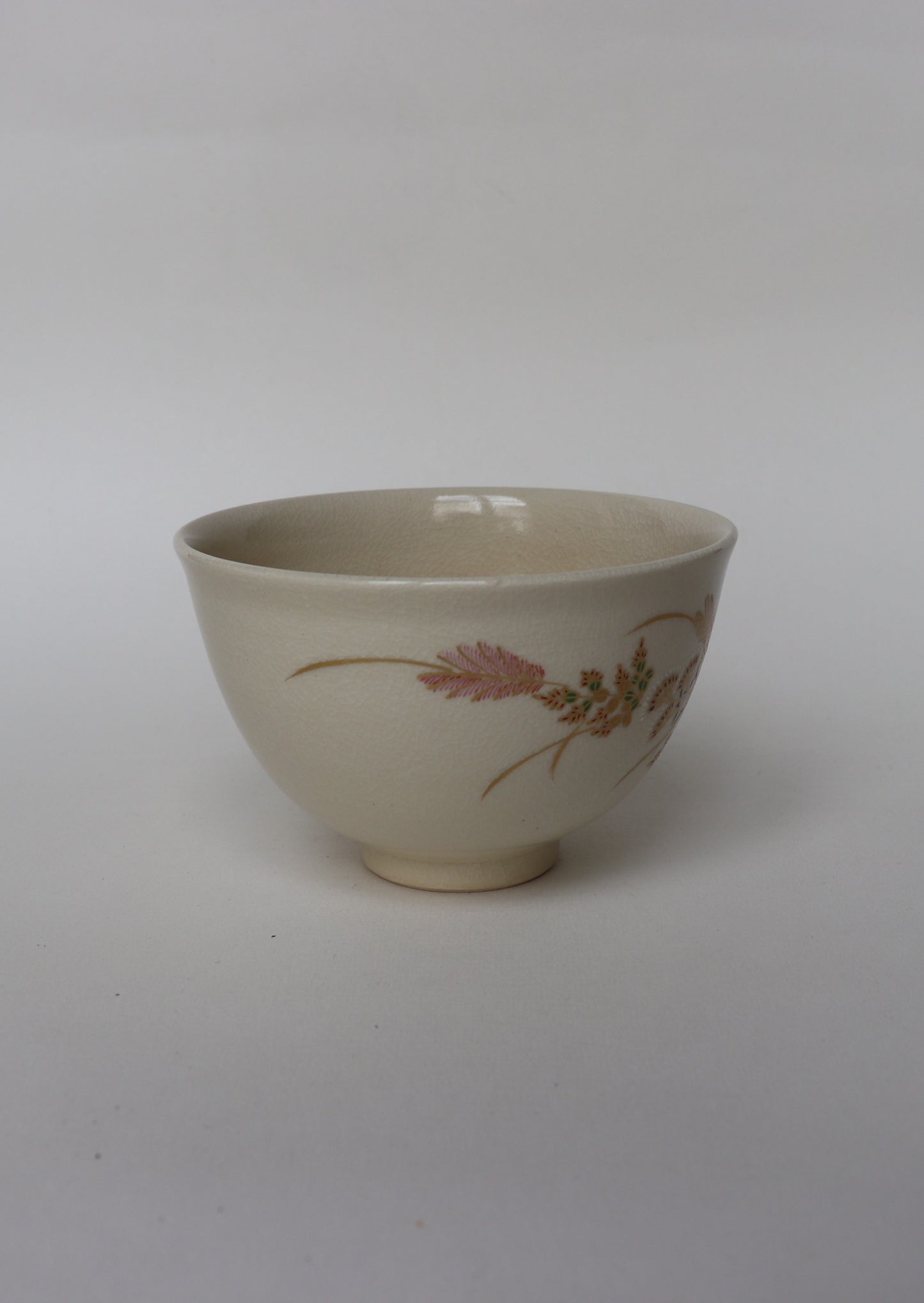
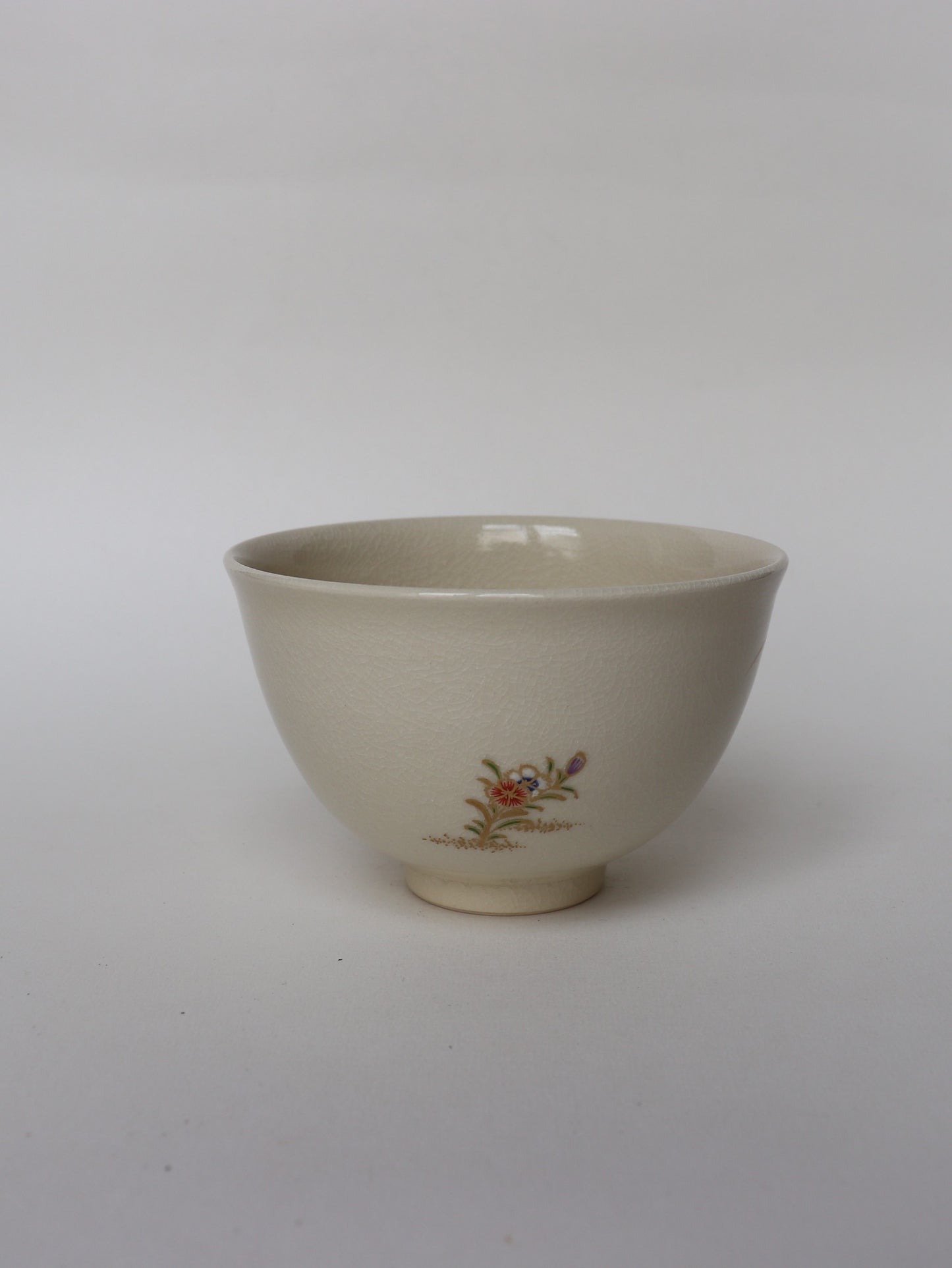
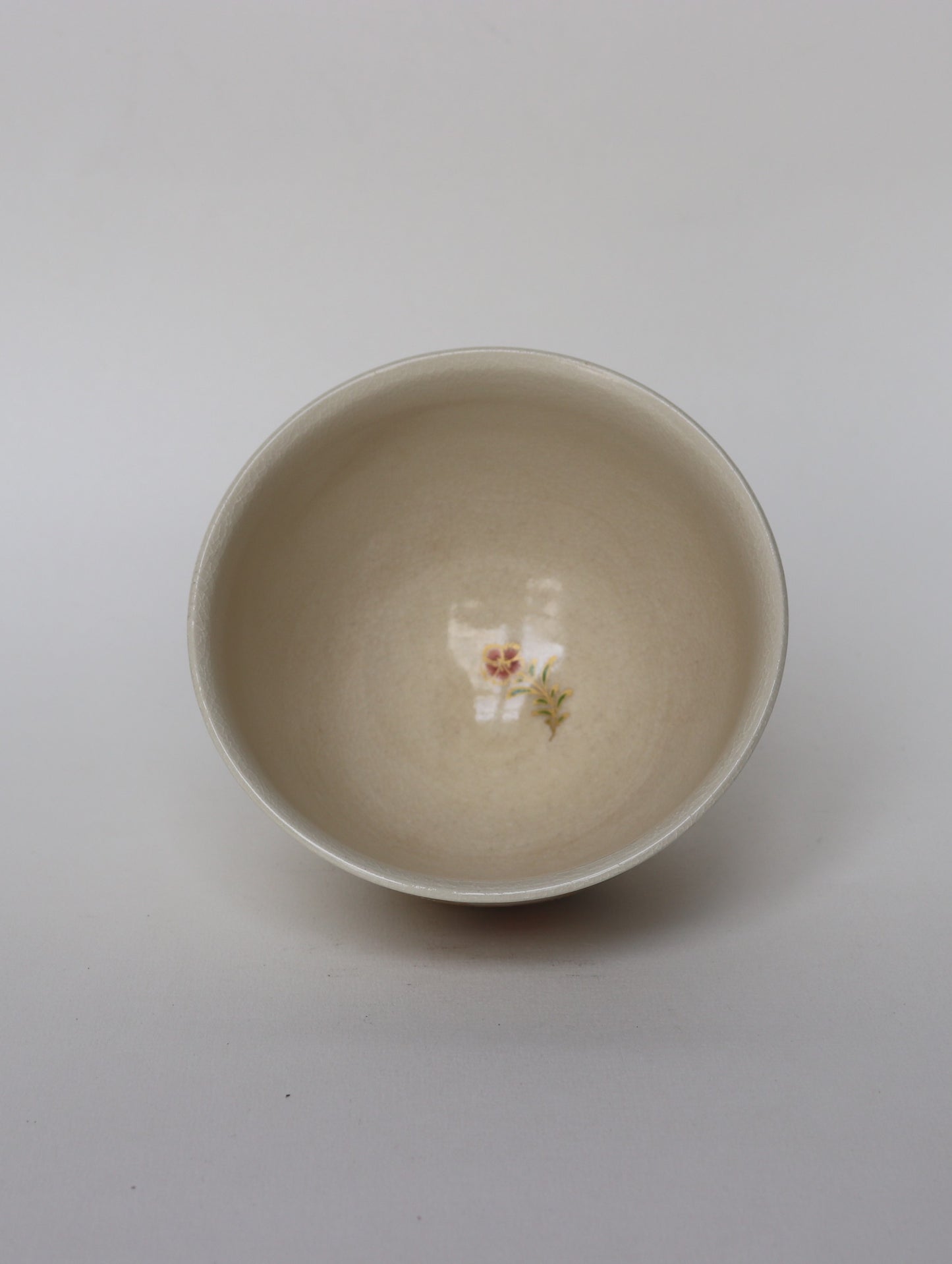
The bowl presented here illustrates the delicacy and symbolic depth of Satsuma-yaki. Its decoration depicts autumn grasses (akikusa), a classic motif in Japanese poetry. The seven plants associated with autumn—kikyō (bellflower), hagi (lespedeza), omenaeshi (patrinia), nadeshiko (wild carnation), kuzu (kudzu vine), susuki (pampas grass), and fujibakama (eupatorium)—evoke the melancholy and ephemeral beauty of the seasons. In this bowl, these motifs are rendered with exquisite finesse: the gilded stems, delicate petals, and subtle color gradations recall the finest works of the Shiro Satsuma style, characterized by its ivory-colored clay and gold highlights.
Combining technical rigor, decorative elegance and symbolic depth, this bowl embodies the spirit of Satsuma-yaki: a beauty that is both fragile and luminous, rooted in four centuries of history.
Matcha Bowl — Autumn Grasses Motif
Chin Jukan XIV — Satsuma Ware
This matcha bowl was created at the historic Chin Jukan Kiln in Kagoshima, one of Japan’s oldest and most renowned pottery lineages. The family’s origin traces back to Chin Tōkichi, a Korean master potter brought to Japan in 1598 during Toyotomi Hideyoshi’s second Korean campaign. Descended from an aristocratic family of Gyeongsang Province, Chin Tōkichi and other craftsmen were brought to Satsuma by Lord Shimazu Yoshihiro. From their artistry arose the elegant and distinctive Satsuma ware, blending Korean skill with Japanese aesthetics.
Protected by the Shimazu domain, the Chin family maintained its language and customs while refining its ceramics for over fifteen generations. Among them, Chin Jukan XII (1835–1906) elevated Satsuma ware to international fame. As head of the domain kiln, he exhibited monumental works at the Vienna World’s Fair in 1873, where his six-foot vases captivated Europe. His mastery of openwork carving and relief earned him numerous awards, yet he remained faithful to Japanese taste, never catering to foreign trends.
The succeeding generations continued his legacy. Chin Jukan XIII guided the kiln through the difficult early 20th century, and Chin Jukan XIV (1923–2004) revitalized Satsuma ware’s global recognition, receiving the Silver Crown Cultural Medal from the Republic of Korea for his contribution to cultural exchange. Today, Chin Jukan XV carries forward this heritage, balancing tradition and innovation.
The bowl’s decoration features the Seven Flowers of Autumn (Aki no Nanakusa) — bellflower, bush clover, patrinia, pink, kudzu, pampas grass, and thoroughwort — motifs celebrated in classical poetry for their evocation of fleeting beauty. The design, rendered in fine overglaze enamels and delicate gold, exemplifies the Shiro Satsuma style, admired for its soft ivory glaze and intricate detailing.
Refined yet contemplative, this matcha bowl embodies the essence of Satsuma ware: a dialogue between endurance and fragility, between craftsmanship and the quiet elegance of time.
Blog posts
-

New Year in the world of Japanese tea
In Japan, they say that the New Year of Tea takes place in November and not on January 1st. This is explained by the seasonality of the tea leaves and...
New Year in the world of Japanese tea
In Japan, they say that the New Year of Tea takes place in November and not on January 1st. This is explained by the seasonality of the tea leaves and...
-

Maintenance and cleaning of tea utensils and ac...
Our advice for maintaining your kyusu, your chasen and other tea utensils and accessories.
Maintenance and cleaning of tea utensils and ac...
Our advice for maintaining your kyusu, your chasen and other tea utensils and accessories.
-

The birth of the Maruyama Nori house in 1854 in...
The birth of the Maruyama Nori house in 1854 in the world historical context If we can imagine that 1854 was now almost 200 years ago, it can be...
The birth of the Maruyama Nori house in 1854 in...
The birth of the Maruyama Nori house in 1854 in the world historical context If we can imagine that 1854 was now almost 200 years ago, it can be...


