

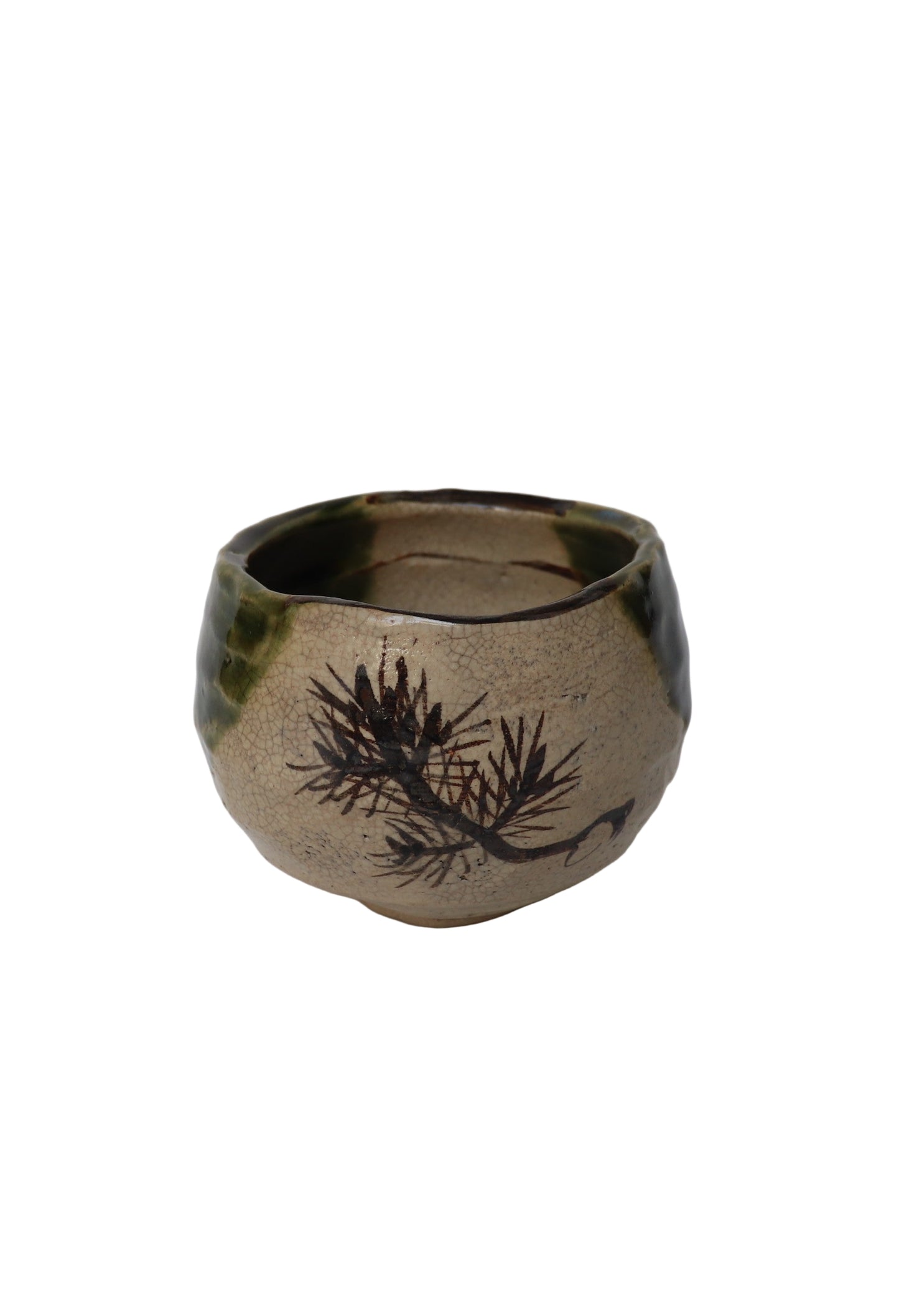
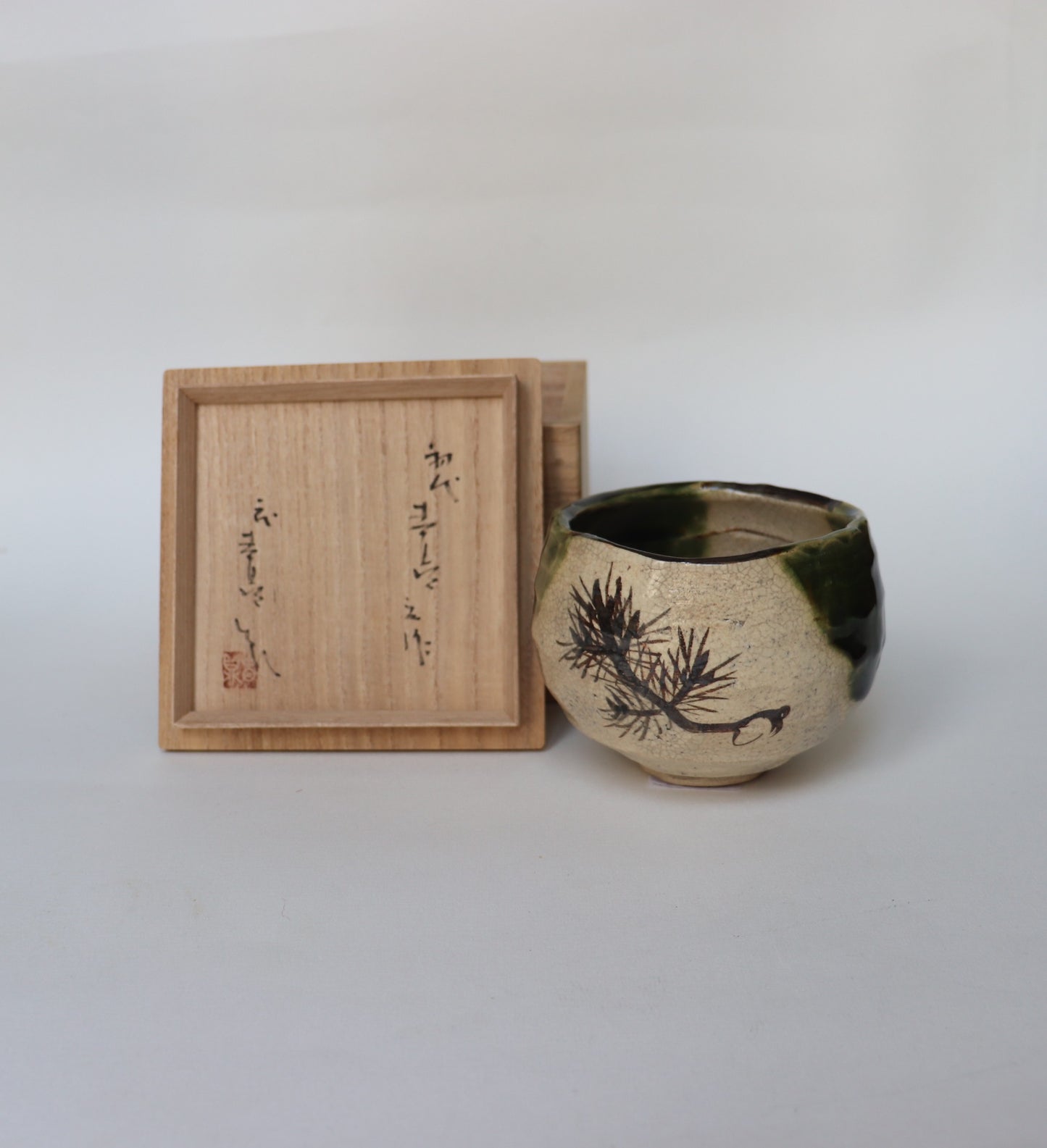
Bol à matcha /Mino Kato Syutei Shodai ORIBE Seto/Akazu-yaki
Bol à matcha /Mino Kato Syutei Shodai ORIBE Seto/Akazu-yaki
Quantity
Couldn't load pickup availability
Please note, this item is a unique piece.
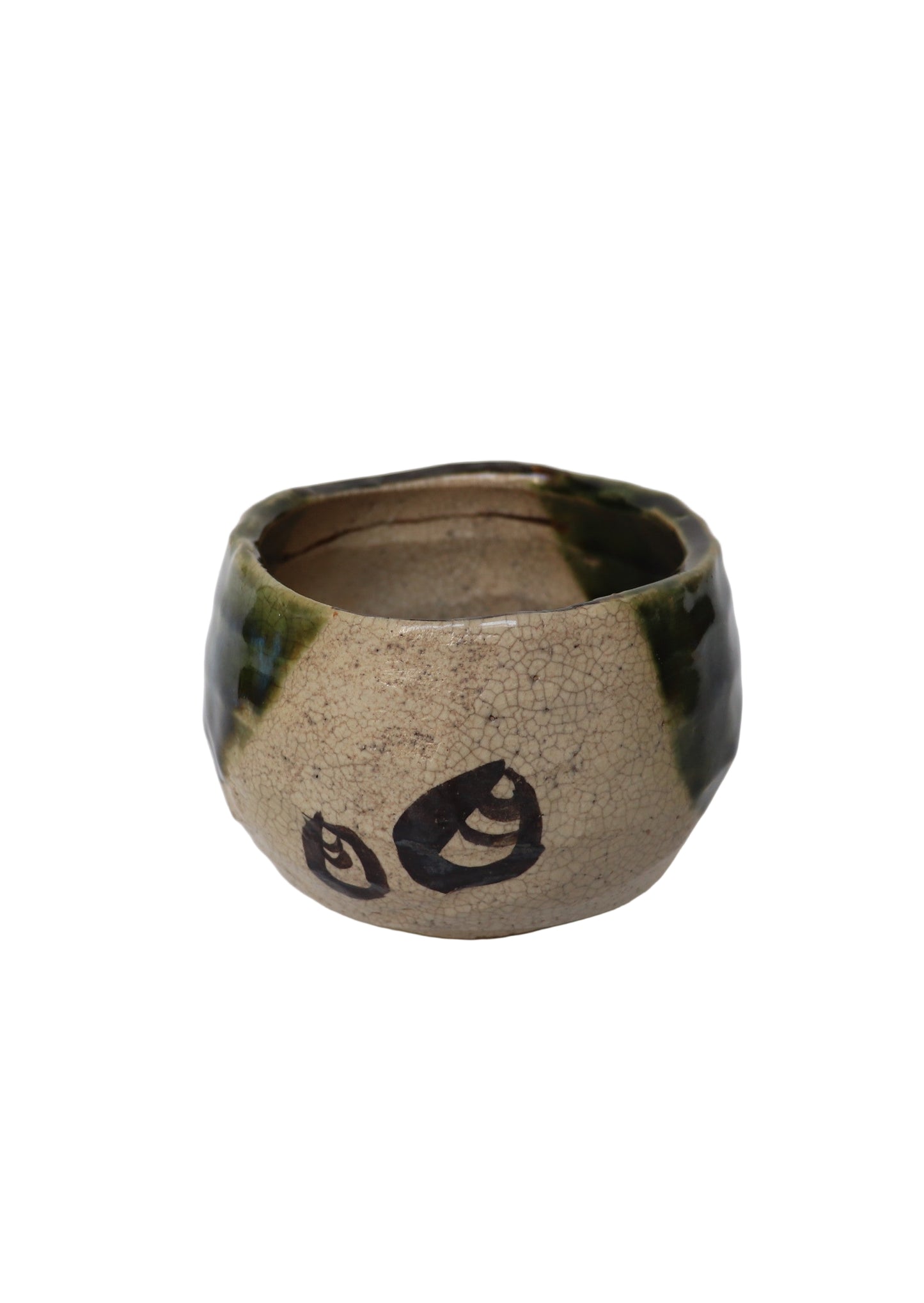
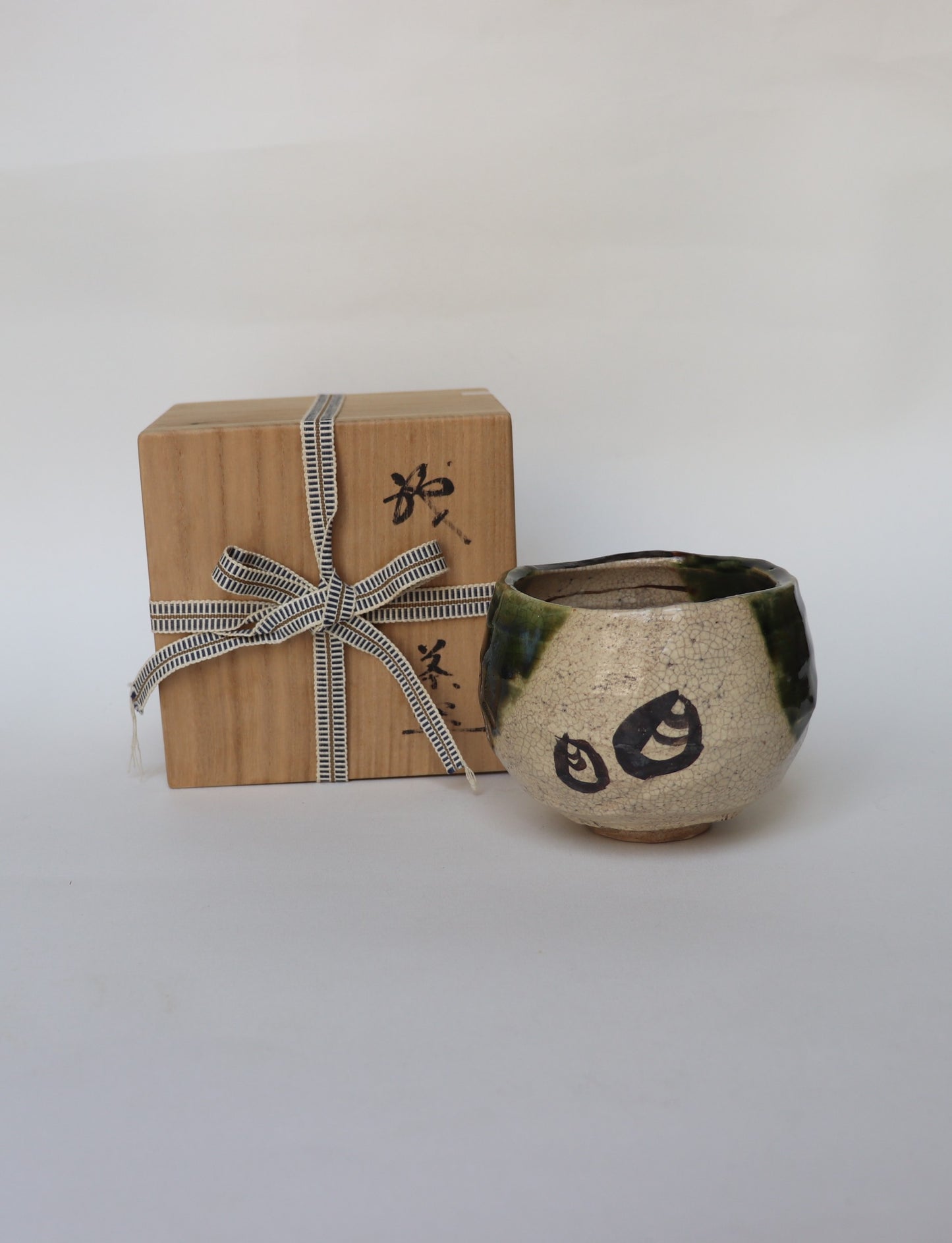
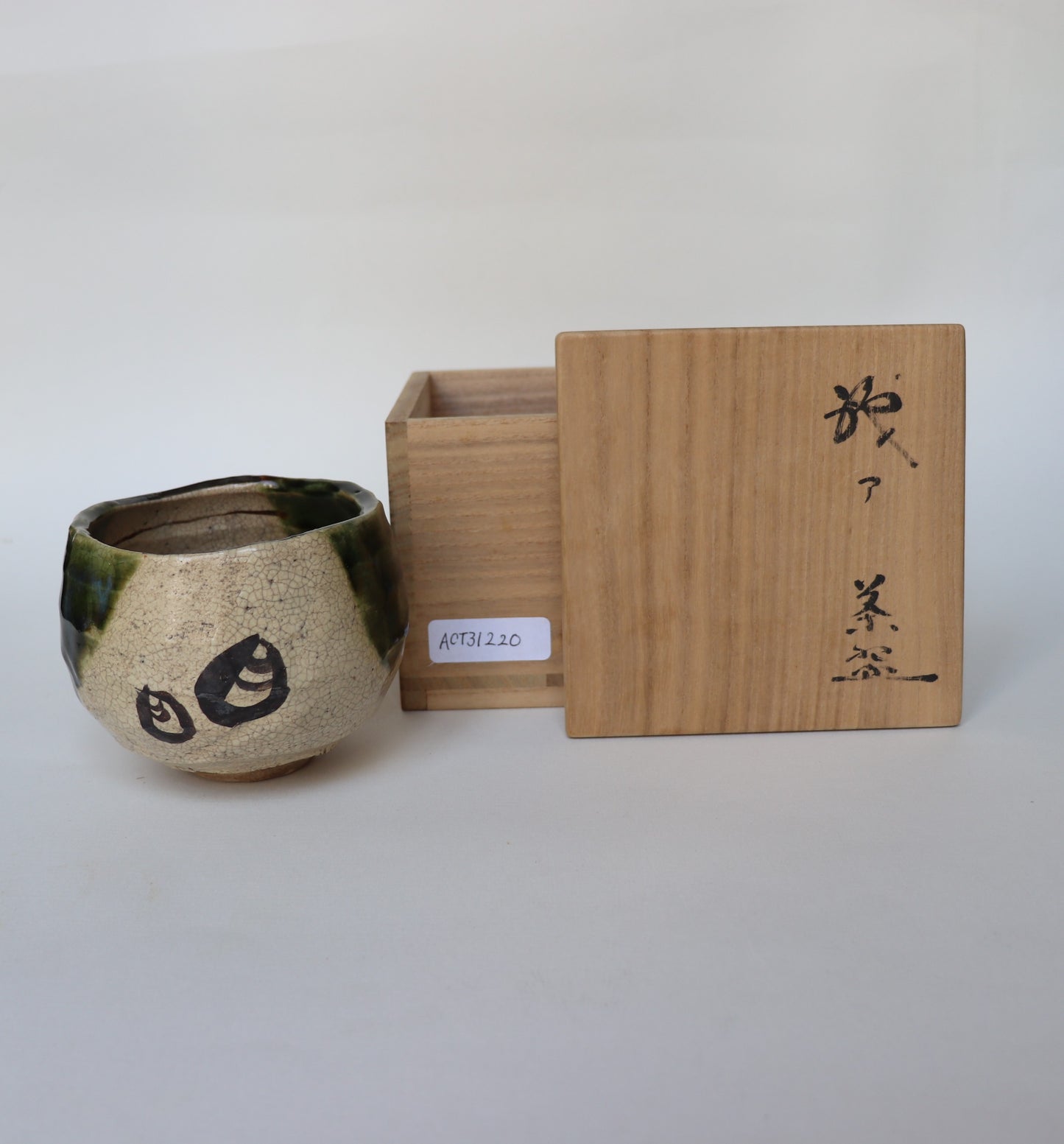
Bowl matcha Edamatsu and Hamaguri
Shundei I — Seto
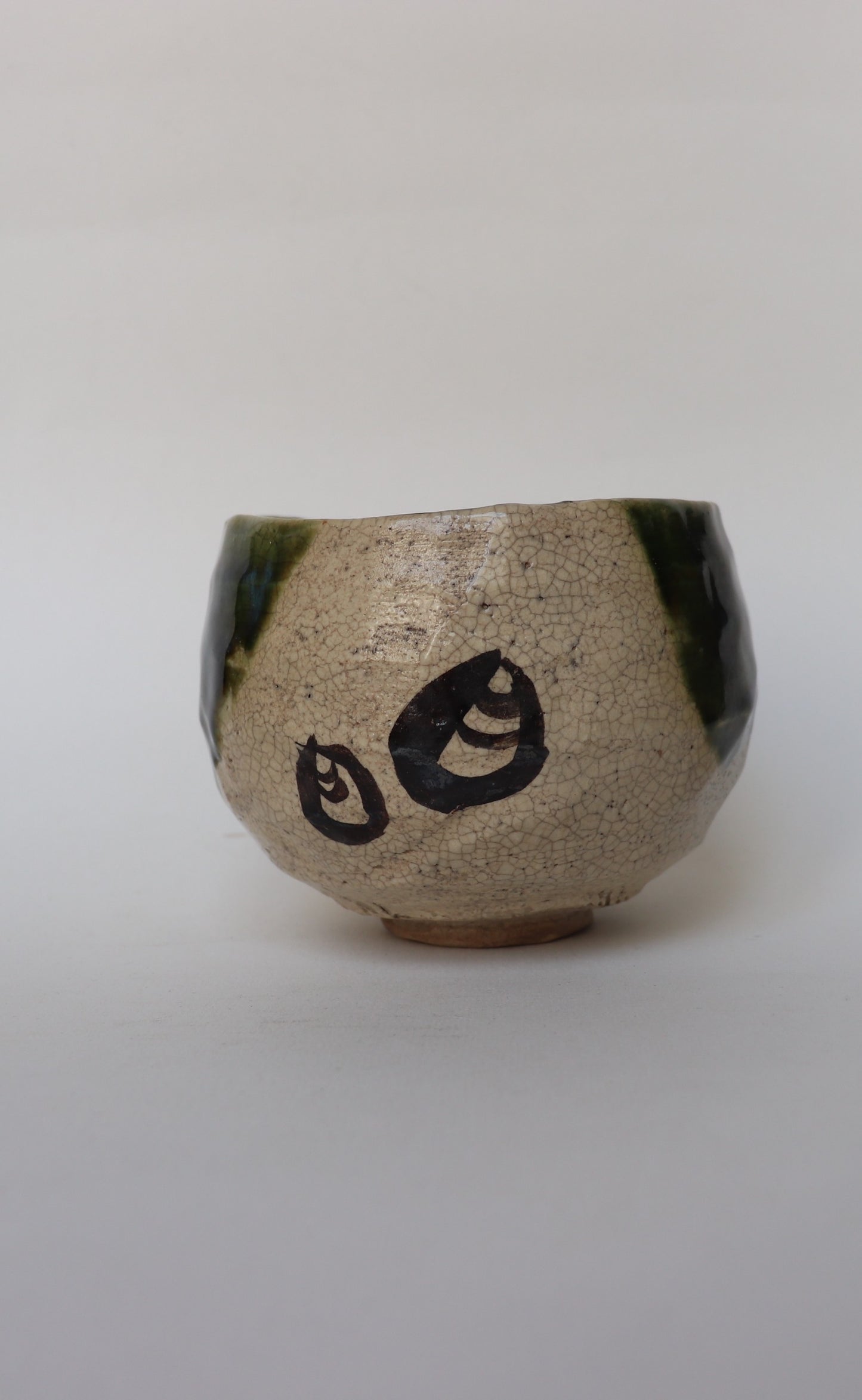
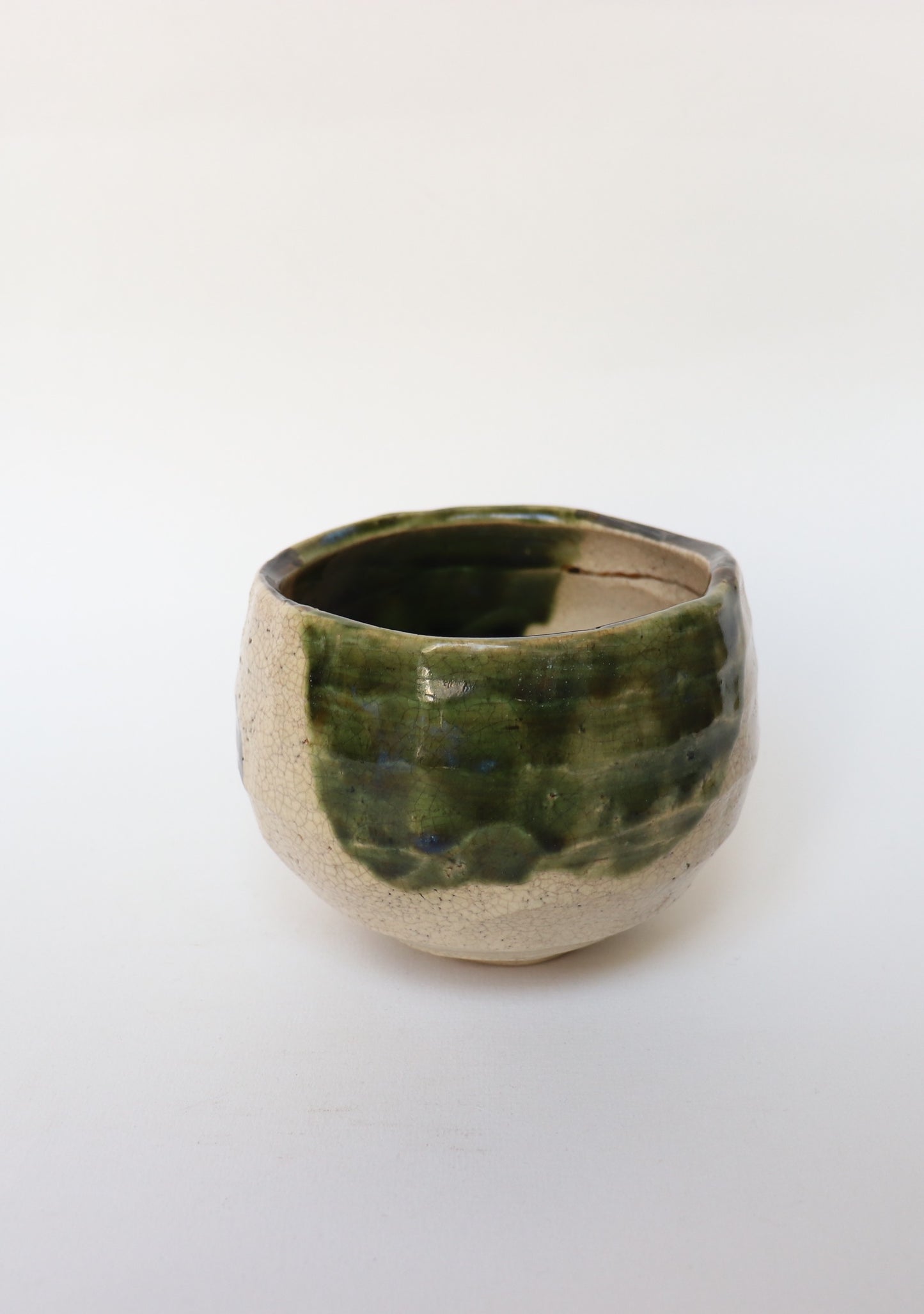
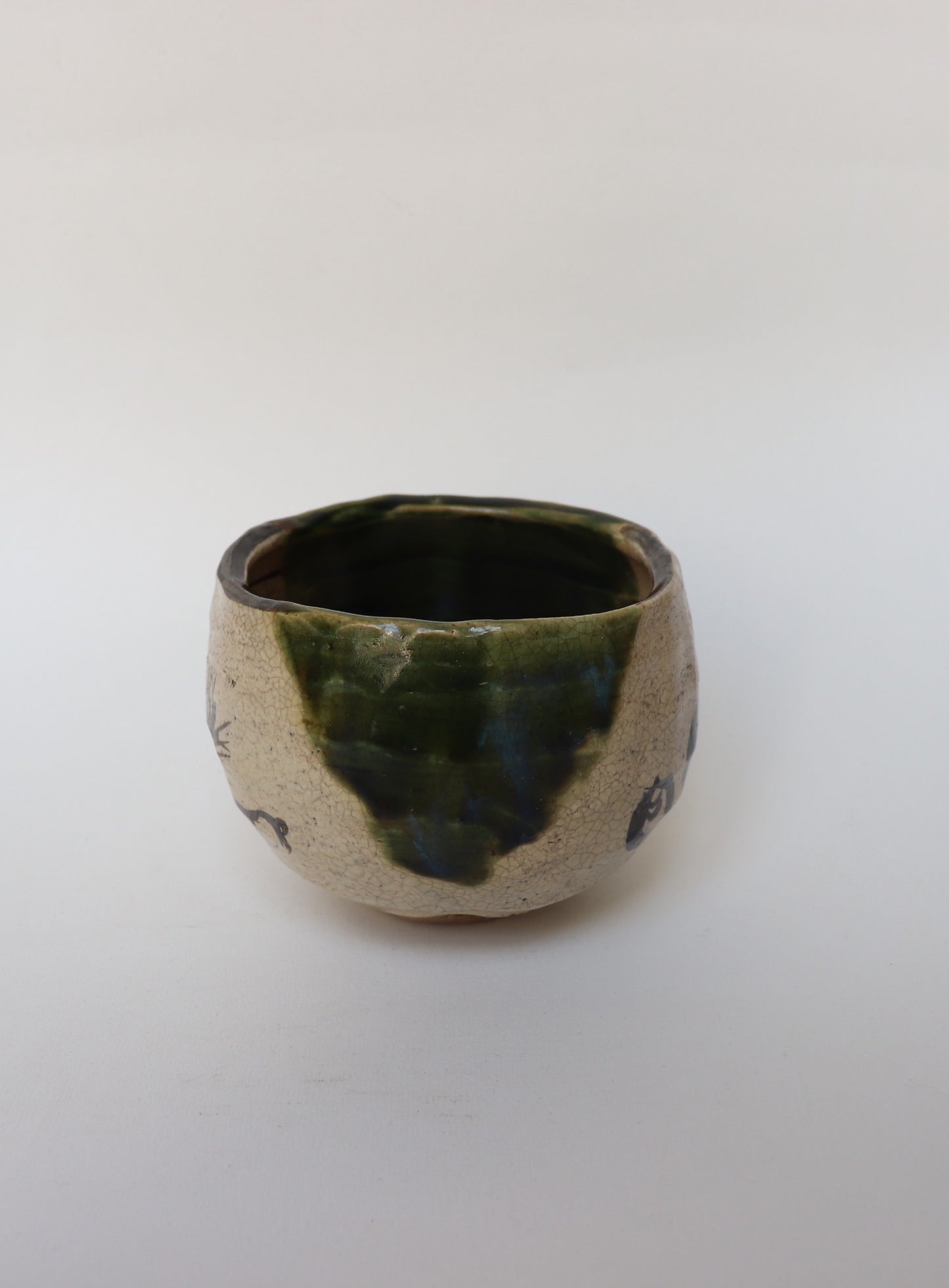
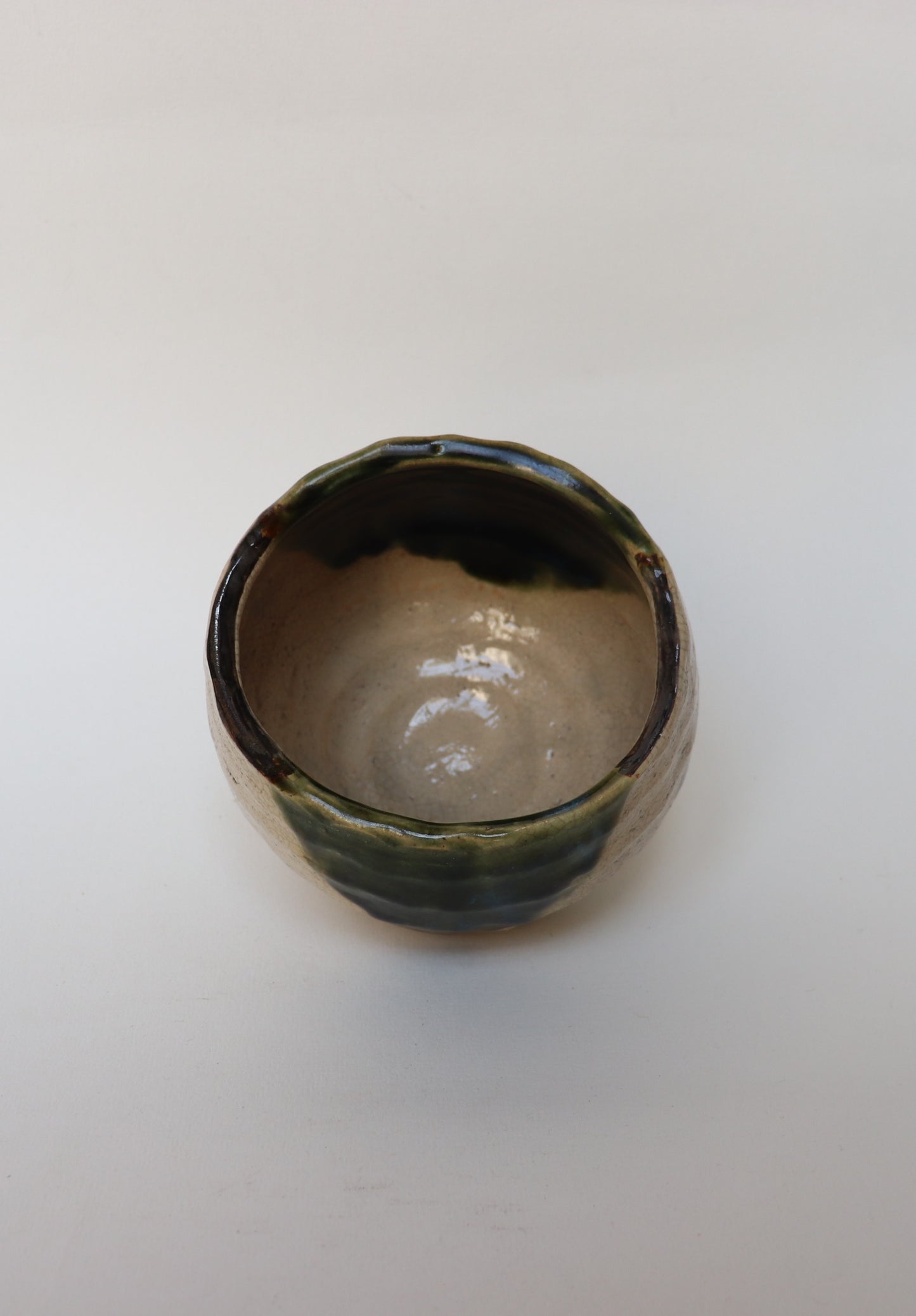
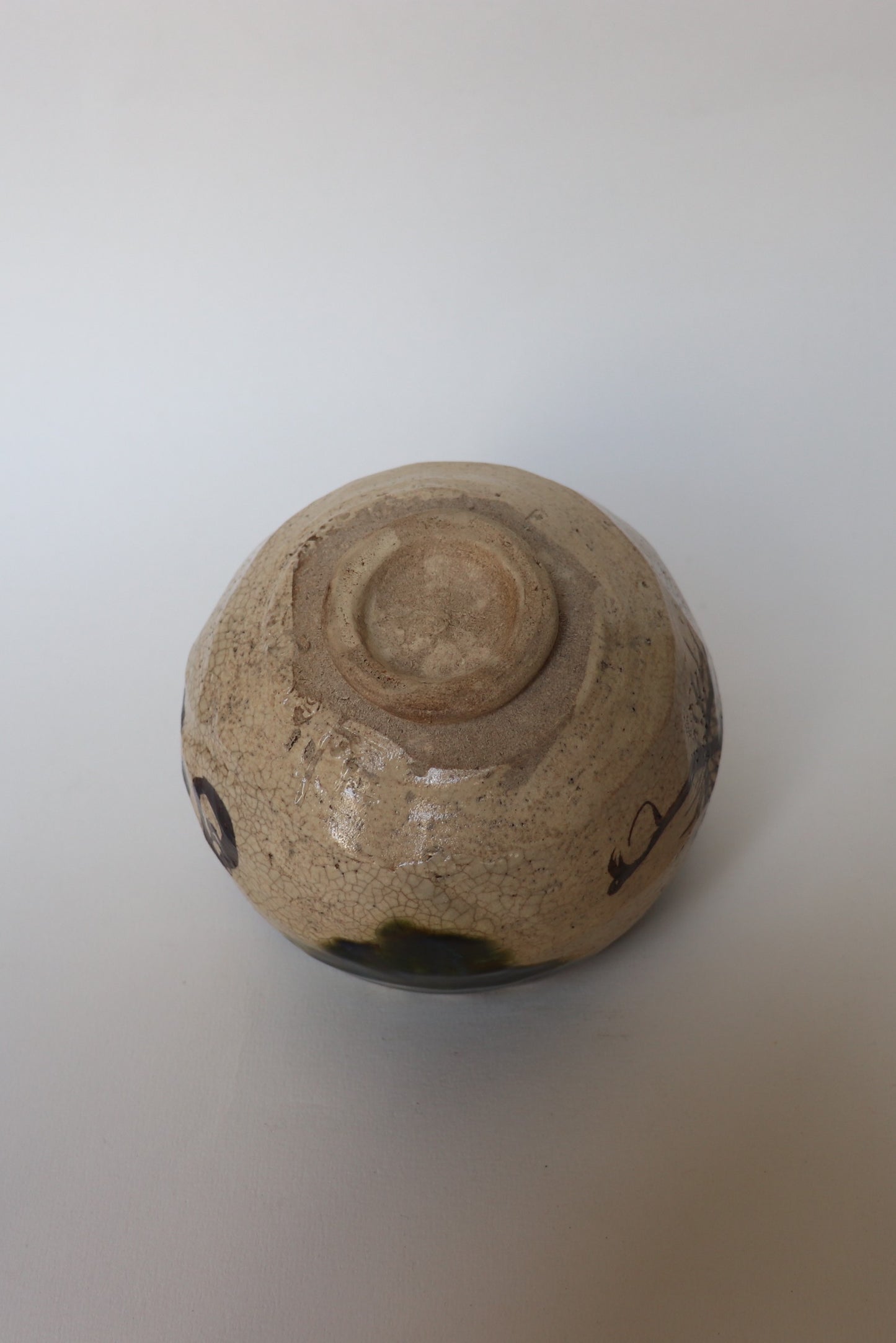
This bowl matcha This piece is a work by the founder of the Shundei pottery house, who passed away in 1961. It embodies a dialogue between the Oribe tradition and the personal sensibility of its creator. Although originating from the Seto ceramic center, the piece is clearly inspired by the Oribe-yaki style, renowned for its green glazes and expressive motifs. However, unlike the often irregular and asymmetrical forms characteristic of Oribe, this bowl features a symmetrical roundness, a balanced shape that lends it a restrained and timeless elegance.
The main motif, Edamatsu, depicts vigorous pine branches, a symbol of longevity and vitality. The pine, which remains green year-round, is considered an auspicious tree, often associated with prosperity and resilience. It frequently appears in tea ceremonies, New Year's celebrations, and festive decorations as an emblem of constancy and enduring life.
The second motif, Hamaguri, the Japanese clam, is a symbol of good fortune and harmonious union. Its two shells fit together perfectly, representing the complementarity between two people, fidelity, and the stability of the couple. In Japanese tradition, the combination of the pine tree and the clam evokes wishes for marital happiness and domestic peace, what is called Fuufu Enman, harmony between husband and wife.
A popular Dodoitsu expresses this idea in these terms:
"The two pine needles, even when fallen, remain together" —
a poetic image of faithful and inseparable love, a symbol of the durability of human bonds.
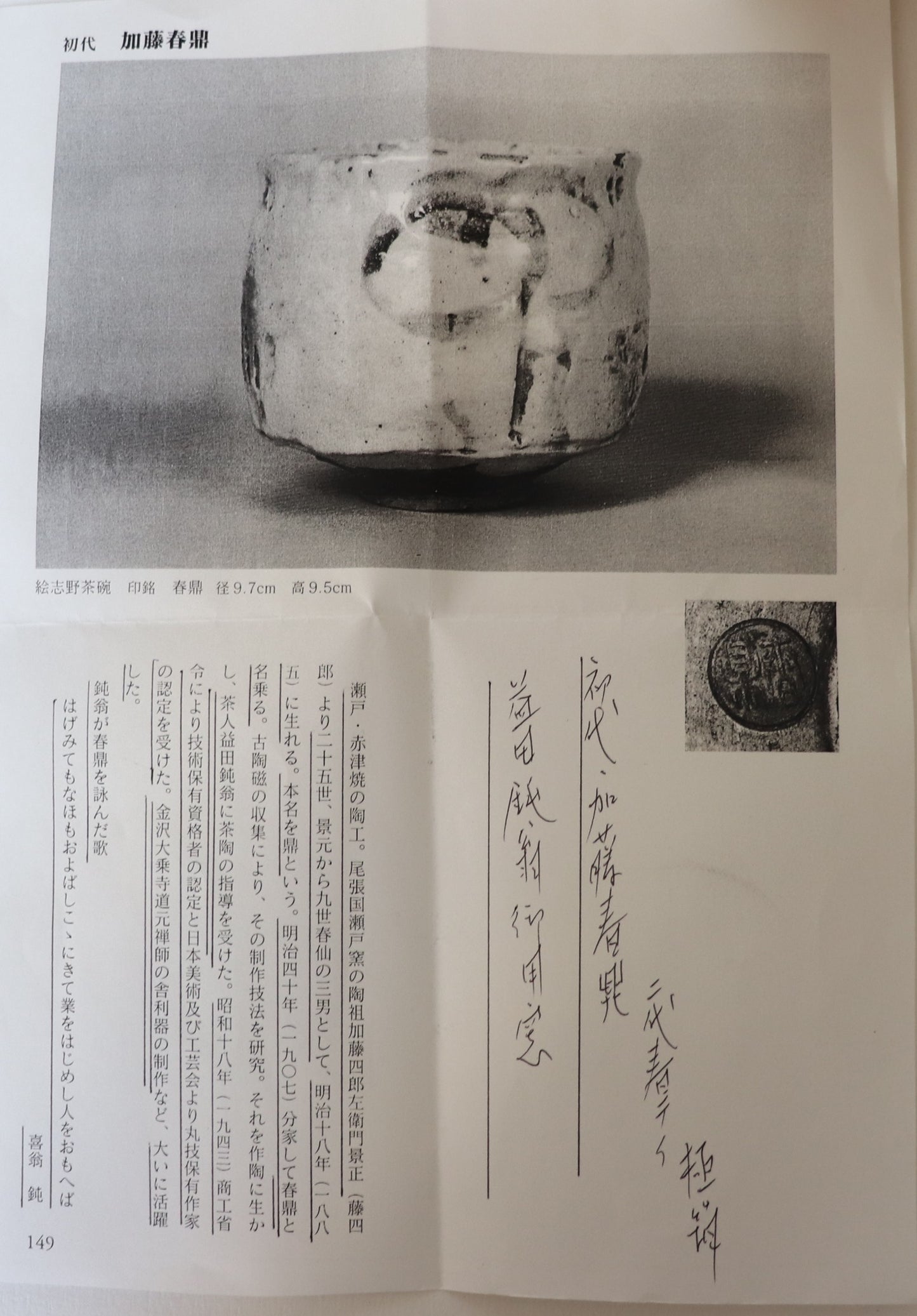
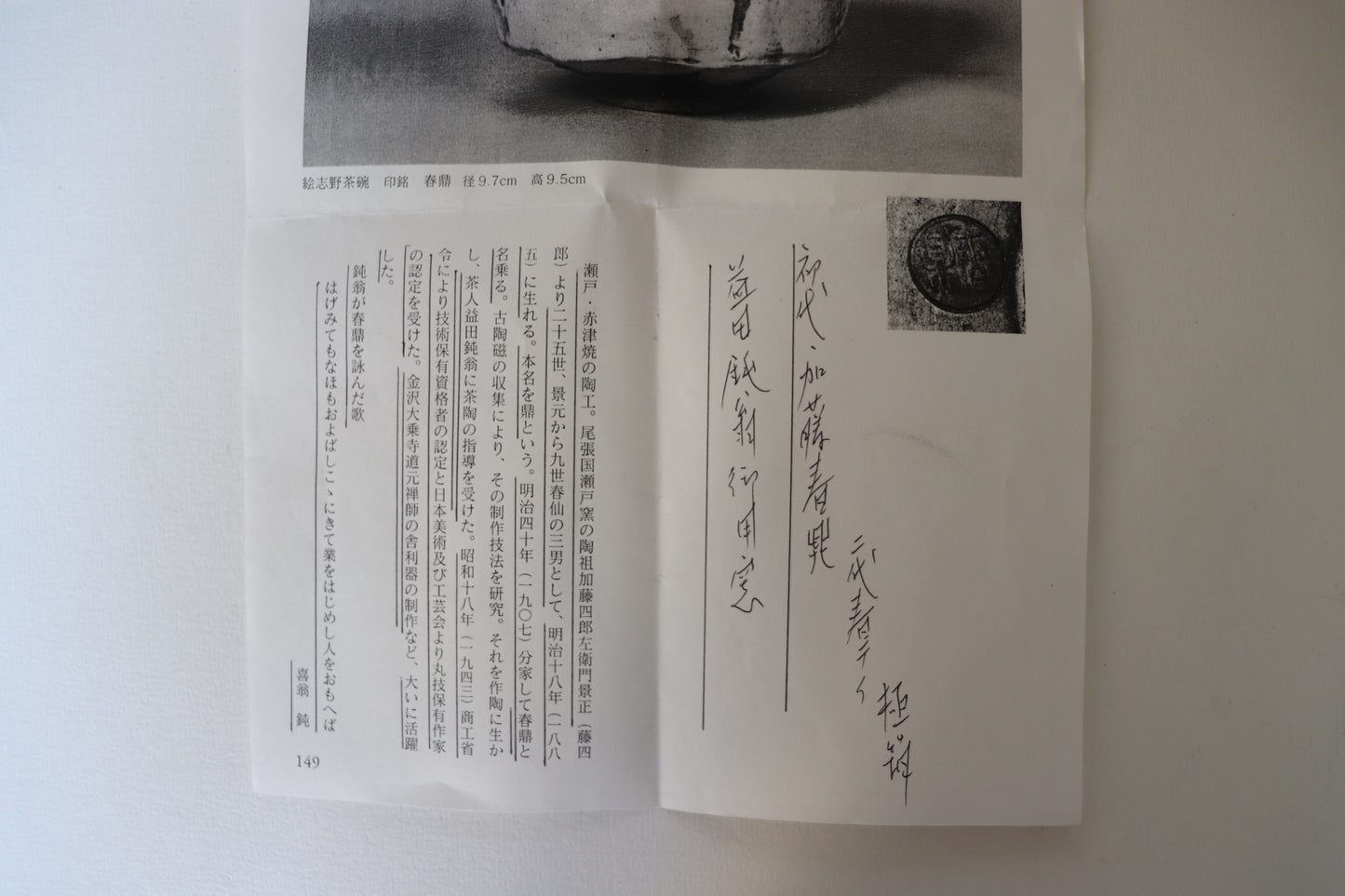
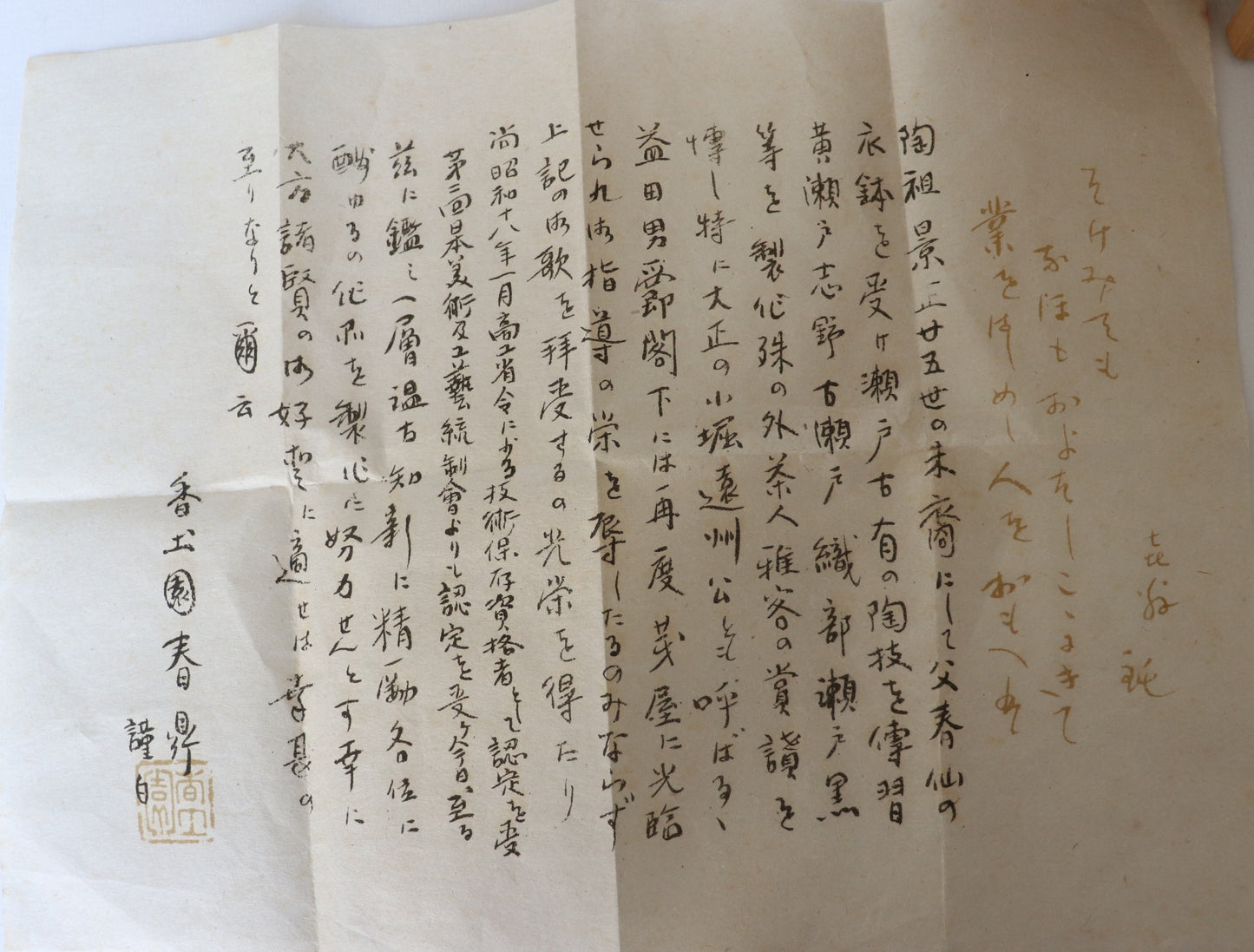
The history of this piece is intimately linked to that of its creator, a man described by his grandson as a complete craftsman, capable of shaping clay but also of painting and writing with equal mastery. An admirer of Seto's master Shunpuku, he chose the name Shundei in reference to his role model and founded his own company with an innovative spirit. It is said that he loved modern and elegant things, and that he participated in events in Tokyo where gastronomy and the culinary arts intertwined, uniting beauty and function in a single gesture.
This bowl, both rooted in tradition and open to modernity, embodies this spirit of balance: a tribute to the past and a personal vision of the future. Through the purity of its form and the meaning of its motifs, it expresses a simple and sincere poetry, that of a craftsman who saw in each object a union between beauty and everyday life.
Matcha Bowl Edamatsu and Hamaguri
Shundei I — Seto
This matcha bowl was crafted by the founder of the Shundei kiln, who passed away in 1961. It reflects a dialogue between Oribe tradition and the artist’s own refined sensibility. Although made in Seto, the piece is strongly influenced by Oribe-yaki, known for its vivid green glazes and dynamic designs. Unlike the typically irregular Oribe forms, however, this bowl displays a perfectly rounded symmetry, giving it a sense of balance and quiet elegance that feels timeless.
The main motif, Edamatsu, depicts vigorous pine branches, symbols of endurance and longevity. The pine, evergreen through all seasons, is regarded as an auspicious tree representing vitality, prosperity, and steadfastness. It frequently appears in tea utensils and festive arts as a sign of life’s continuity and harmony.
The second motif, Hamaguri, or Japanese clam, is a traditional emblem of marital harmony. Because its two shells fit perfectly only with each other, it represents the unity and lasting bond between partners. Together, the pine and clam symbolize Fuufu Enman, a wish for conjugal happiness and enduring harmony.
A traditional Dodoitsu folk poem beautifully captures this sentiment:
“Even when fallen, the twin pine needles remain together” —
a poetic image of faithful, inseparable love and enduring connection.
The story of this bowl is closely tied to its creator, remembered by his grandson as a master of many arts — potter, calligrapher, and painter — who combined craft and elegance with a modern spirit. Admiring the Seto master Shunpuku, he adopted the name Shundei and founded his own kiln, guided by curiosity and innovation. In early Showa-era Tokyo, he participated in gatherings that celebrated the meeting of fine cuisine and ceramic art, a concept that still feels ahead of its time.
This bowl, both rooted in tradition and inspired by new ideas, embodies harmony between form and meaning. Its smooth shape and symbolic decoration express a quiet, enduring beauty — that of an artisan who saw in each object the meeting of art, use, and human connection.
Blog posts
-

New Year in the world of Japanese tea
In Japan, they say that the New Year of Tea takes place in November and not on January 1st. This is explained by the seasonality of the tea leaves and...
New Year in the world of Japanese tea
In Japan, they say that the New Year of Tea takes place in November and not on January 1st. This is explained by the seasonality of the tea leaves and...
-

Maintenance and cleaning of tea utensils and ac...
Our advice for maintaining your kyusu, your chasen and other tea utensils and accessories.
Maintenance and cleaning of tea utensils and ac...
Our advice for maintaining your kyusu, your chasen and other tea utensils and accessories.
-

The birth of the Maruyama Nori house in 1854 in...
The birth of the Maruyama Nori house in 1854 in the world historical context If we can imagine that 1854 was now almost 200 years ago, it can be...
The birth of the Maruyama Nori house in 1854 in...
The birth of the Maruyama Nori house in 1854 in the world historical context If we can imagine that 1854 was now almost 200 years ago, it can be...


