

Plenty of matcha / Tajimi Suigetsdugama "Kohakubai"
Plenty of matcha / Tajimi Suigetsdugama "Kohakubai"
Quantity
Couldn't load pickup availability
Please note, this item is a unique piece.
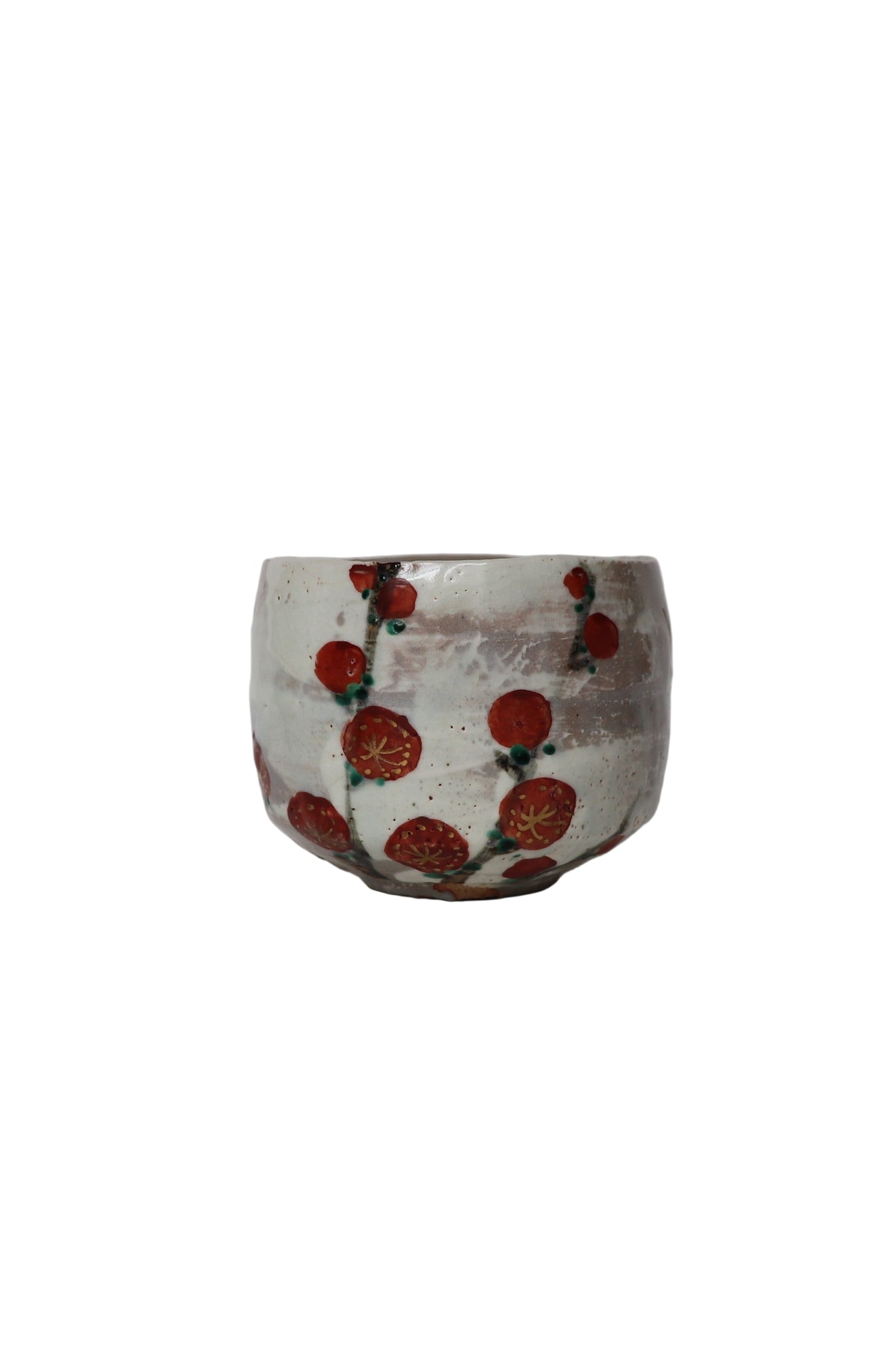
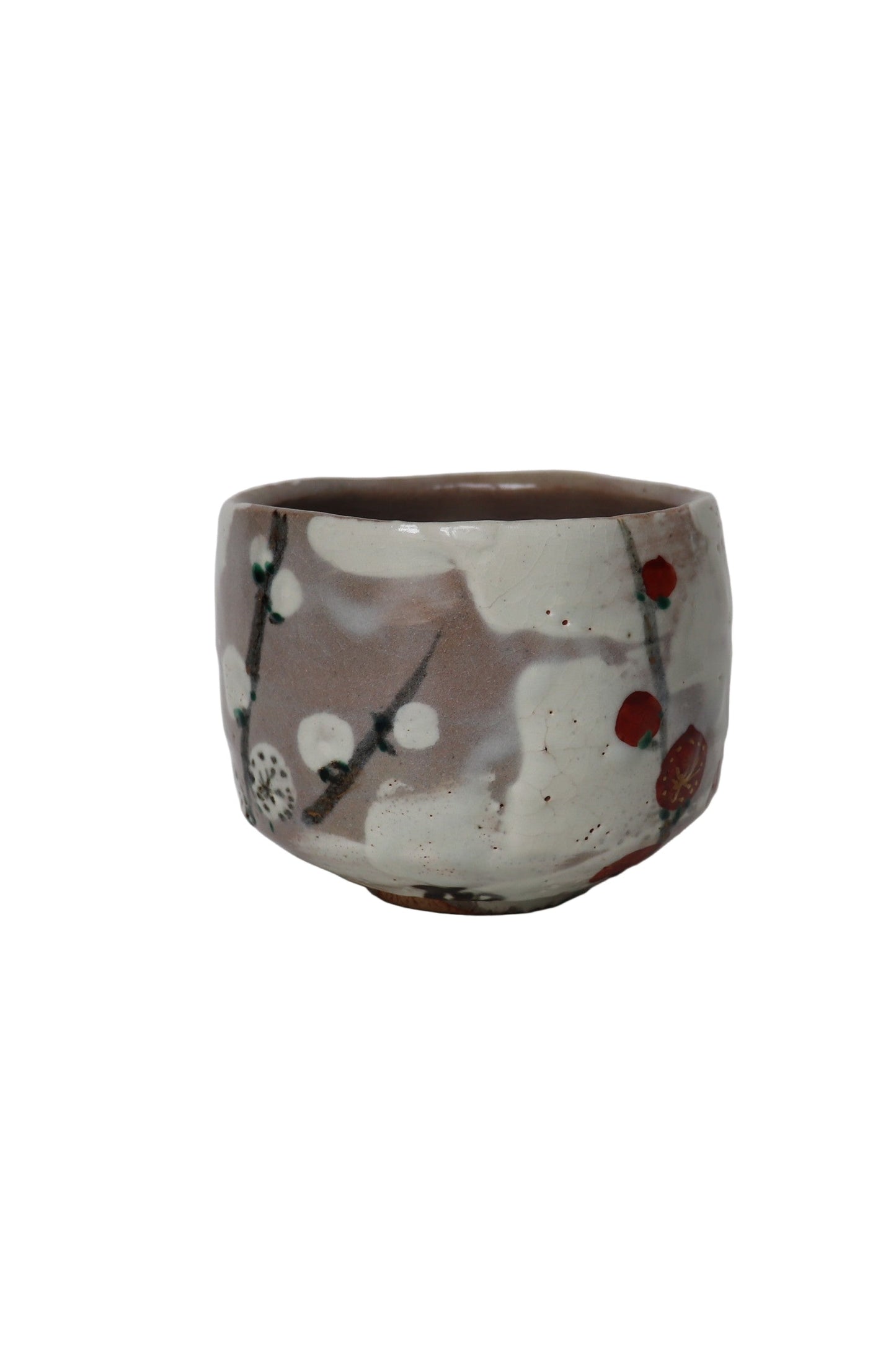
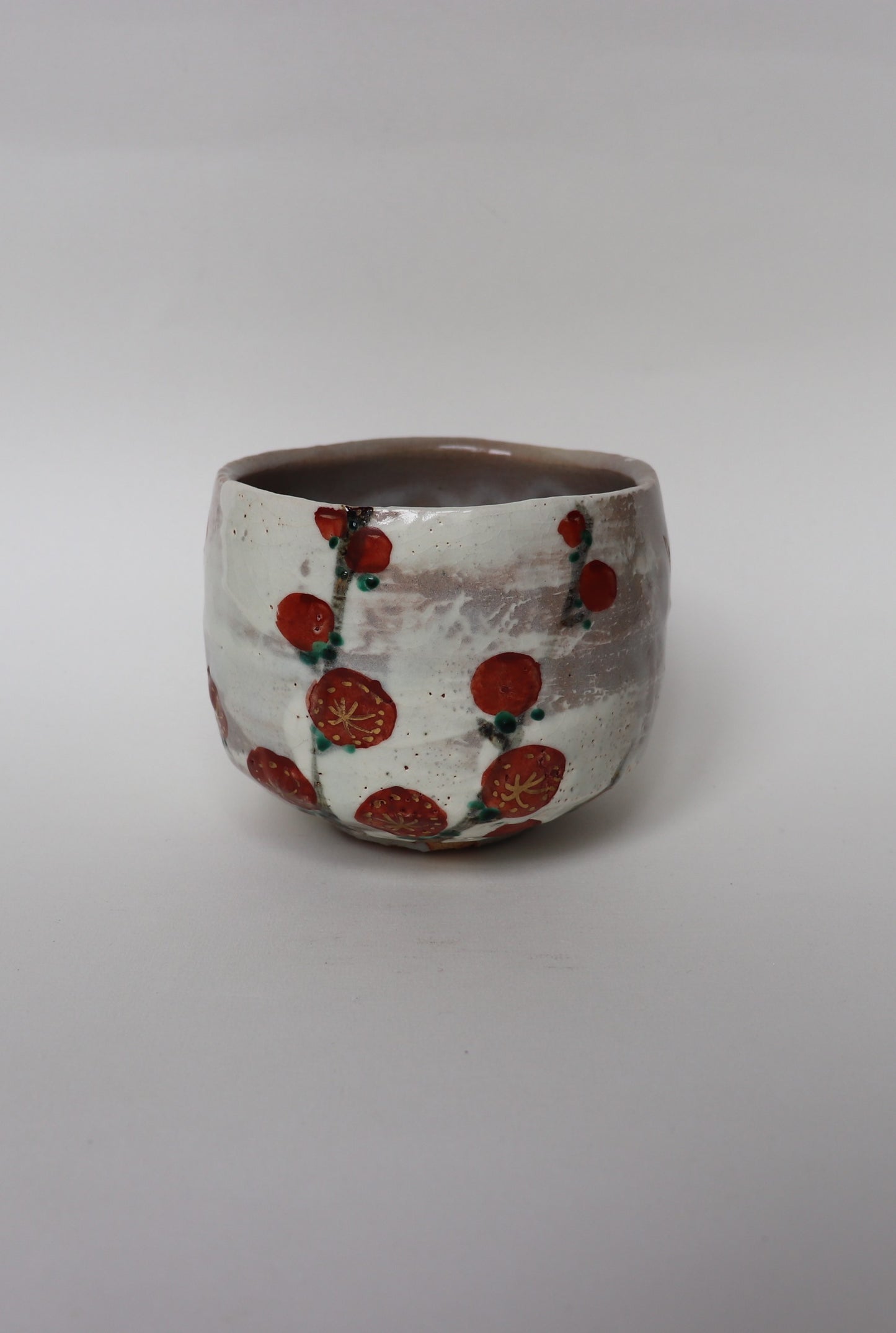
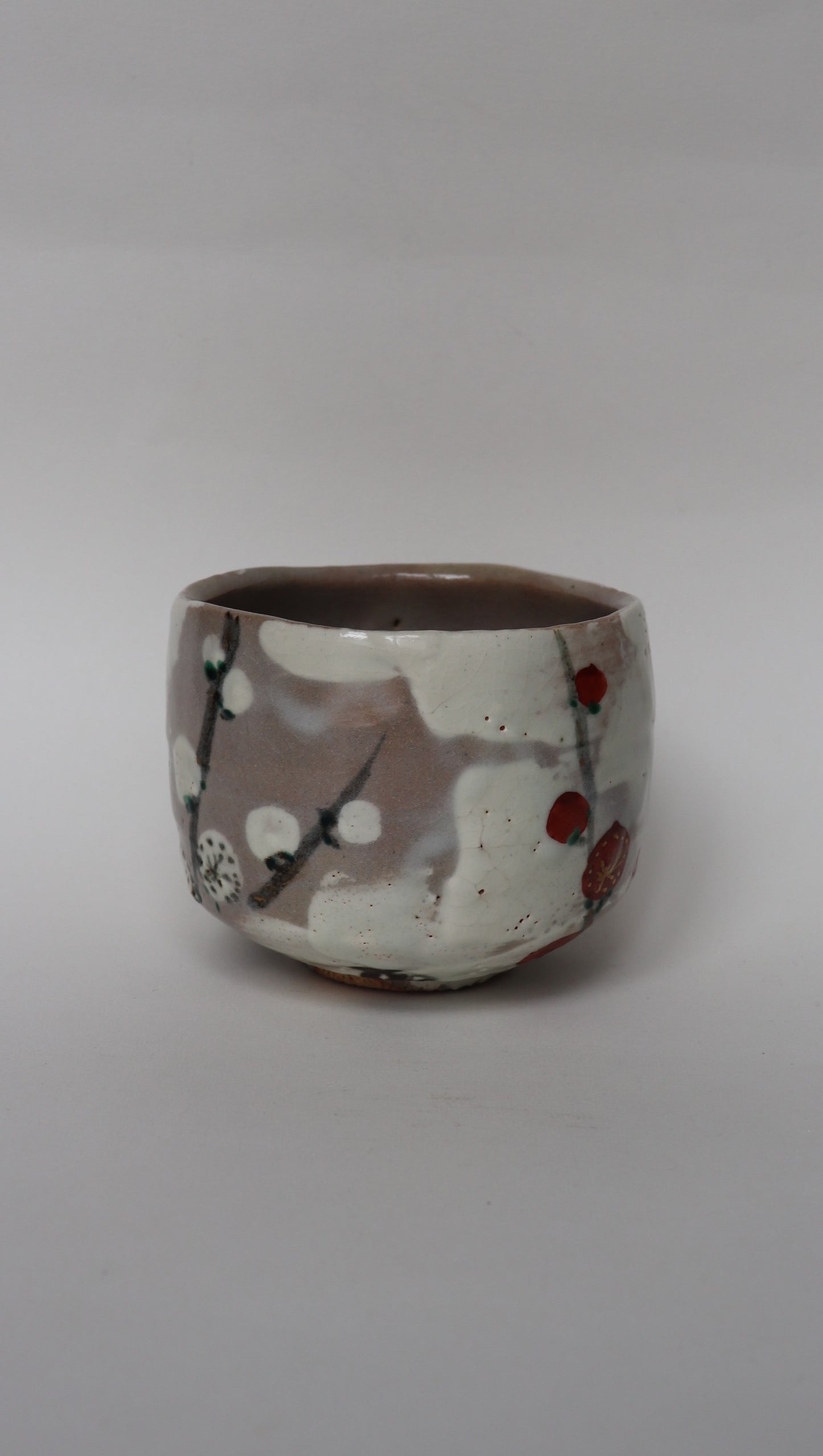
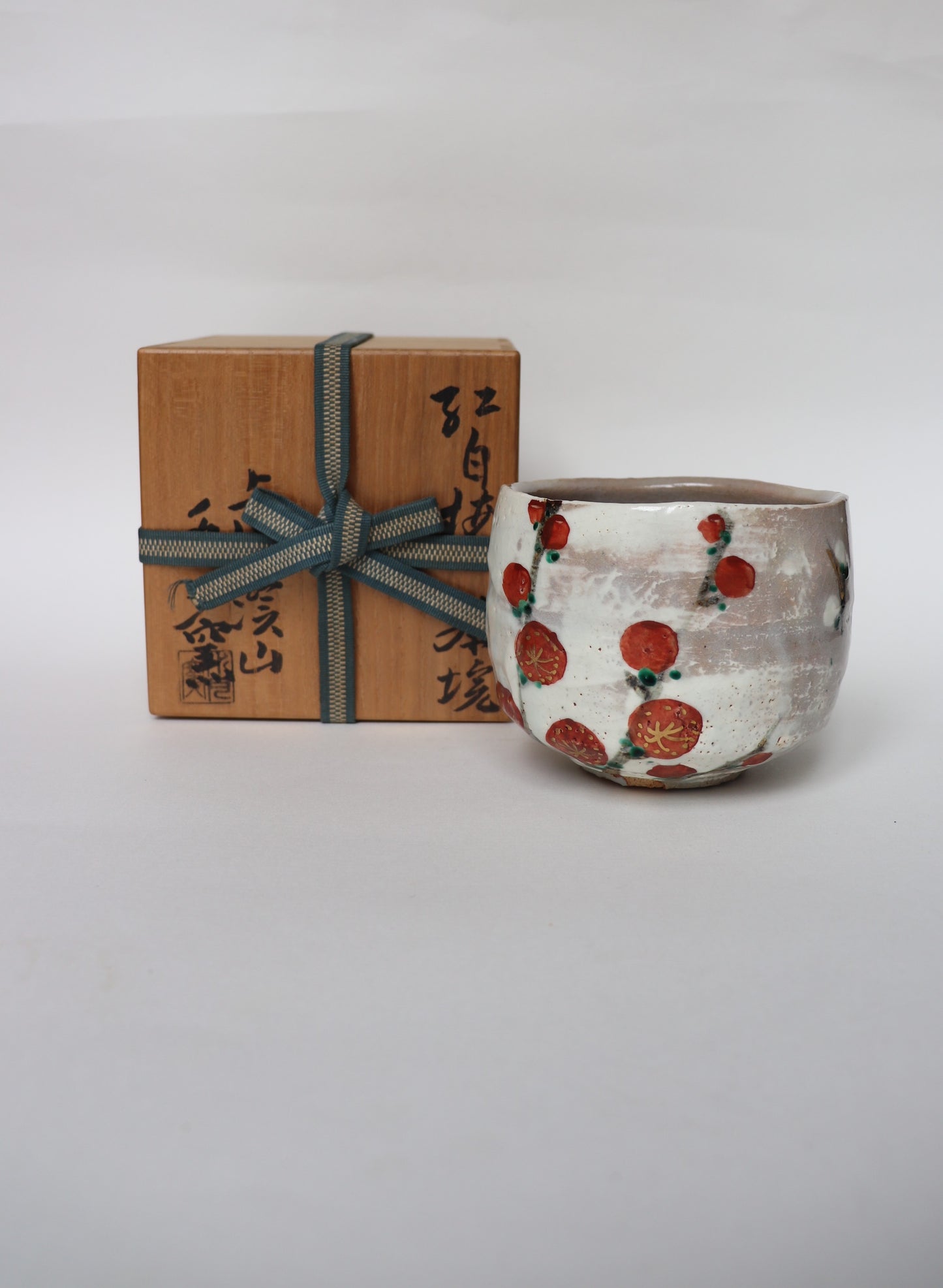
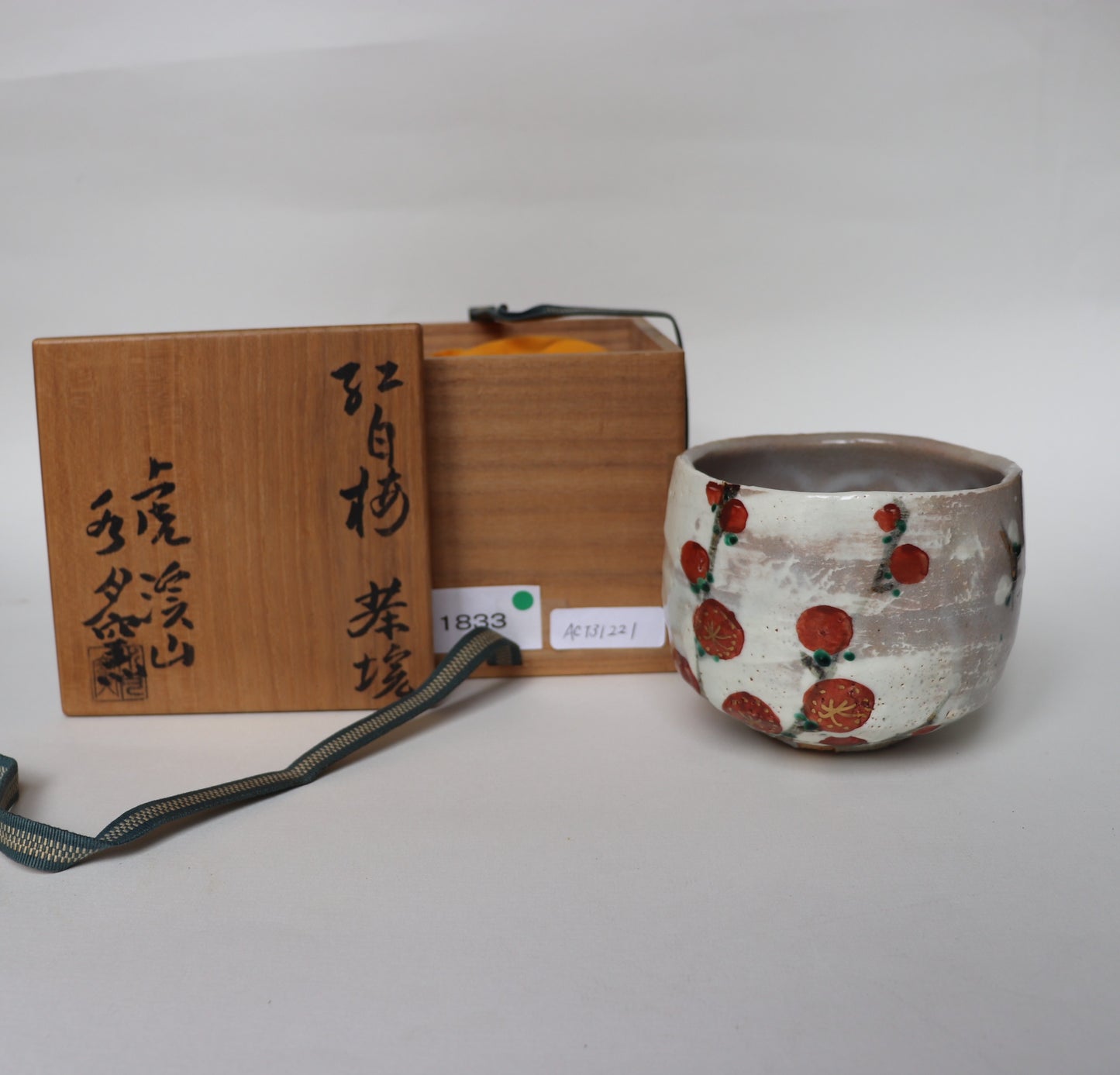
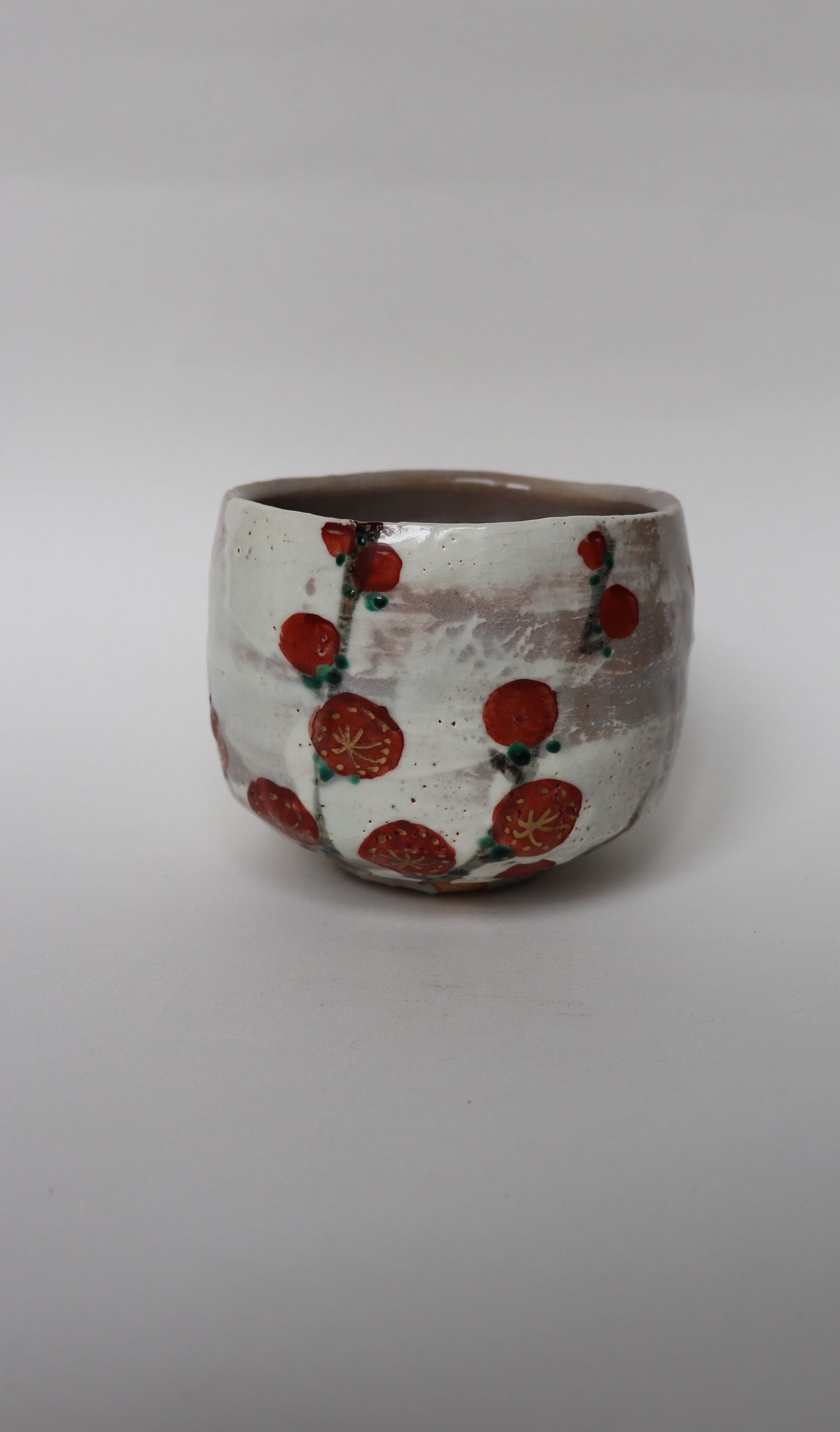
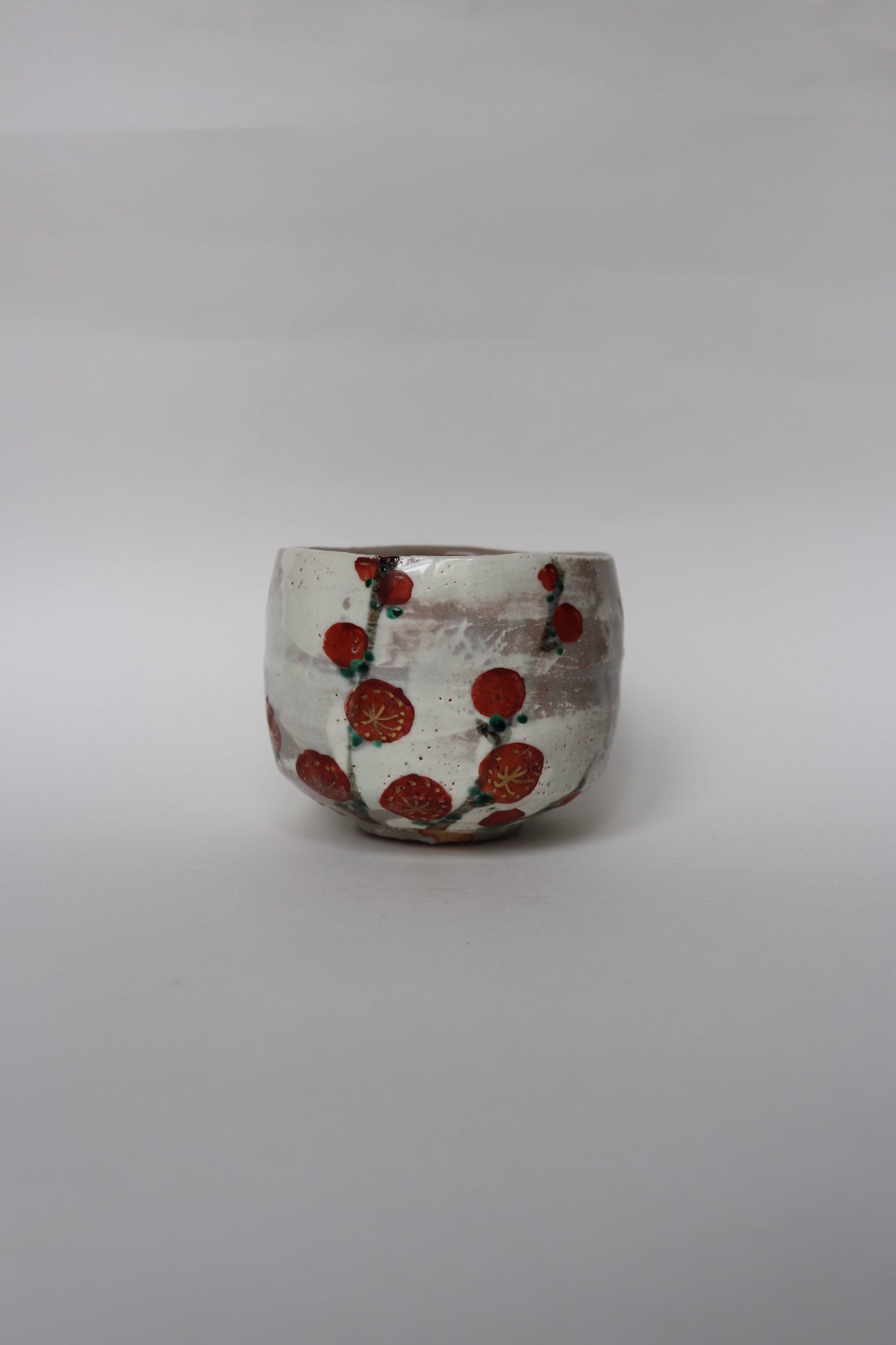
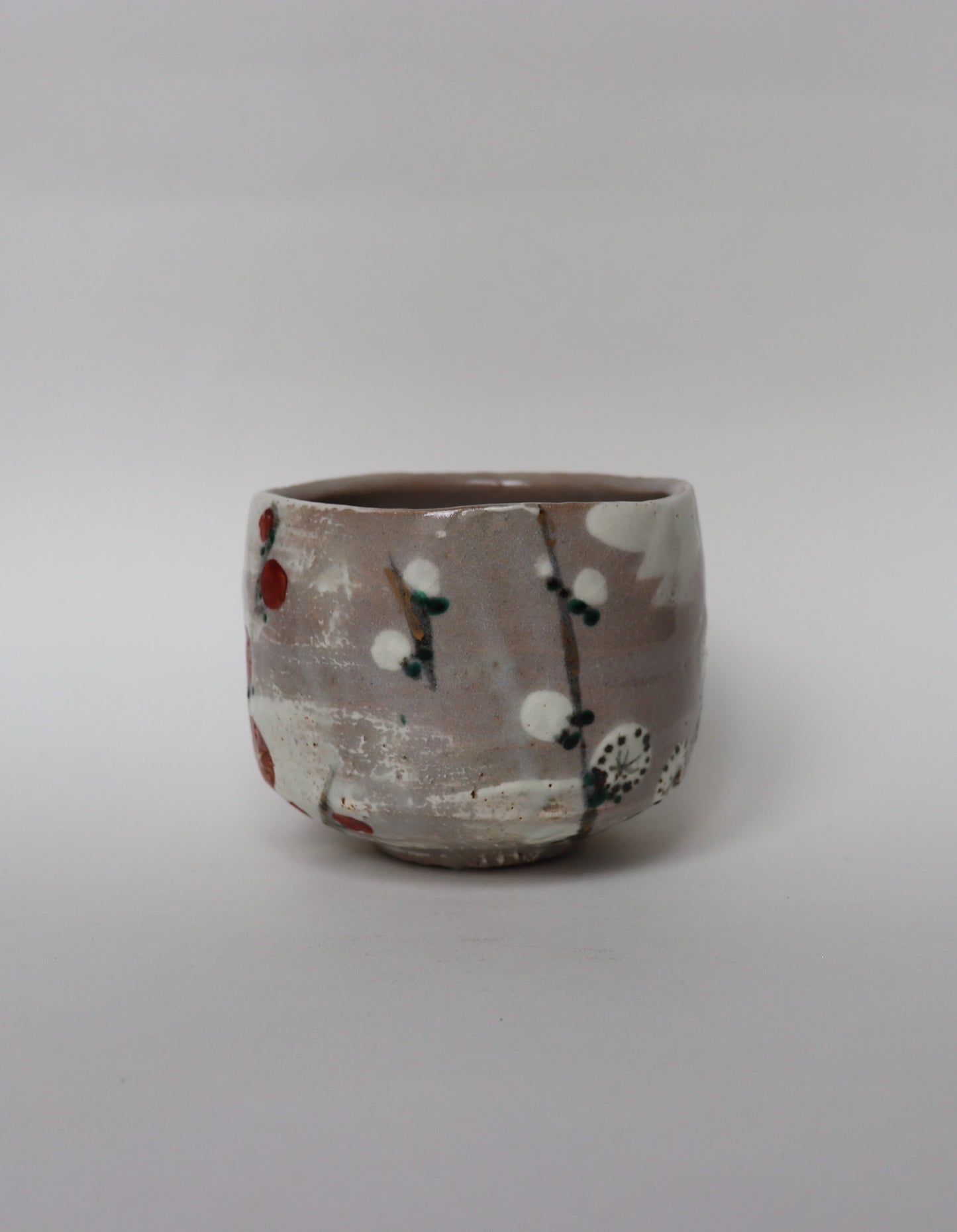
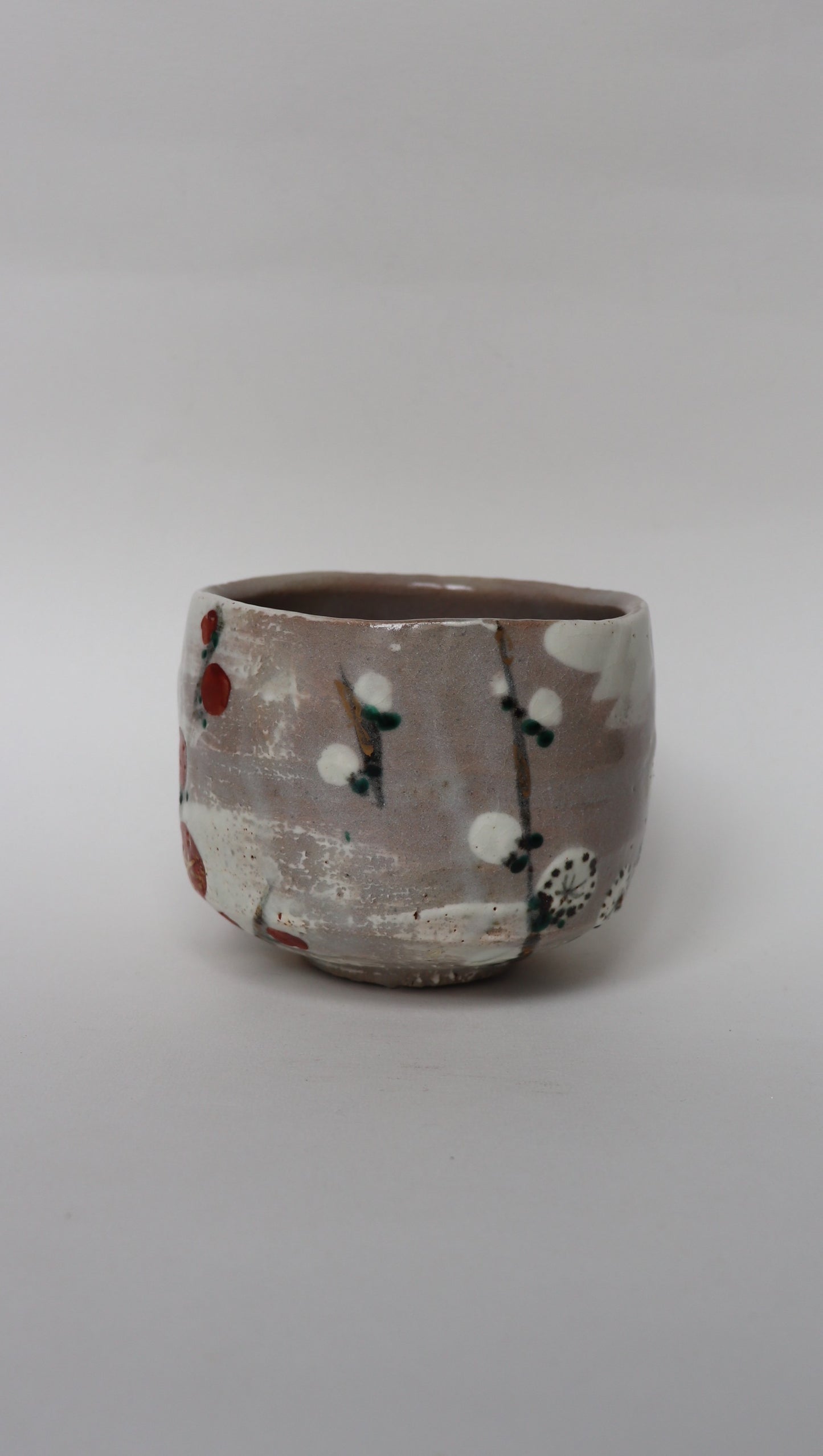
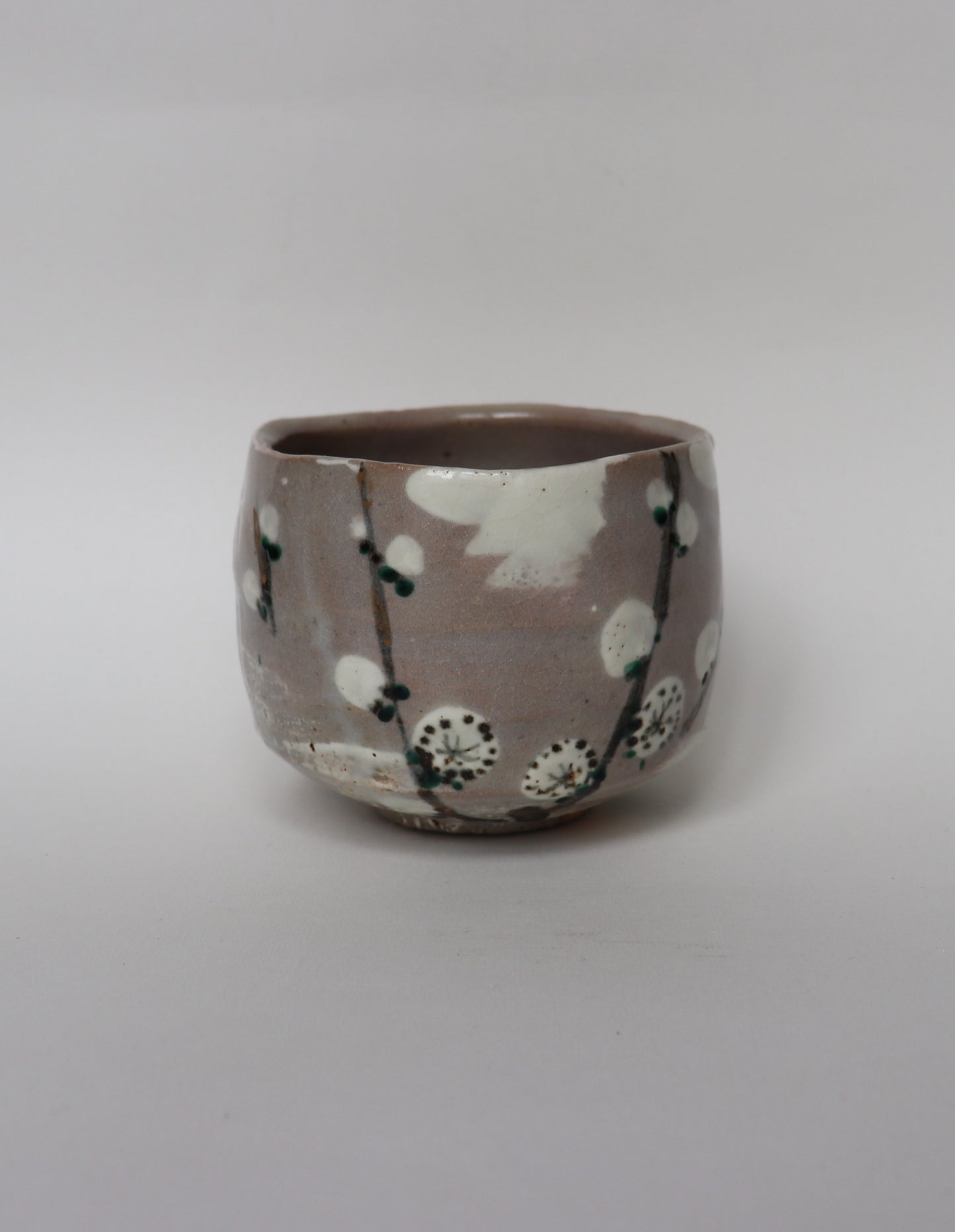
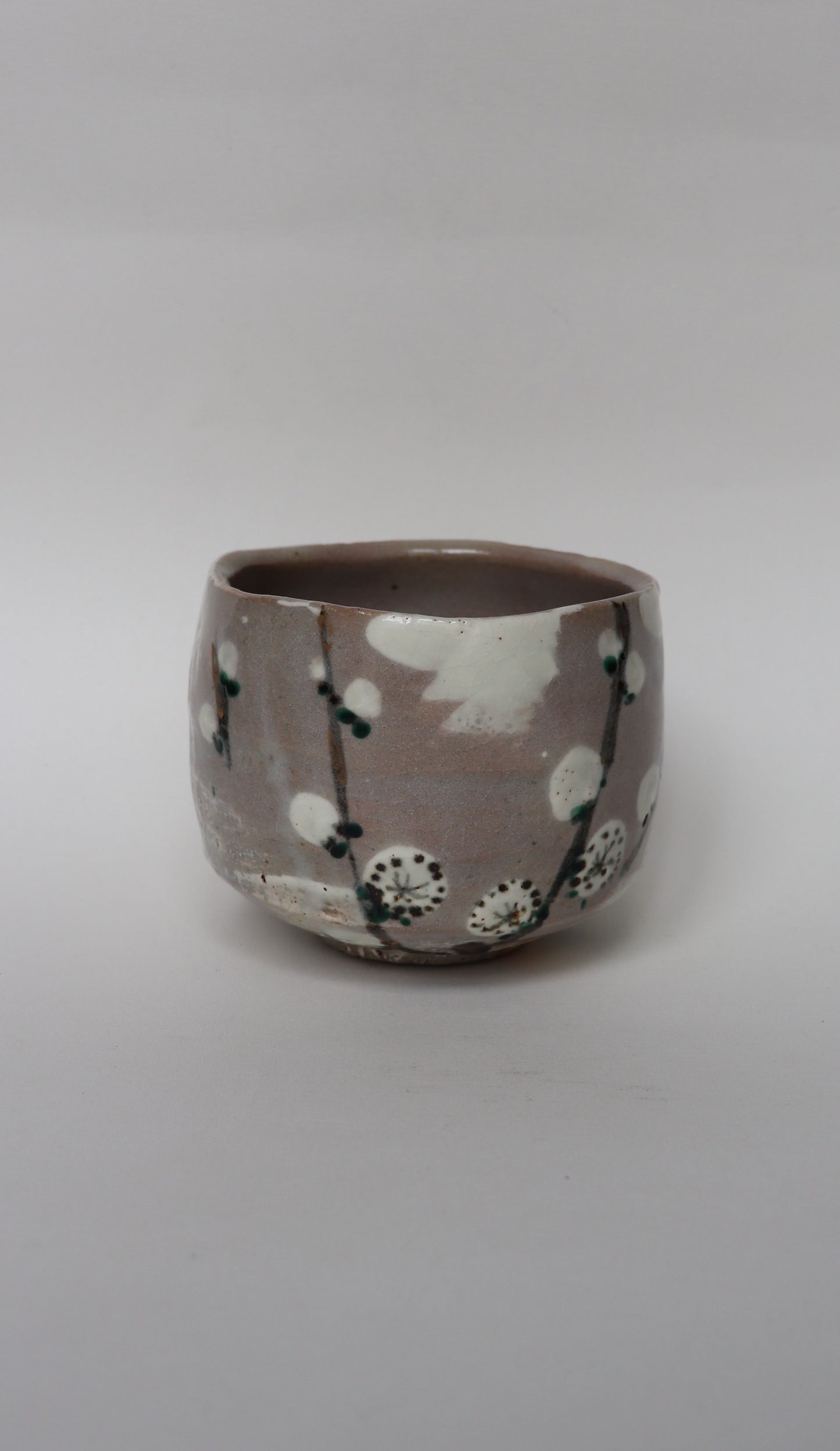
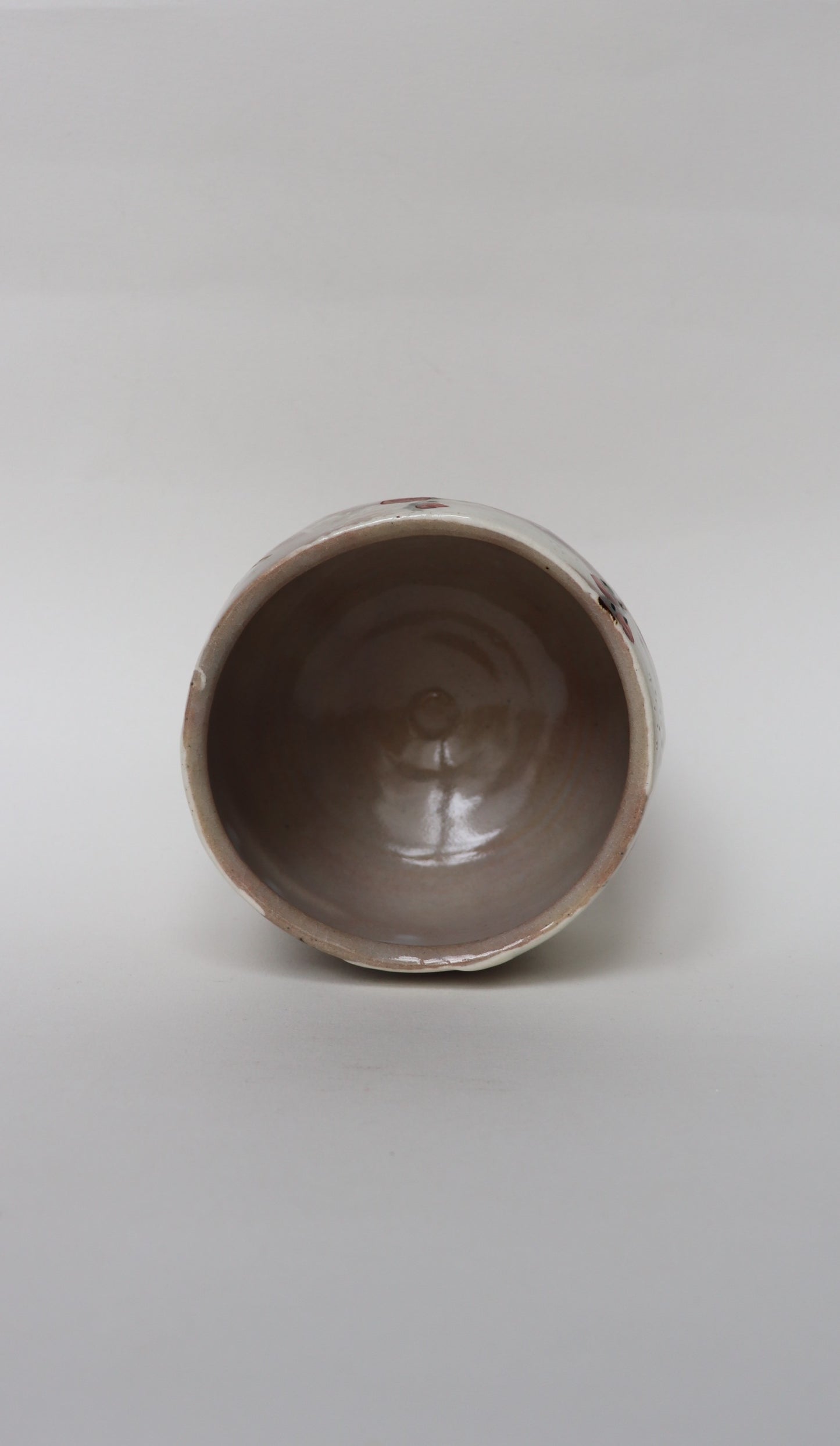
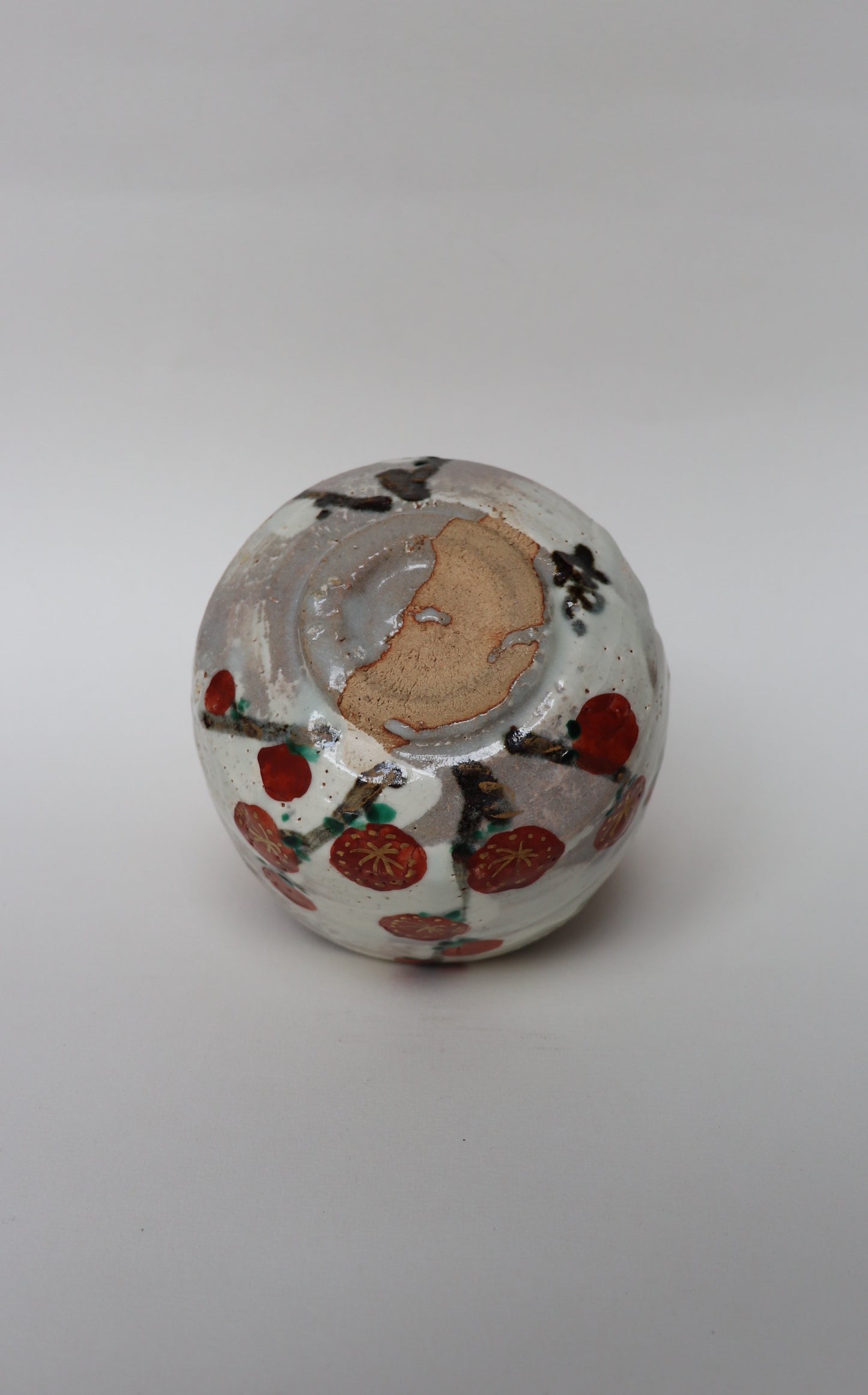
Bol à matcha Shino – Branches de prunier rouges et blanches
Arakawa Toyozō — Four Kokei-gama (Torakei-gama), Mino-yaki
This bowl matcha This piece is a work by master potter Arakawa Toyozō (1894-1985), a major figure in modern Japanese ceramics and a Living National Treasure for his expertise in Shino and Seto-guro techniques. Born in Gifu Prefecture, Arakawa dedicated his life to rediscovering and reviving Momoyama-era ceramics, bringing back the Mino-yaki tradition and establishing his own kiln in Kokei-gama, Tajimi.
His career was marked by a decisive encounter with Kitaōji Rosanjin, with whom he collaborated in the late 1920s. In 1930, Arakawa revolutionized the history of Japanese ceramics by discovering, at Muta-hora in the Mino region, fragments of bowls decorated with bamboo (Shino Takenoe chawanThis discovery proved that the famous 16th-century Shino and Seto-guro ware, believed to have been produced in Seto, actually originated in Mino. He then dedicated himself to recreating the ancient firing methods, glazes, and clays, succeeding in reviving the spirit of the original Shino.
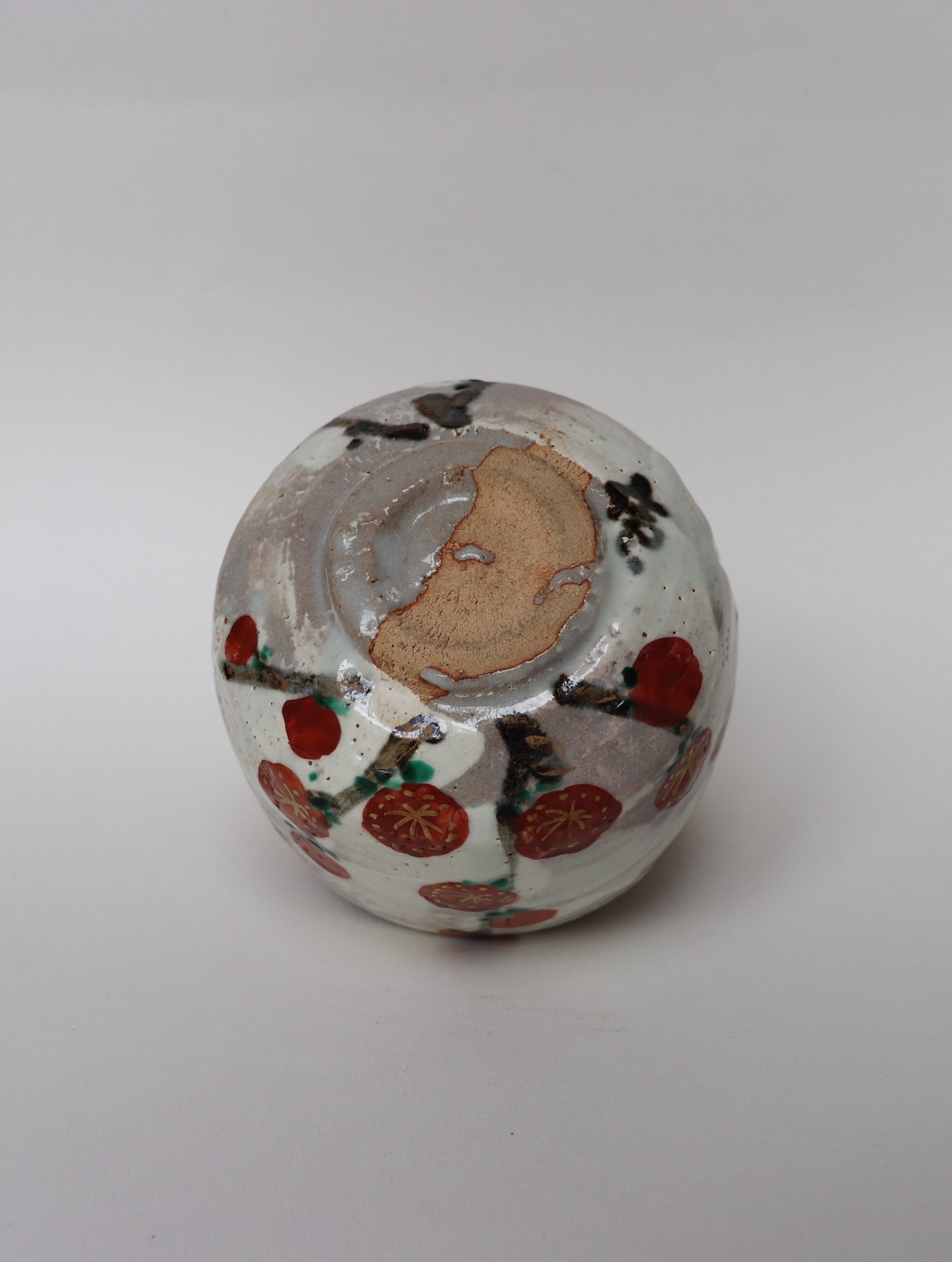
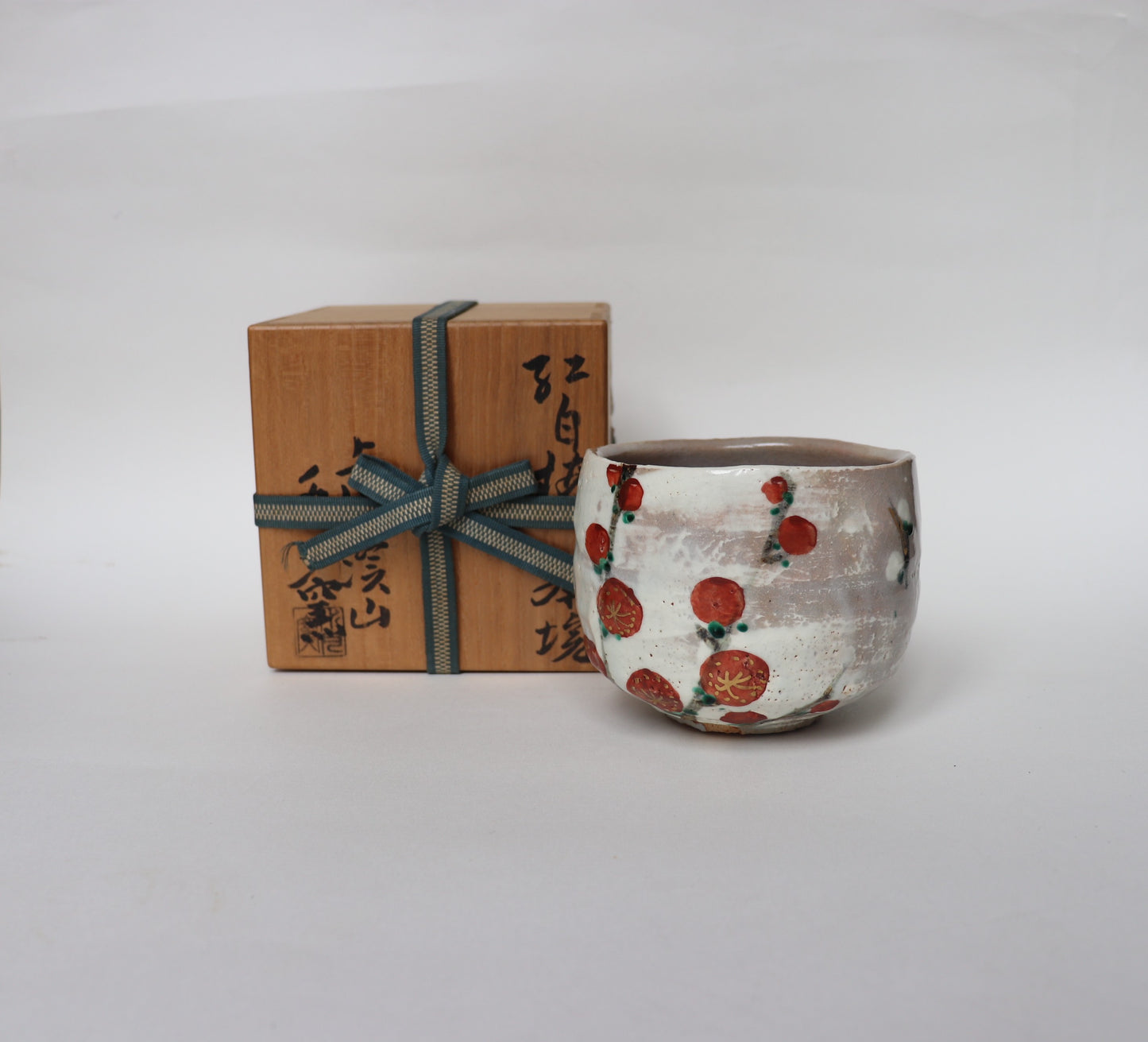
His work, known as "Arakawa Shino," is distinguished by a thick, soft paste, a slightly pinkish-white glaze, and a texture punctuated by small, natural cavities from the firing process. In this bowl, Arakawa depicted red and white plum branches—a motif called eda-ume (枝梅), a symbol of endurance and renewal. These flowers, which can bloom before the snow melts, evoke the beauty of the Japanese seasons and the coexistence of cold and life's renewal. This type of decoration, which appeared during the Momoyama period, was often featured in fabrics and ceremonial objects, where the combination of snow white and plum red expressed purity and vitality.
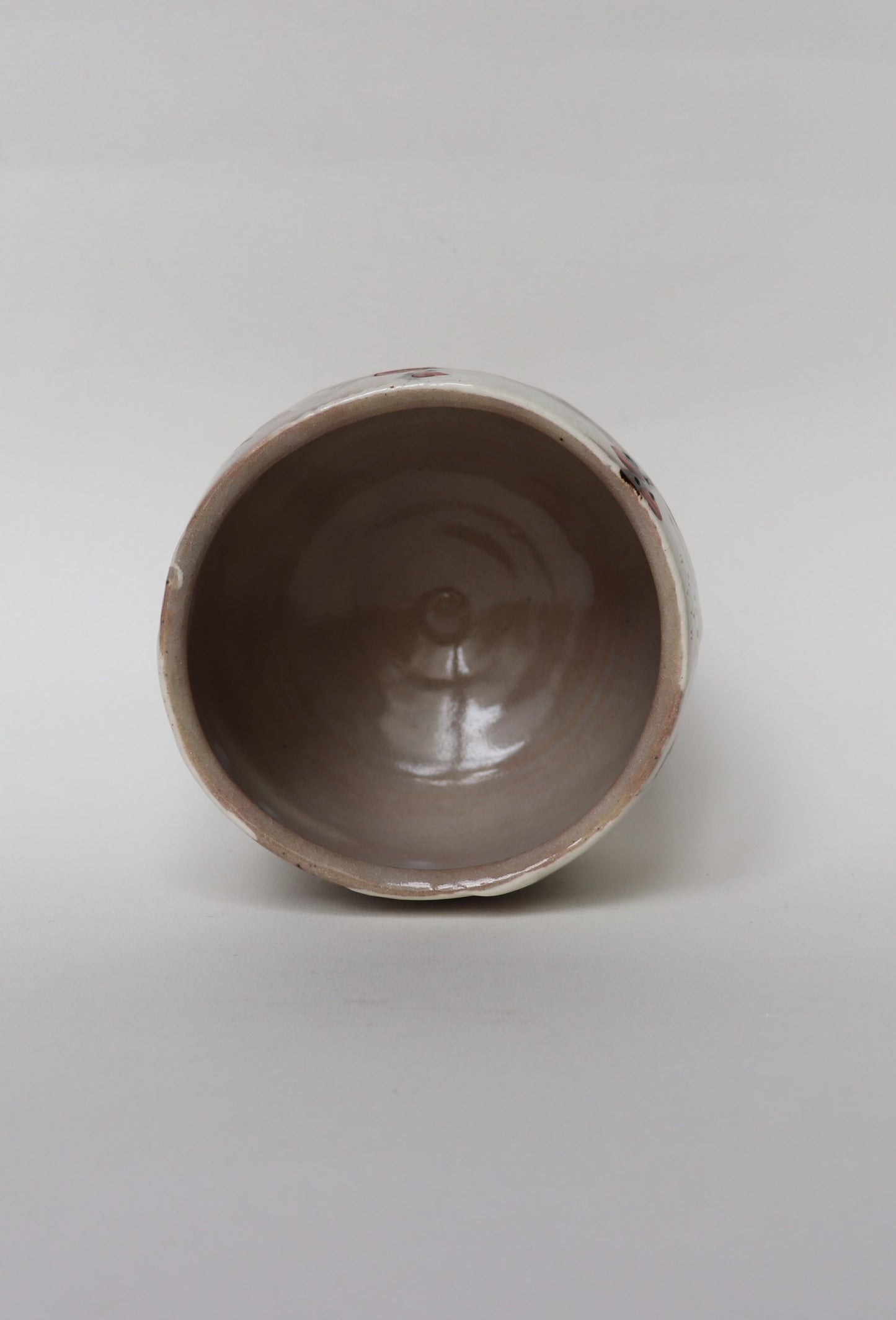
Arakawa's Shino combines a deliberately simple, round form with an atmosphere of warmth and depth. Each bowl reveals the passage of fire and hand, in a quest for authenticity characteristic of the wabi-sabi. Arakawa Toyozō thus made Shino not only a technique, but an aesthetic and spiritual path — an art of silence and light.
Matcha Bowl Shino – Red and White Plum Branches
Arakawa Toyozō — Kokei Kiln, Mino-yaki
This matcha bowl was crafted by Arakawa Toyozō (1894-1985), one of Japan’s most celebrated potters and a Living National Treasure recognized for his mastery of Shino and Seto-guro ceramics. Born in Gifu Prefecture, Arakawa devoted his life to reviving the ceramic traditions of the Momoyama period. Establishing his kiln at Kokei-gama in Tajimi, he restored the authentic techniques of Mino ware, combining scholarship, experimentation, and artistic intuition.
After working with Kitaōji Rosanjin in the late 1920s, Arakawa made a groundbreaking discovery in 1930 at the ancient kiln site of Muta-hora, where he unearthed shards of Shino ware depicting bamboo motifs. This finding overturned the accepted history of Japanese ceramics, proving that the famous Shino and Seto-guro wares of the 16th century had been made not in Seto, but in Mino. His subsequent research and kiln experiments succeeded in reviving the lost Shino technique, giving rise to a distinct modern tradition known as “Arakawa Shino.”
This bowl features a design of red and white plum blossoms (eda-ume), symbolizing perseverance and renewal — flowers that bloom even while snow remains on the ground. Such motifs, popular during the Momoyama period, combine the white of snow and the red of plum petals to express the unique beauty of the Japanese seasons.
Arakawa’s Shino bowls are noted for their soft white feldspathic glaze, gentle curves, and subtle warmth. The form, hand-built and thickly glazed, captures the traces of fire and touch, embodying the spirit of wabi-sabi — simplicity, imperfection, and depth. Through his art, Arakawa Toyozō transformed Shino into a living expression of harmony between earth, flame, and the quiet poetry of tea.
Blog posts
-

New Year in the world of Japanese tea
Au Japon, on dit que le nouvel an du thé a lieu en novembre et non le 1er janvier. Cela s’explique par la saisonnalité des feuilles de thé et plus...
New Year in the world of Japanese tea
Au Japon, on dit que le nouvel an du thé a lieu en novembre et non le 1er janvier. Cela s’explique par la saisonnalité des feuilles de thé et plus...
-

Maintenance and cleaning of tea utensils and ac...
Our advice for maintaining your kyusu, your chasen and other tea utensils and accessories.
Maintenance and cleaning of tea utensils and ac...
Our advice for maintaining your kyusu, your chasen and other tea utensils and accessories.
-

The birth of the Maruyama Nori house in 1854 in...
The birth of the Maruyama Nori house in 1854 in the world historical context If we can imagine that 1854 was now almost 200 years ago, it can be...
The birth of the Maruyama Nori house in 1854 in...
The birth of the Maruyama Nori house in 1854 in the world historical context If we can imagine that 1854 was now almost 200 years ago, it can be...


