


Bol à matcha / Kyoto Gozangama Hayashi Tanyu Akae
Bol à matcha / Kyoto Gozangama Hayashi Tanyu Akae
Quantity
Couldn't load pickup availability
Please note, this item is a unique piece.
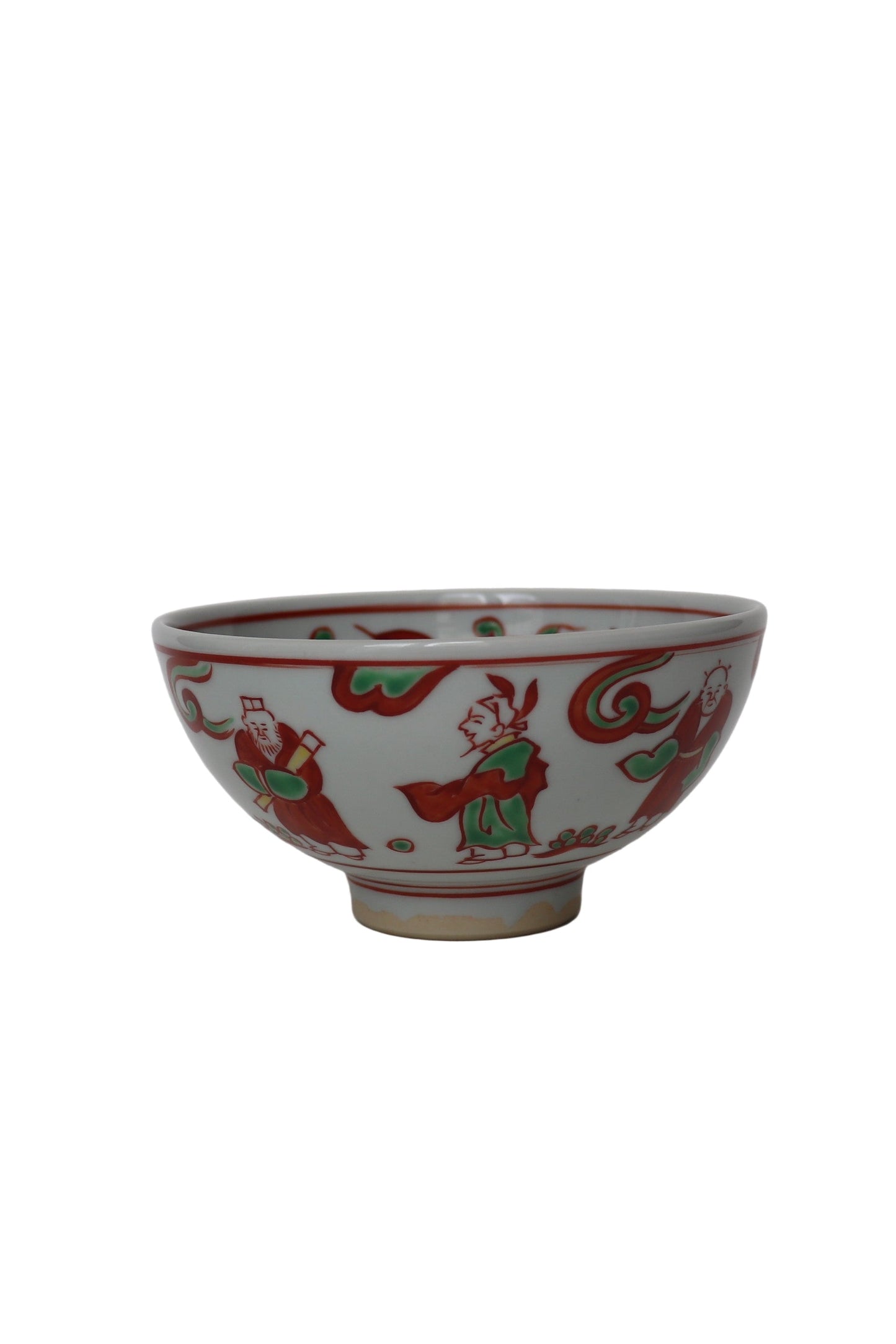
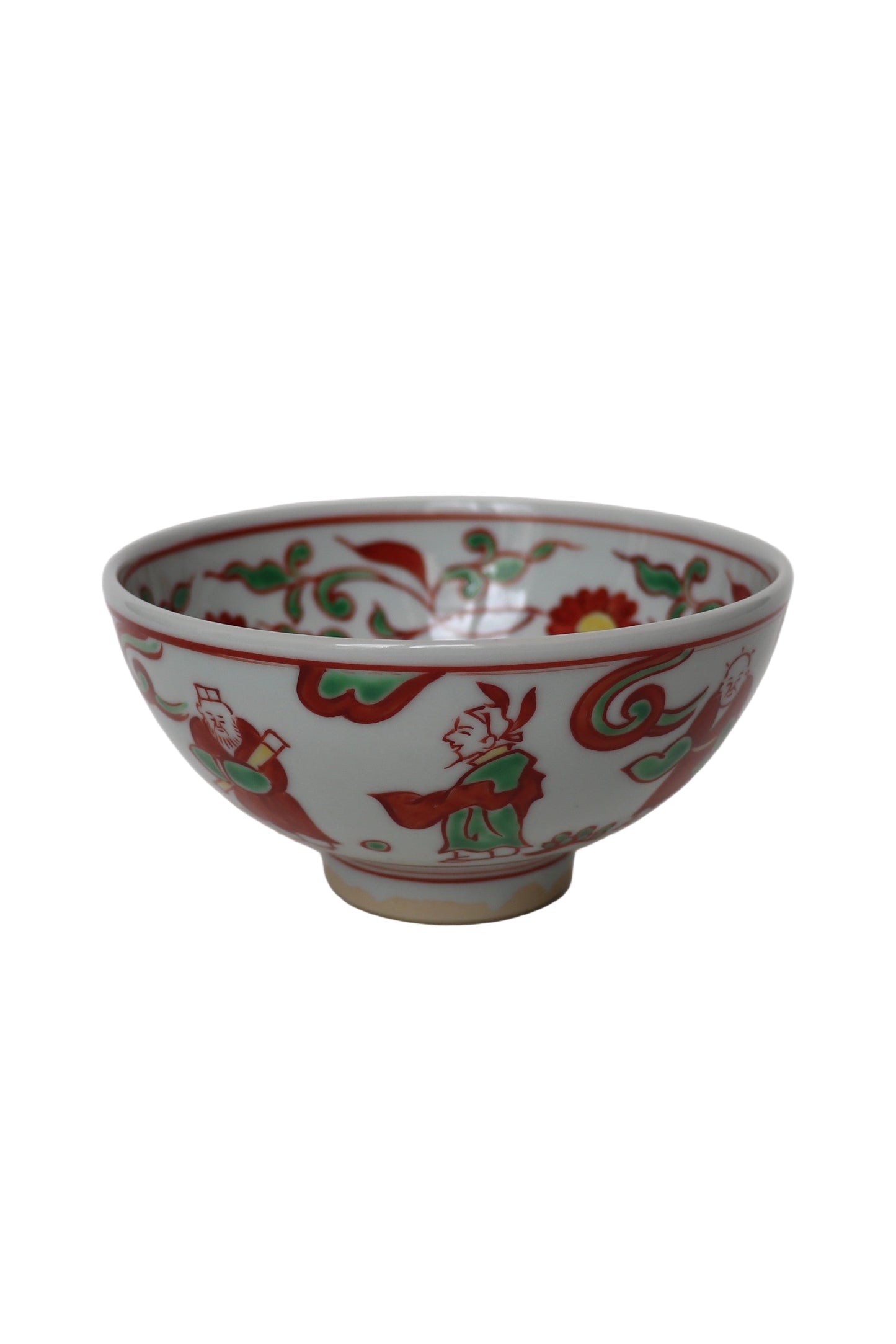
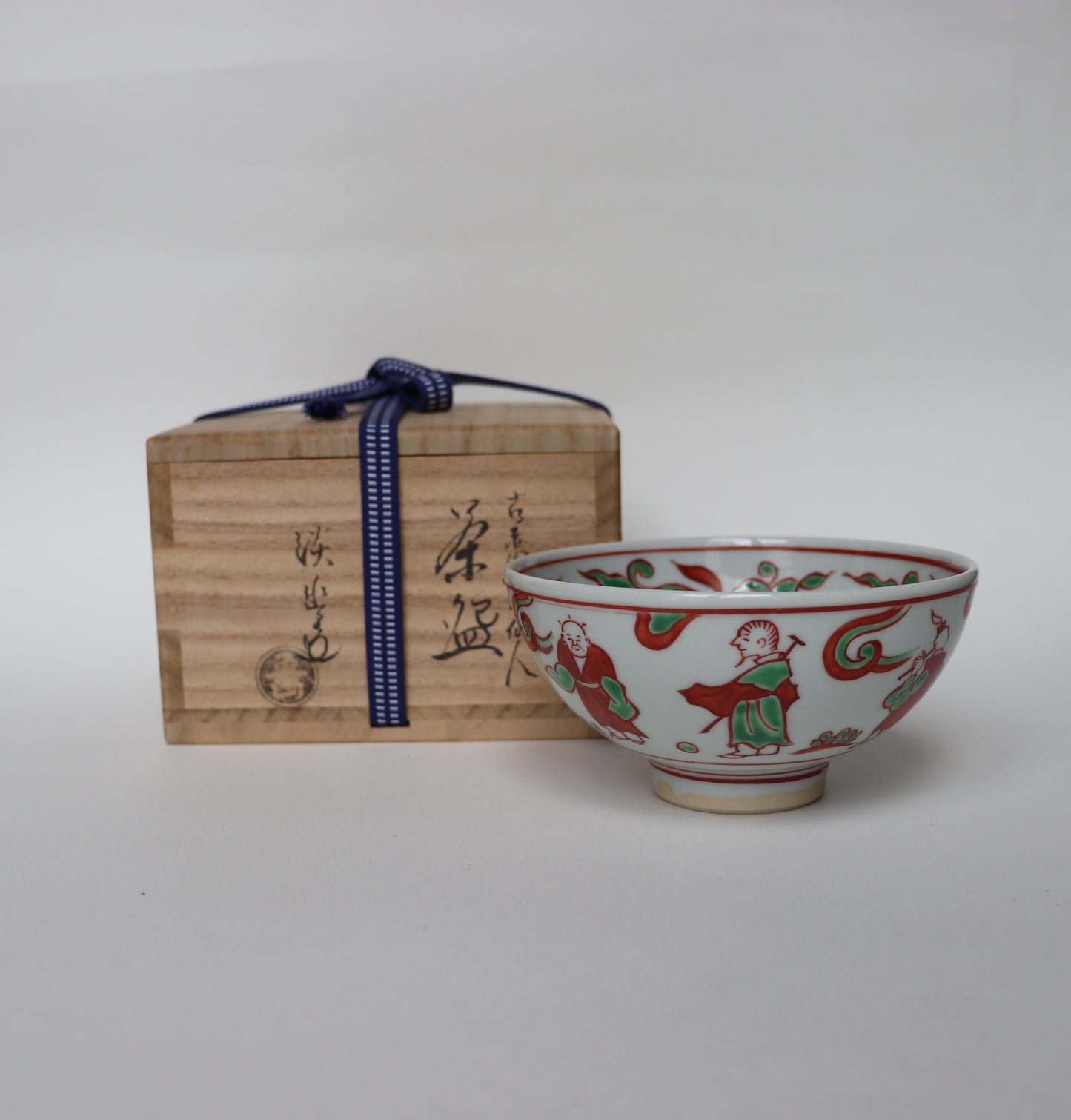
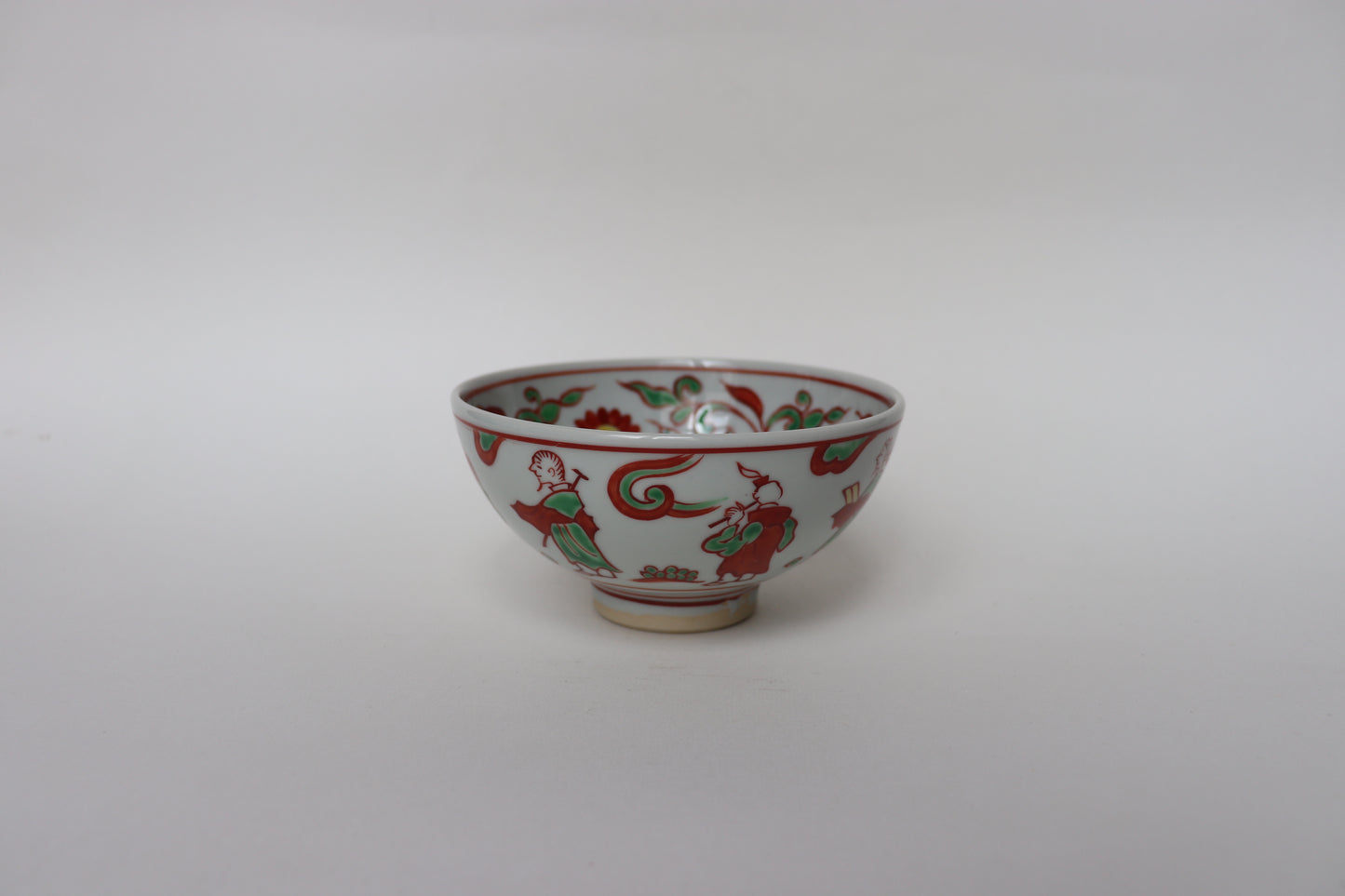
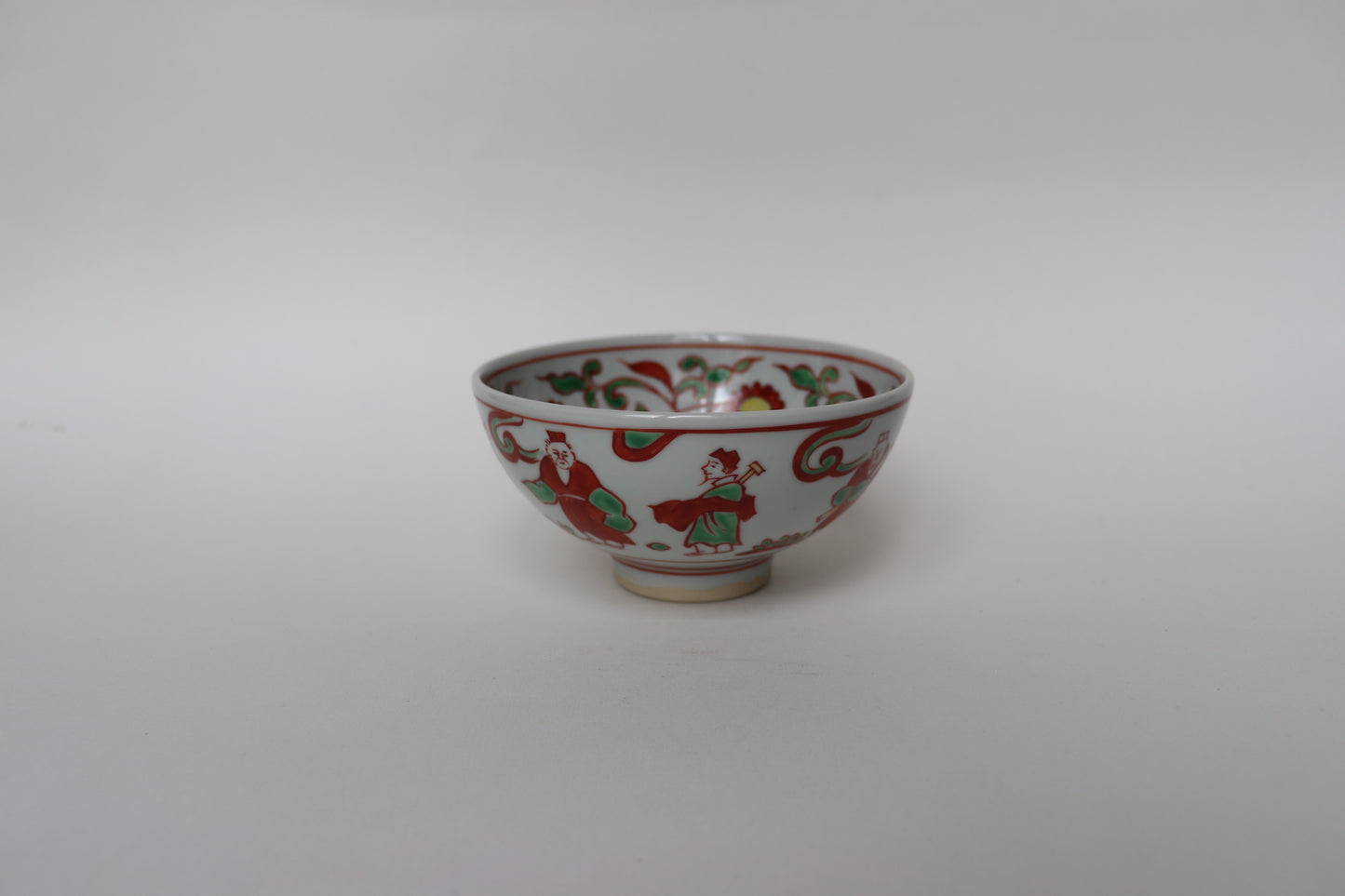
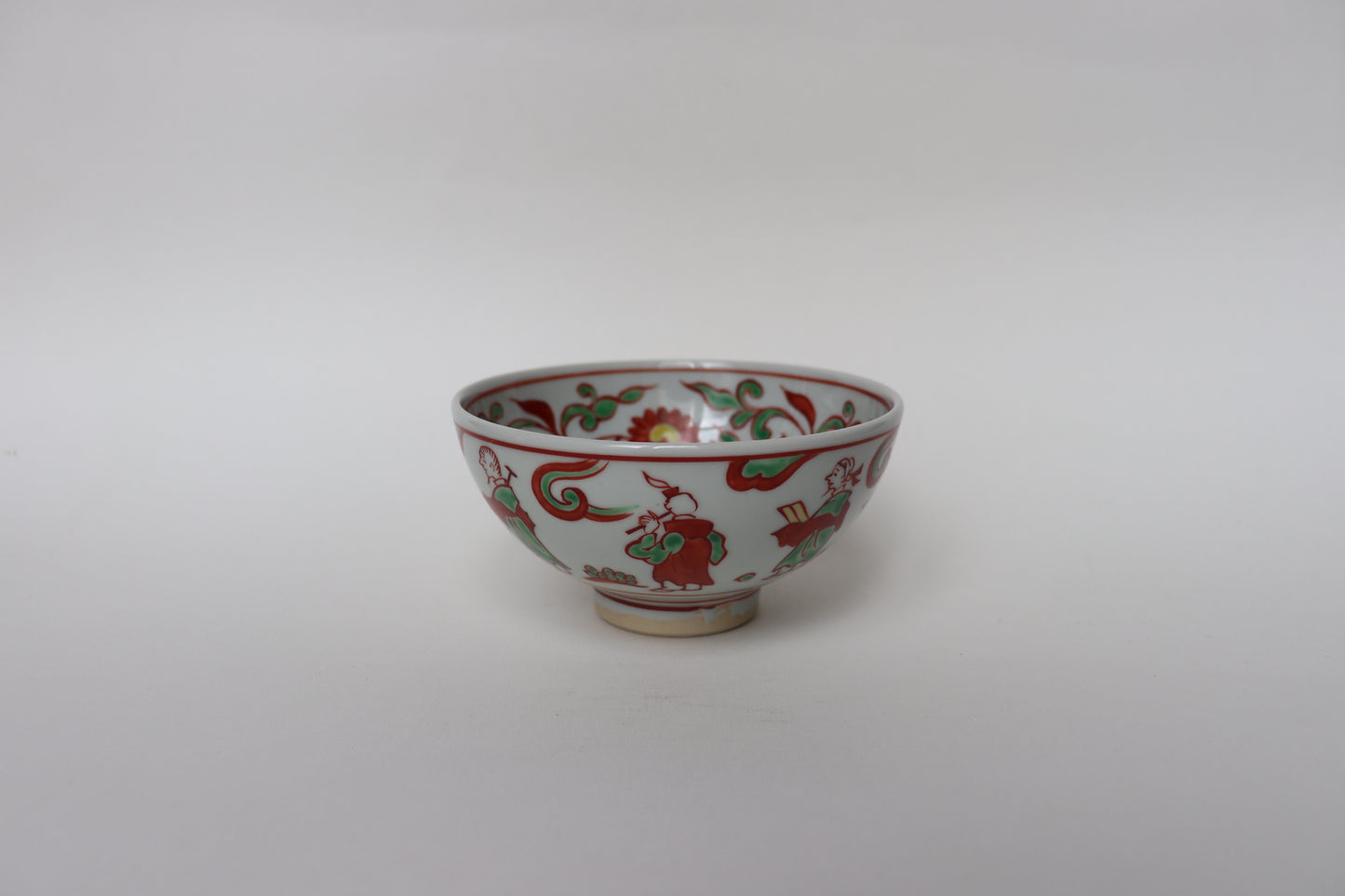
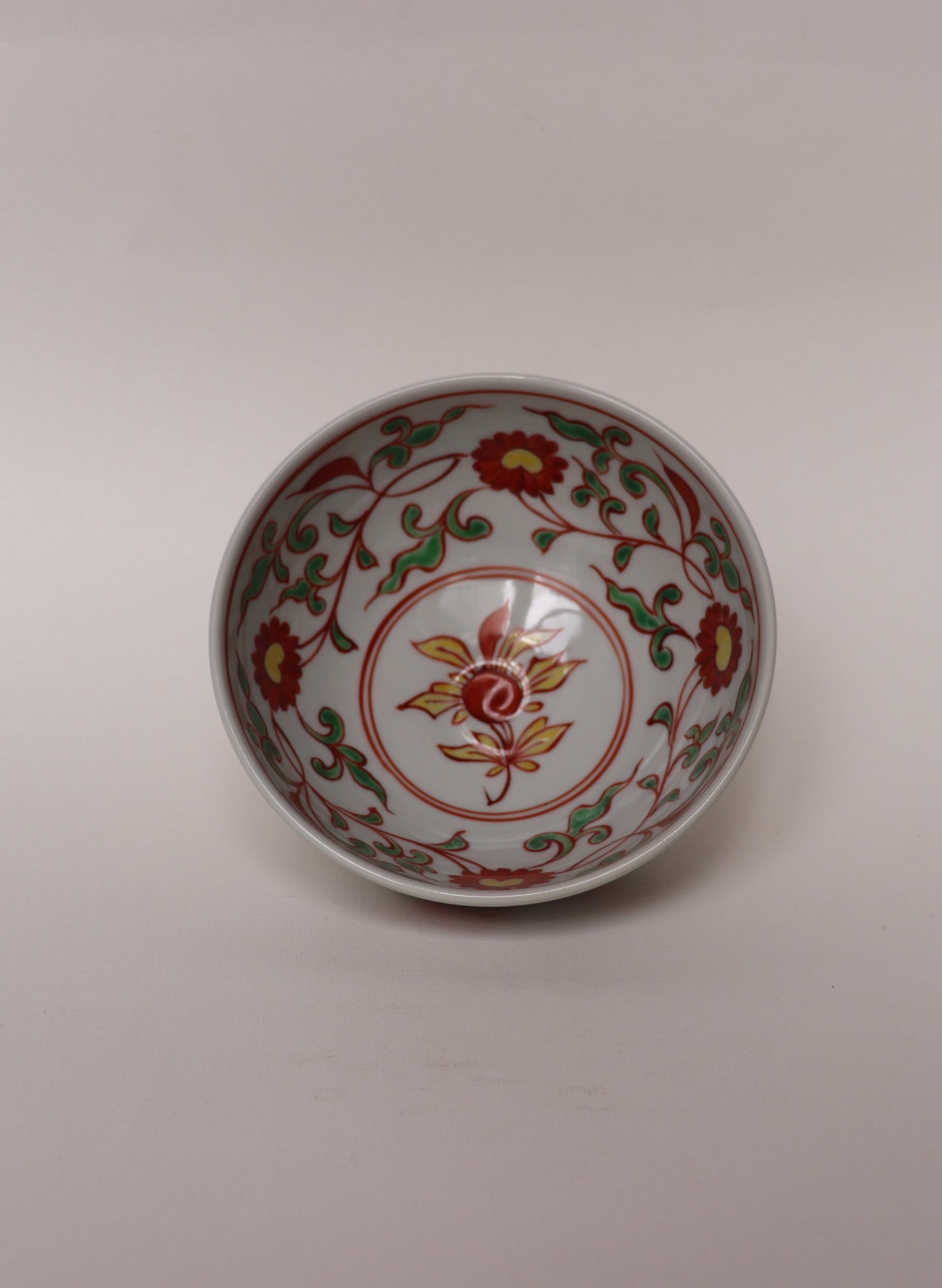
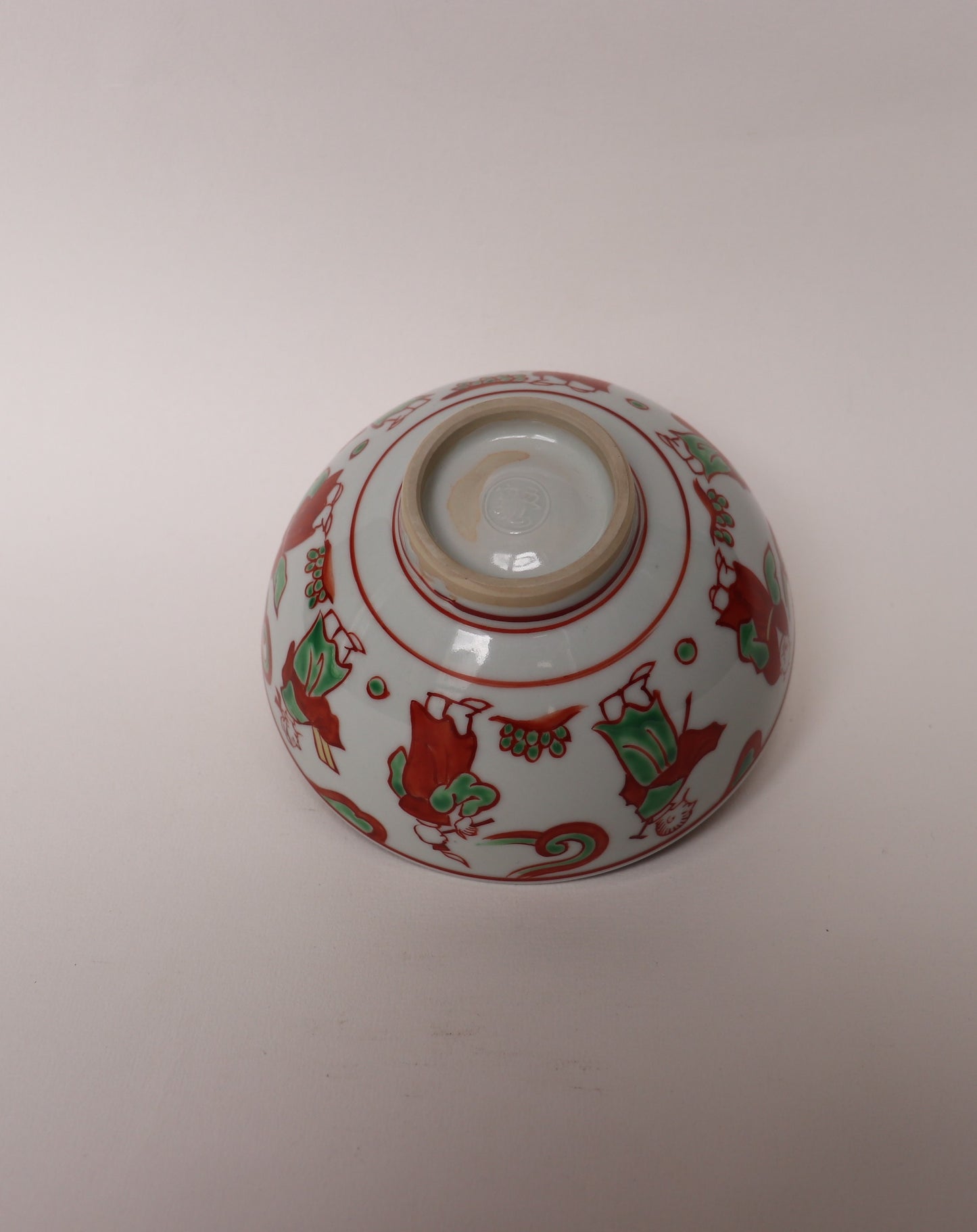
Bowl matcha The Eight Immortals
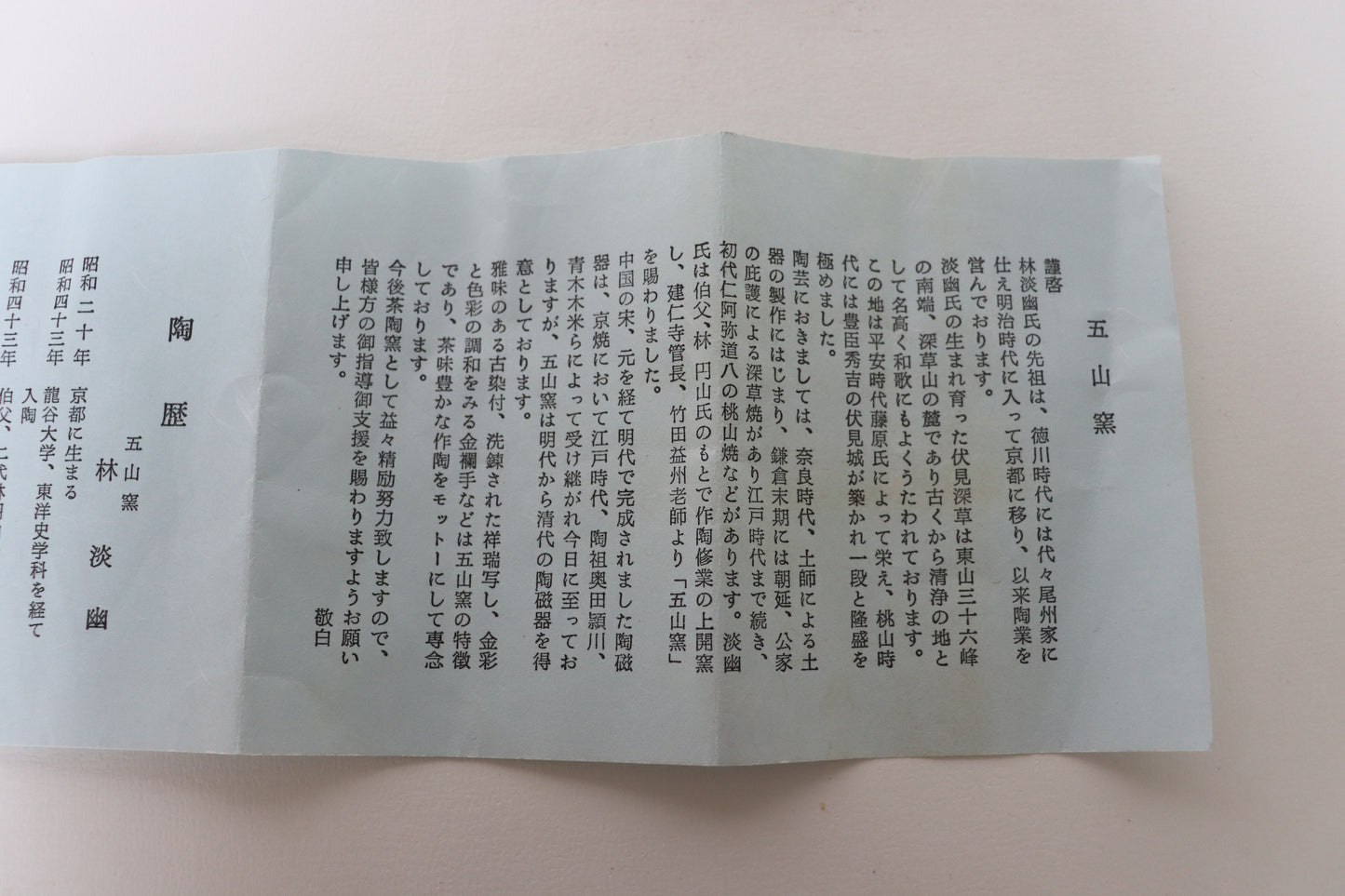
Four Gozan — Hayashi Tanyū
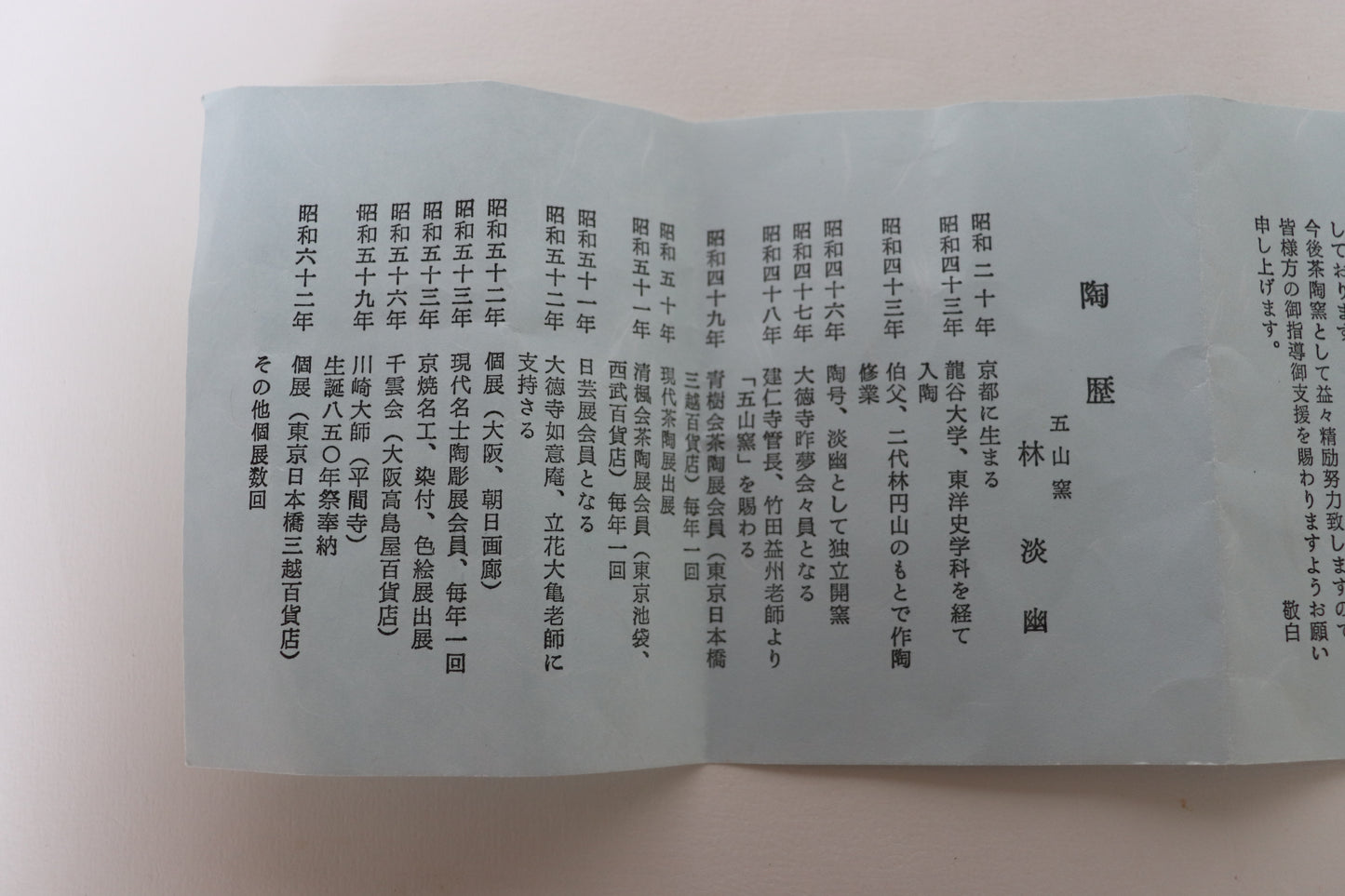
This bowl matcha This piece is a creation of Hayashi Tanyū, a ceramicist at the Gozan kiln, located in Fushimi Inari, Kyoto. Born in 1945, he studied Oriental history at Ryūkoku University before dedicating himself to ceramics under the tutelage of his uncle, Hayashi Enzan II. In 1971, he founded his own workshop and adopted the artist name "Tanyū." Two years later, the abbot of Kennin-ji Temple, Master Takeda Mokushū, named the kiln "Gozan," in homage to the five great Zen temples of Kyoto. Renowned for his mastery of the art of form and Kyō-yaki glazes, he has distinguished himself in the creation of tea vessels, mizusashi (traditional Japanese tea bowls), and ceremonial objects.
The decoration on this bowl depicts the Eight Immortals (八仙 / hassen), iconic figures of Chinese Taoism. Each embodies a human virtue—wisdom, perseverance, generosity, and longevity—and symbolizes the diverse paths to enlightenment. Their image, very popular in China, is often compared to the Seven Lucky Gods of Japan. The Eight Immortals frequently appear on painted scrolls, porcelain, and ritual objects as symbols of good fortune and happiness.
In this bowl, the theme of the Eight Immortals is interpreted through refined Iroé painting: the figures, dressed in colorful tunics, stand out against the ivory glaze, surrounded by stylized clouds and waves. The composition illustrates the idea of a passage between the world of men and that of the immortal sages, in an atmosphere of peace and lightness characteristic of the Way of Tea.
Matcha Bowl The Eight Immortals
Gozan Kiln — Hayashi Tanyū
This matcha bowl was crafted by Hayashi Tanyū, master potter of the Gozan Kiln, located within the grounds of Fushimi Inari Shrine in Kyoto. Born in 1945, Tanyū studied East Asian history at Ryūkoku University before apprenticing under his uncle, the second-generation Hayashi Enzan. In 1971, he established his own studio and adopted the artist name “Tanyū.” Two years later, Kennin-ji’s head priest, Master Takeda Mokushū, granted him the kiln name “Gozan,” after Kyoto’s five great Zen temples. Hayashi Tanyū is renowned for his refined Kyōyaki / Kiyomizuyaki tea ceramics, particularly mizusashi, chaire, and ceremonial vessels.
The design depicts the Eight Immortals (Hassen), legendary Taoist sages representing wisdom, perseverance, benevolence, and long life. Widely revered throughout Chinese culture and comparable to Japan’s Seven Lucky Gods, they are celebrated figures in painting and porcelain, embodying happiness and good fortune.
On this bowl, the Eight Immortals are portrayed through exquisite Iroé overglaze painting. Each figure, dressed in vividly colored robes, appears amidst stylized clouds and waves, suggesting a realm between the human world and that of the enlightened. The composition conveys serenity, transcendence, and the timeless harmony sought through tea.
Blog posts
-

New Year in the world of Japanese tea
In Japan, they say that the New Year of Tea takes place in November and not on January 1st. This is explained by the seasonality of the tea leaves and...
New Year in the world of Japanese tea
In Japan, they say that the New Year of Tea takes place in November and not on January 1st. This is explained by the seasonality of the tea leaves and...
-

Maintenance and cleaning of tea utensils and ac...
Our advice for maintaining your kyusu, your chasen and other tea utensils and accessories.
Maintenance and cleaning of tea utensils and ac...
Our advice for maintaining your kyusu, your chasen and other tea utensils and accessories.
-

The birth of the Maruyama Nori house in 1854 in...
The birth of the Maruyama Nori house in 1854 in the world historical context If we can imagine that 1854 was now almost 200 years ago, it can be...
The birth of the Maruyama Nori house in 1854 in...
The birth of the Maruyama Nori house in 1854 in the world historical context If we can imagine that 1854 was now almost 200 years ago, it can be...


