

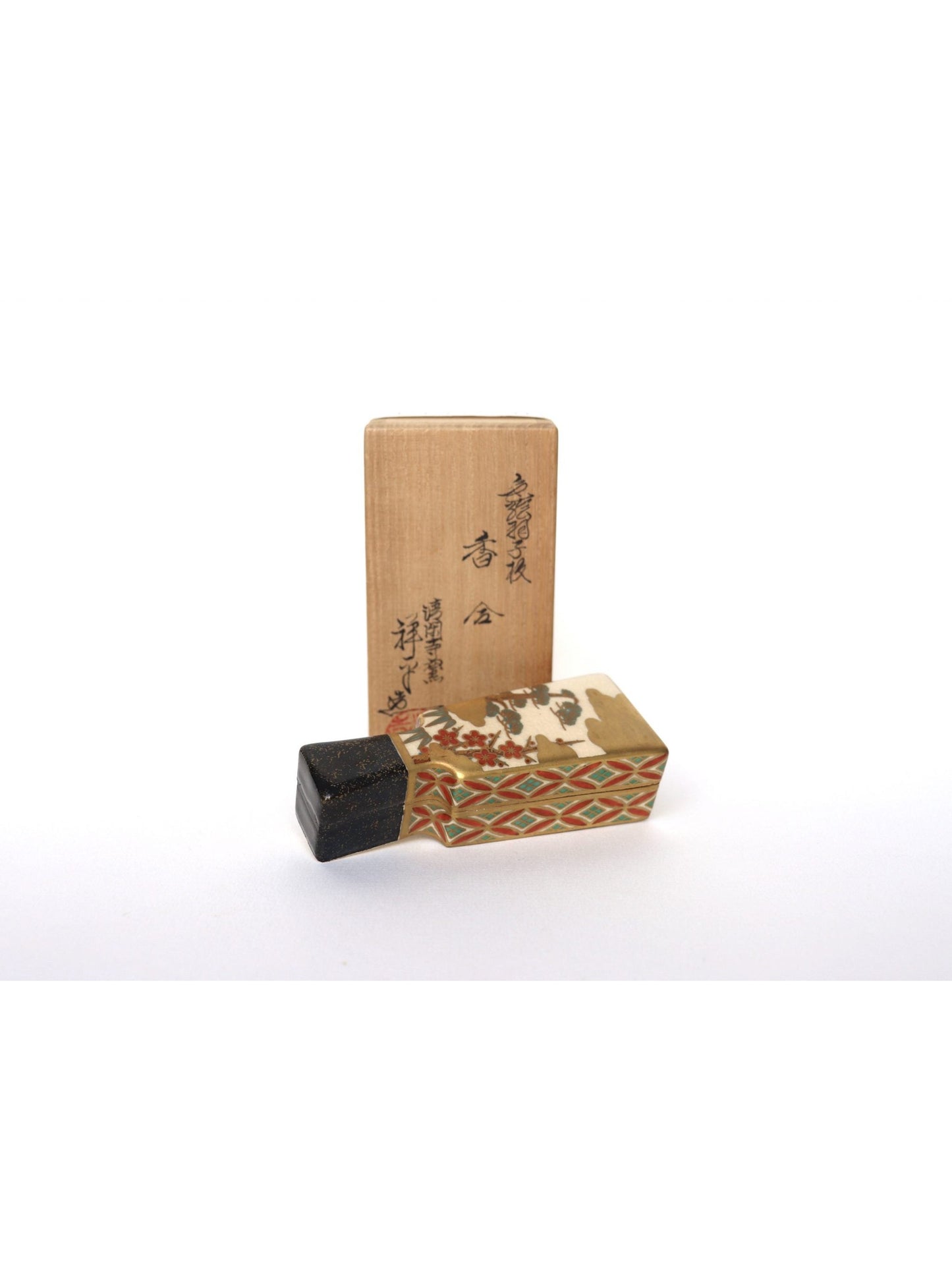
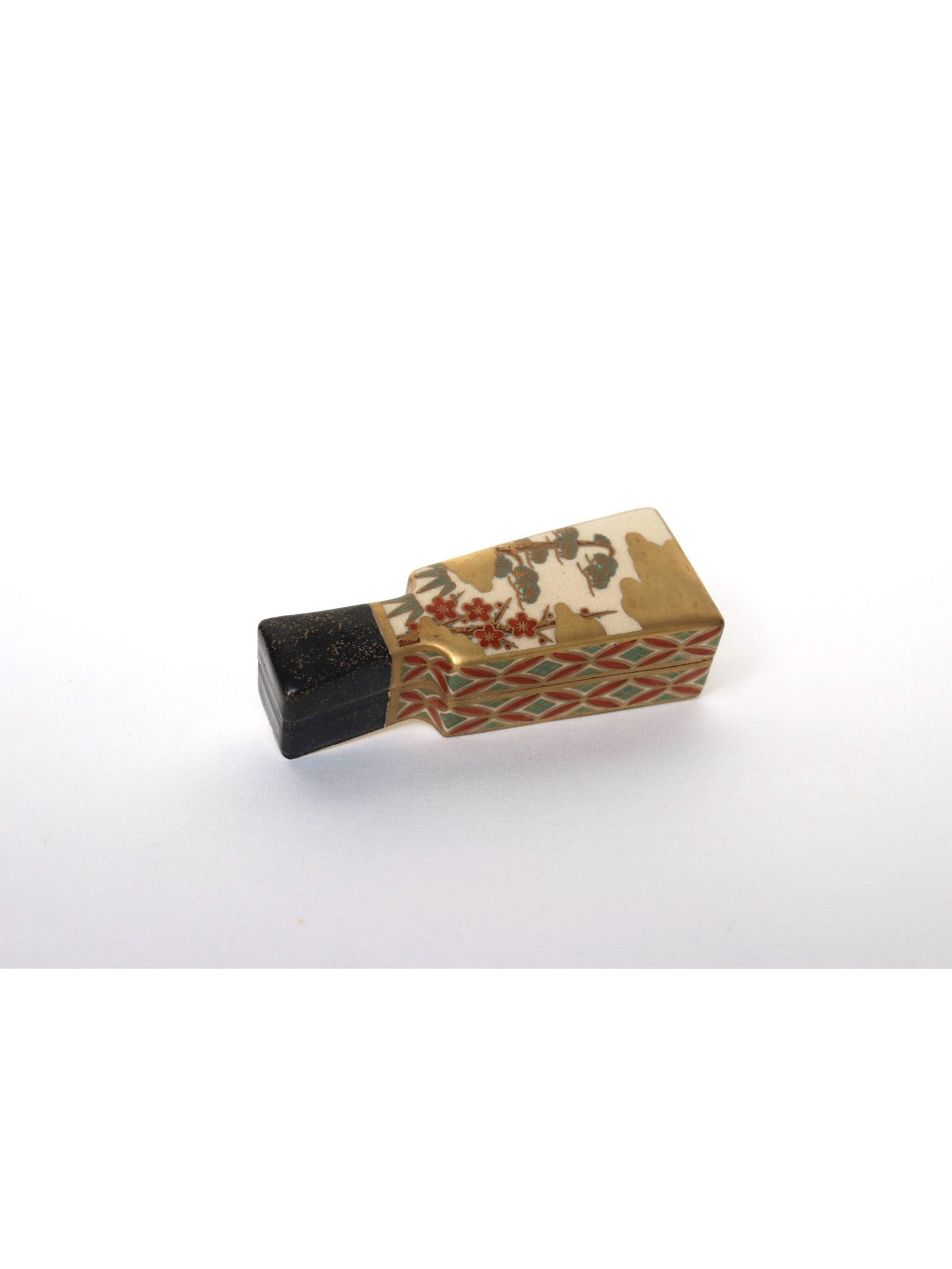
Kogo incense box / "Hagoïta Shôchikubaï" Seikanji
Kogo incense box / "Hagoïta Shôchikubaï" Seikanji
Quantity
Couldn't load pickup availability
Please note, this item is a unique piece.
A Kyo-yaki ceramic Kogo incense box in the shape of a hagoita, decorated with a pine, bamboo, plum, and cloud motif, made by Shōhei Sugita IV (1942-) at the Seikanji kiln in Kyoto. The hagoita is a rectangular wooden paddle used to play the traditional Japanese game called hanetsuki: the game of trying to keep the shuttlecock, or hané, in the air for as long as possible, either by one person or by two people who take turns hitting it. In Japan, mosquitoes were believed to carry and cause various diseases, and dragonflies, which feed on mosquitoes, were considered beneficial insects that kept illness away from people. Thus, this game of hitting a shuttlecock, resembling dragonflies, became both a game and a kind of ritual to ward off evil spirits. The hagoita also became an object of good luck.


Blog posts
-

New Year in the world of Japanese tea
In Japan, they say that the New Year of Tea takes place in November and not on January 1st. This is explained by the seasonality of the tea leaves and...
New Year in the world of Japanese tea
In Japan, they say that the New Year of Tea takes place in November and not on January 1st. This is explained by the seasonality of the tea leaves and...
-

Maintenance and cleaning of tea utensils and ac...
Our advice for maintaining your kyusu, your chasen and other tea utensils and accessories.
Maintenance and cleaning of tea utensils and ac...
Our advice for maintaining your kyusu, your chasen and other tea utensils and accessories.
-

The birth of the Maruyama Nori house in 1854 in...
The birth of the Maruyama Nori house in 1854 in the world historical context If we can imagine that 1854 was now almost 200 years ago, it can be...
The birth of the Maruyama Nori house in 1854 in...
The birth of the Maruyama Nori house in 1854 in the world historical context If we can imagine that 1854 was now almost 200 years ago, it can be...


