


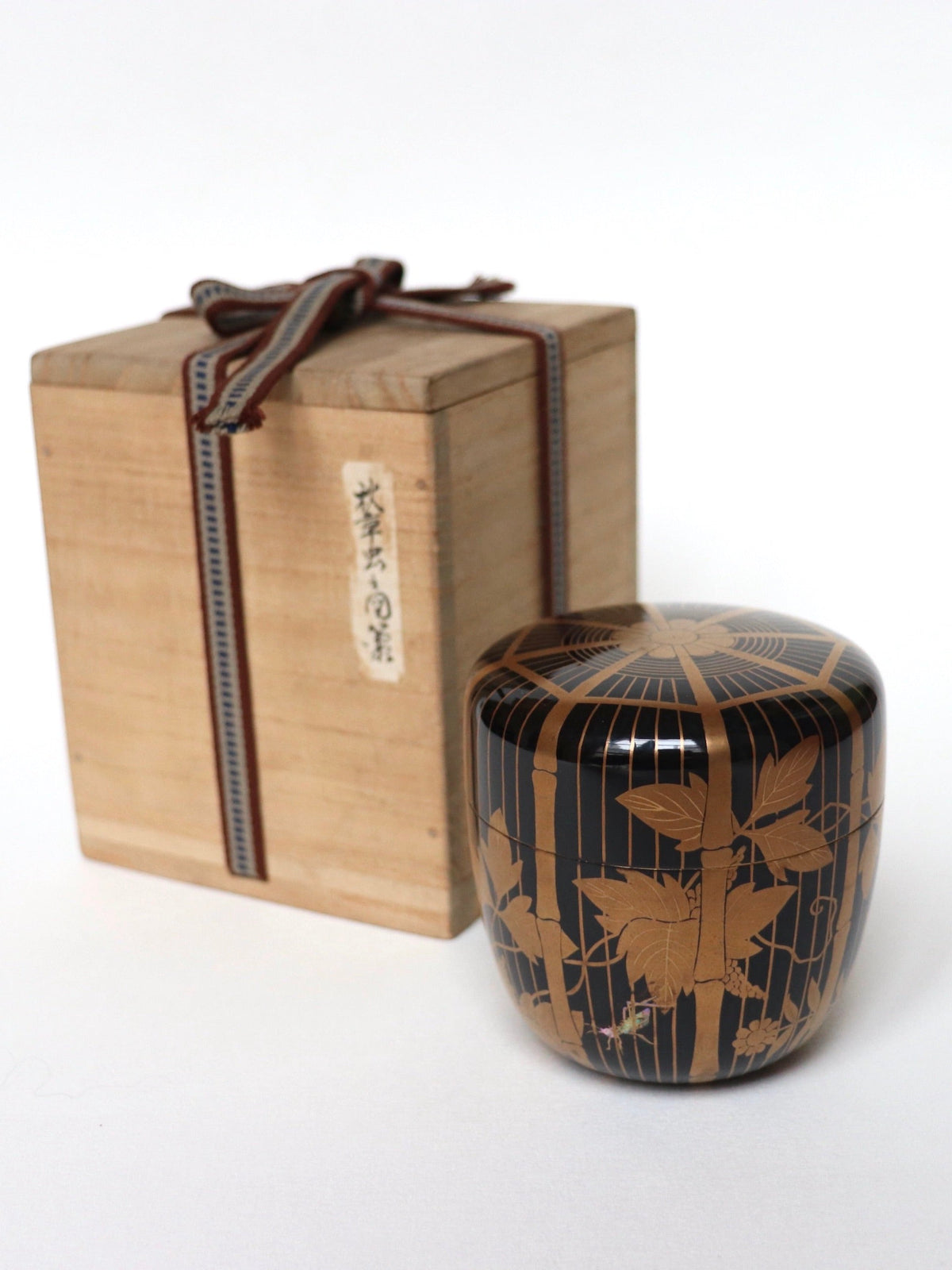
Natsumé matcha box / “Mushikago makié”
Natsumé matcha box / “Mushikago makié”
Quantity
Couldn't load pickup availability
Natsumé matcha box in black lacquered wood with bamboo insect cage pattern and autumnal plants in makié, and cricket in mother-of-pearl inlay made in Japan during the Meiji era (1868-1912). The Japanese have long felt the arrival of summer with the singing of frogs and cicadas, and autumn with the singing of crickets. It is not known when the culture of appreciating the sound of insects began, but the Manyoshu (Anthology of Myriad Leaves), compiled in the Nara period (710-794), contains many poems about the sound of insects. insects. In addition to listening to the sound of insects outside, aristocrats in the Heian period would catch insects, place them in decorated insect cages, and enjoy the song of the insects inside. During the Edo period (1603-1868), the "mushi asobi" (insect games) enjoyed by Heian aristocrats spread to the general public, and "insect sellers" appeared, selling a variety of insects and insect cages.


Blog posts
-

New Year in the world of Japanese tea
Au Japon, on dit que le nouvel an du thé a lieu en novembre et non le 1er janvier. Cela s’explique par la saisonnalité des feuilles de thé et plus...
New Year in the world of Japanese tea
Au Japon, on dit que le nouvel an du thé a lieu en novembre et non le 1er janvier. Cela s’explique par la saisonnalité des feuilles de thé et plus...
-

Maintenance and cleaning of tea utensils and ac...
Our advice for maintaining your kyusu, your chasen and other tea utensils and accessories.
Maintenance and cleaning of tea utensils and ac...
Our advice for maintaining your kyusu, your chasen and other tea utensils and accessories.
-

The birth of the Maruyama Nori house in 1854 in...
The birth of the Maruyama Nori house in 1854 in the world historical context If we can imagine that 1854 was now almost 200 years ago, it can be...
The birth of the Maruyama Nori house in 1854 in...
The birth of the Maruyama Nori house in 1854 in the world historical context If we can imagine that 1854 was now almost 200 years ago, it can be...


