

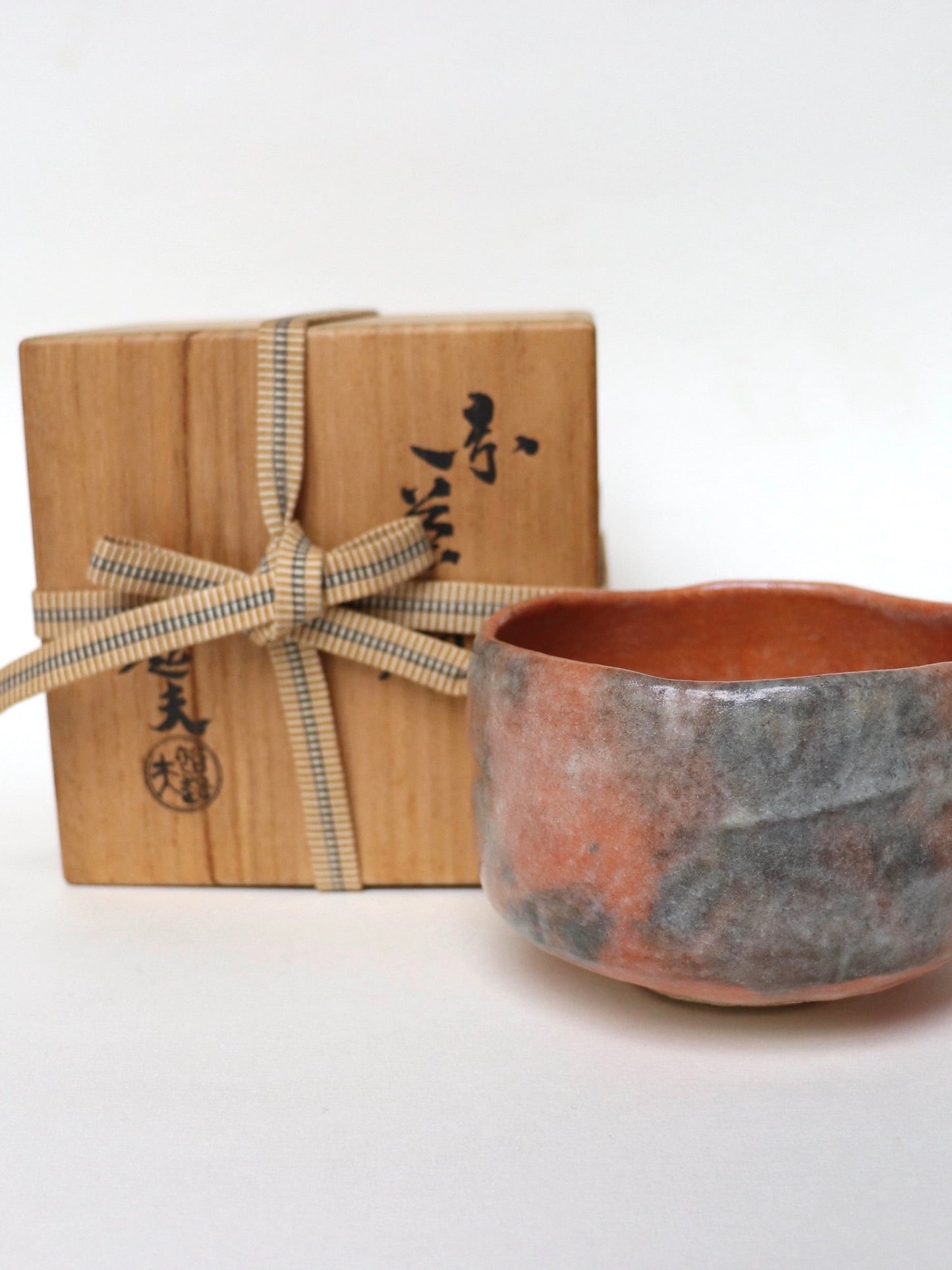
Matcha bowl / "Akaraku" Ogawa Chôraku III
Matcha bowl / "Akaraku" Ogawa Chôraku III
Quantity
Couldn't load pickup availability
The red Raku-yaki matcha bowl shown here is the work of Ogawa Yukio, also known as Chôraku III, an eminent tea ceremony potter from Kyoto.
Born in 1947, Ogawa Yukio is the eldest son of Chōraku II. After graduating from Kyoto Kamigyō Prefectural High School in 1966, he began working under his father's tutelage, using the stage name "Hirokio". In 1992, he succeeded to the name Chōraku III, simultaneously receiving the title of Shōfūken (松風軒, Wind Pavilion in the Pines) from the main abbot of Daigo-ji, Asaō Fumio.
The Chōraku lineage traces back to Ogawa Dajirō (Chōraku I, 1874–1939), who was trained by Konyū (11th generation of the Raku lineage, founded by Chōjirō, a pioneer of Raku ceramics). In 1906, with the blessing of Takeda Mokurai, a high-ranking monk of Kennin-ji Temple, and Ennōsai, the 13th Grand Master of the Urasenke School of Tea, he founded the Chōraku kiln.
His son, Chôraku II (1912–1991), inherited the family kiln in 1939. He is particularly recognized for having developed original techniques such as Shiro Raku (White raku) and the Yakugashi (poured enamel Or melted glaze), bringing a new sensitivity to the Raku tradition.
Today, Chôraku III continues this legacy while infusing his works with a contemporary dimension. He incorporates literary and poetic references, notably the collection *De cent poètes un poème* (One Hundred Poets One Poem).Hyakunin Isshu) and The Narrow Path at the End of the World (Oku no Hosomichi) by Matsuo Bashō. His creations thus combine the formal sobriety of tradition with a modern expressiveness, reflecting a refined aesthetic, both rooted in history and open to innovation.


Blog posts
-

New Year in the world of Japanese tea
In Japan, they say that the New Year of Tea takes place in November and not on January 1st. This is explained by the seasonality of the tea leaves and...
New Year in the world of Japanese tea
In Japan, they say that the New Year of Tea takes place in November and not on January 1st. This is explained by the seasonality of the tea leaves and...
-

Maintenance and cleaning of tea utensils and ac...
Our advice for maintaining your kyusu, your chasen and other tea utensils and accessories.
Maintenance and cleaning of tea utensils and ac...
Our advice for maintaining your kyusu, your chasen and other tea utensils and accessories.
-

The birth of the Maruyama Nori house in 1854 in...
The birth of the Maruyama Nori house in 1854 in the world historical context If we can imagine that 1854 was now almost 200 years ago, it can be...
The birth of the Maruyama Nori house in 1854 in...
The birth of the Maruyama Nori house in 1854 in the world historical context If we can imagine that 1854 was now almost 200 years ago, it can be...


