


Bol à matcha Kyoto Tezuka Daiji Shikikusabana
Bol à matcha Kyoto Tezuka Daiji Shikikusabana
Quantity
Couldn't load pickup availability
Please note, this item is a unique piece.
Bol à matcha Ninsei Shikikusabana
Tezuka Daiji — Four Momoyama
This bowl matcha This piece is a work by Tezuka Daiji, master ceramicist of the Momoyama kiln in Kyoto. Born in 1937, the third son of the founder of the Gyokudō kiln, he succeeded his father in 1967 and continues the Kyō-yaki/Kiyomizu-yaki tradition. Recognized as a "Traditional Craftsman" in 1977 and winner of the Grand Prize at the Kyōyaki/Kiyomizu-yaki competition in 1981, Tezuka Daiji is considered one of the most refined representatives of Kyoto ceramics.
The Momoyama kiln was founded in the 1950s in Fushimi-Momoyama, following an initial period of operation in Higashiyama. Following in his father's footsteps, Tezuka Daiji drew inspiration from both ancient Chinese ceramics and classical Japanese styles, such as celadon, sansai, and colored glazes. His mastery of glazes and ceramic painting allowed him to create pieces of remarkable chromatic richness and exquisite detail.
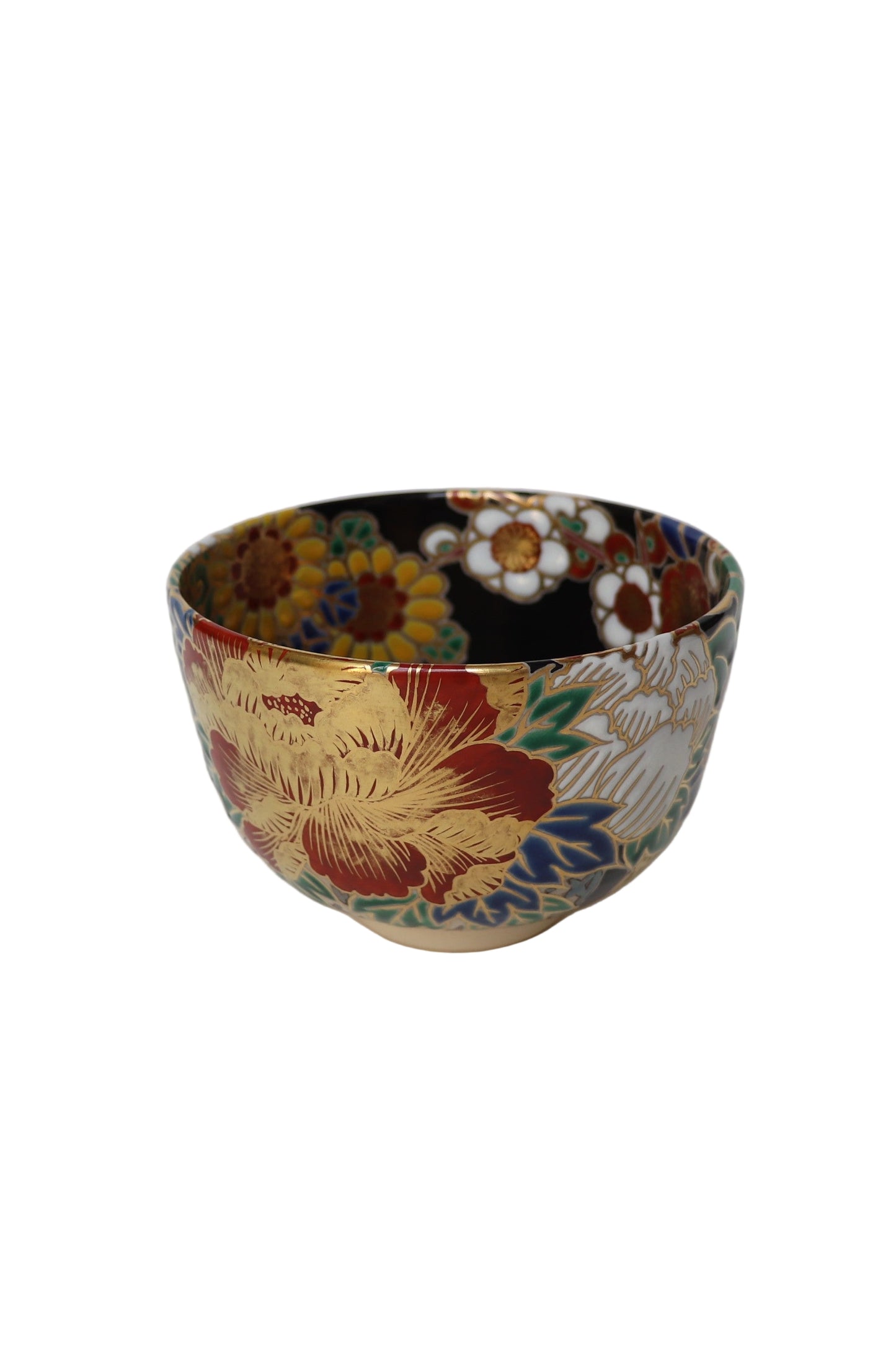
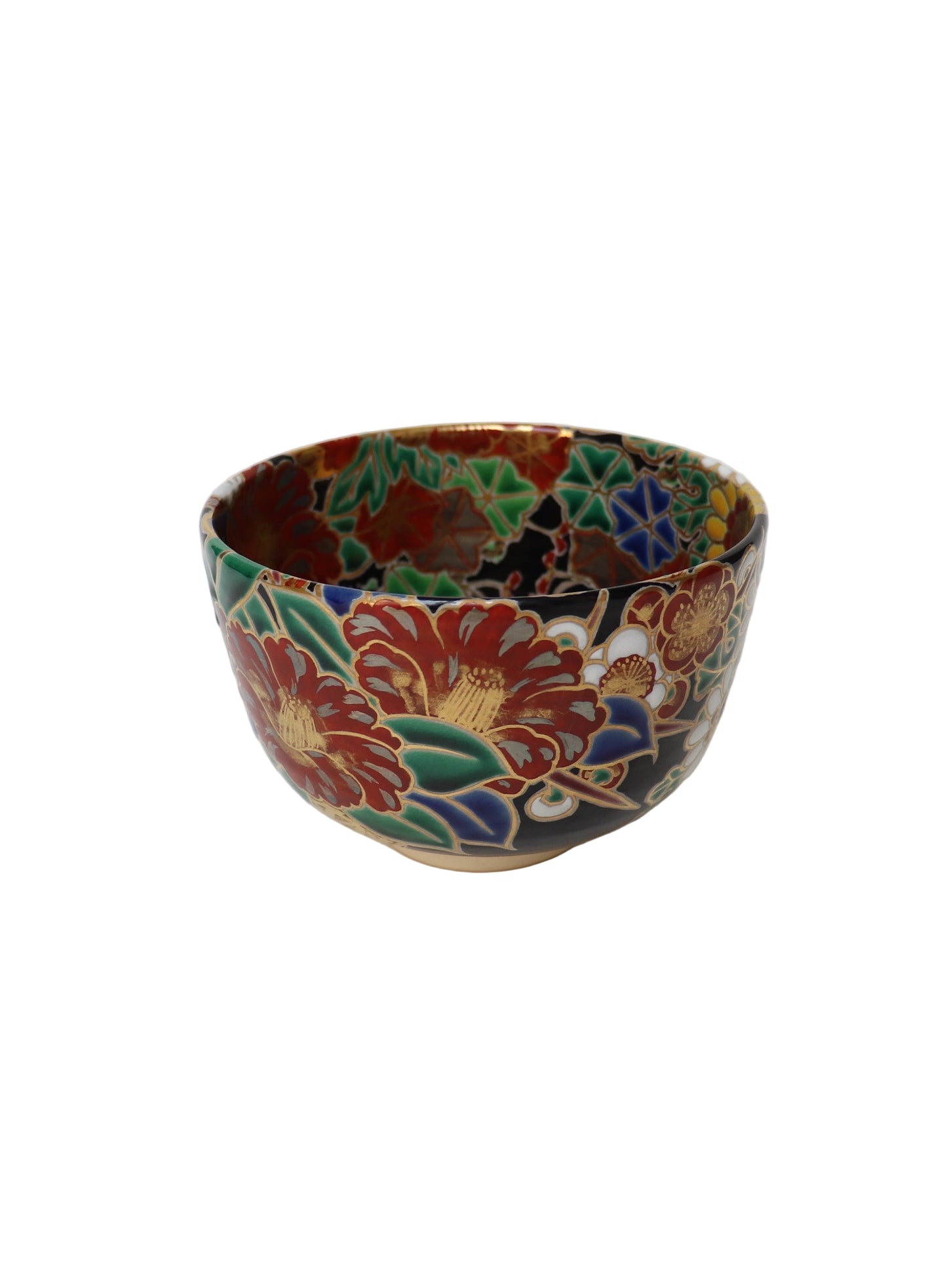
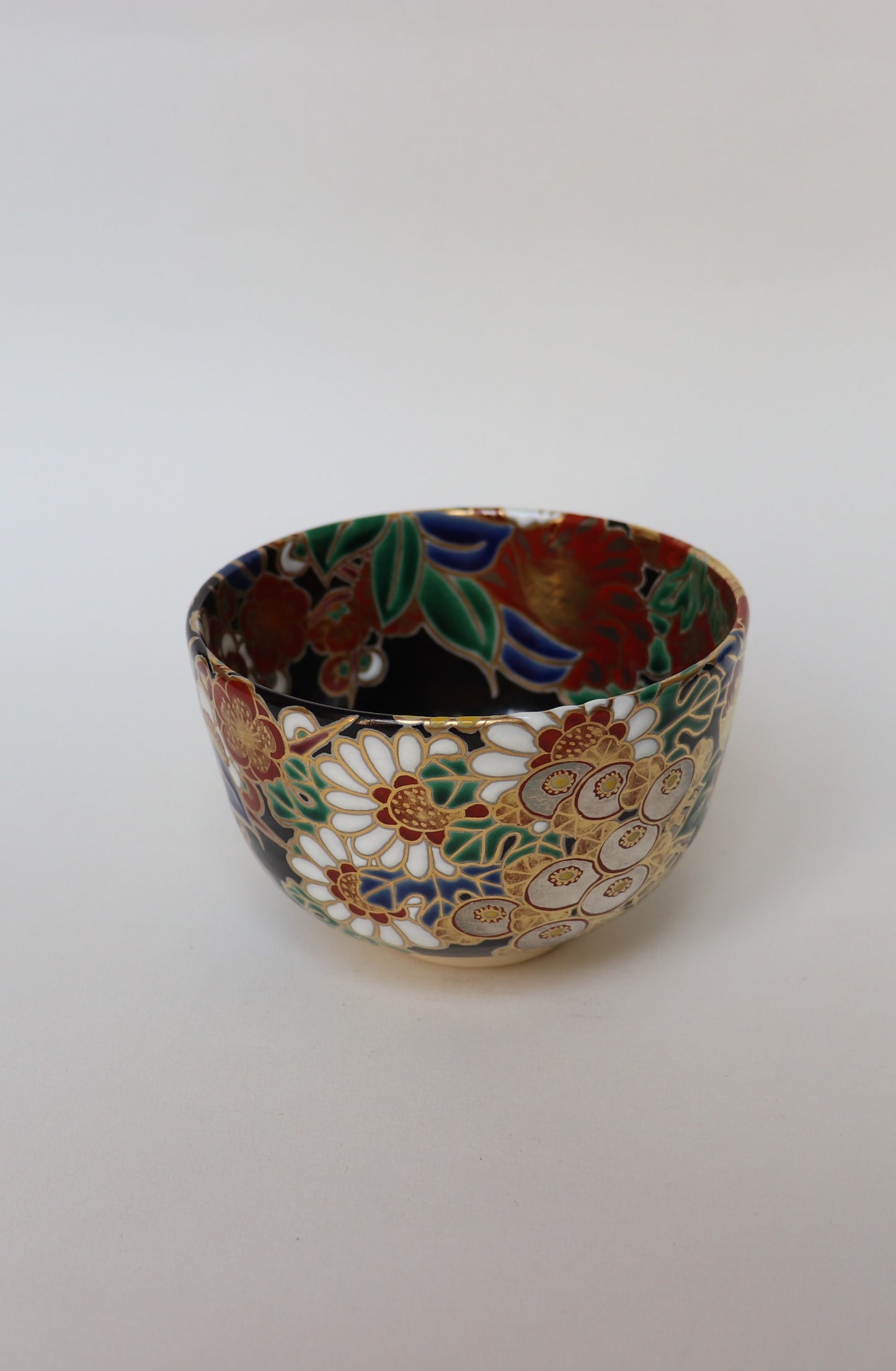
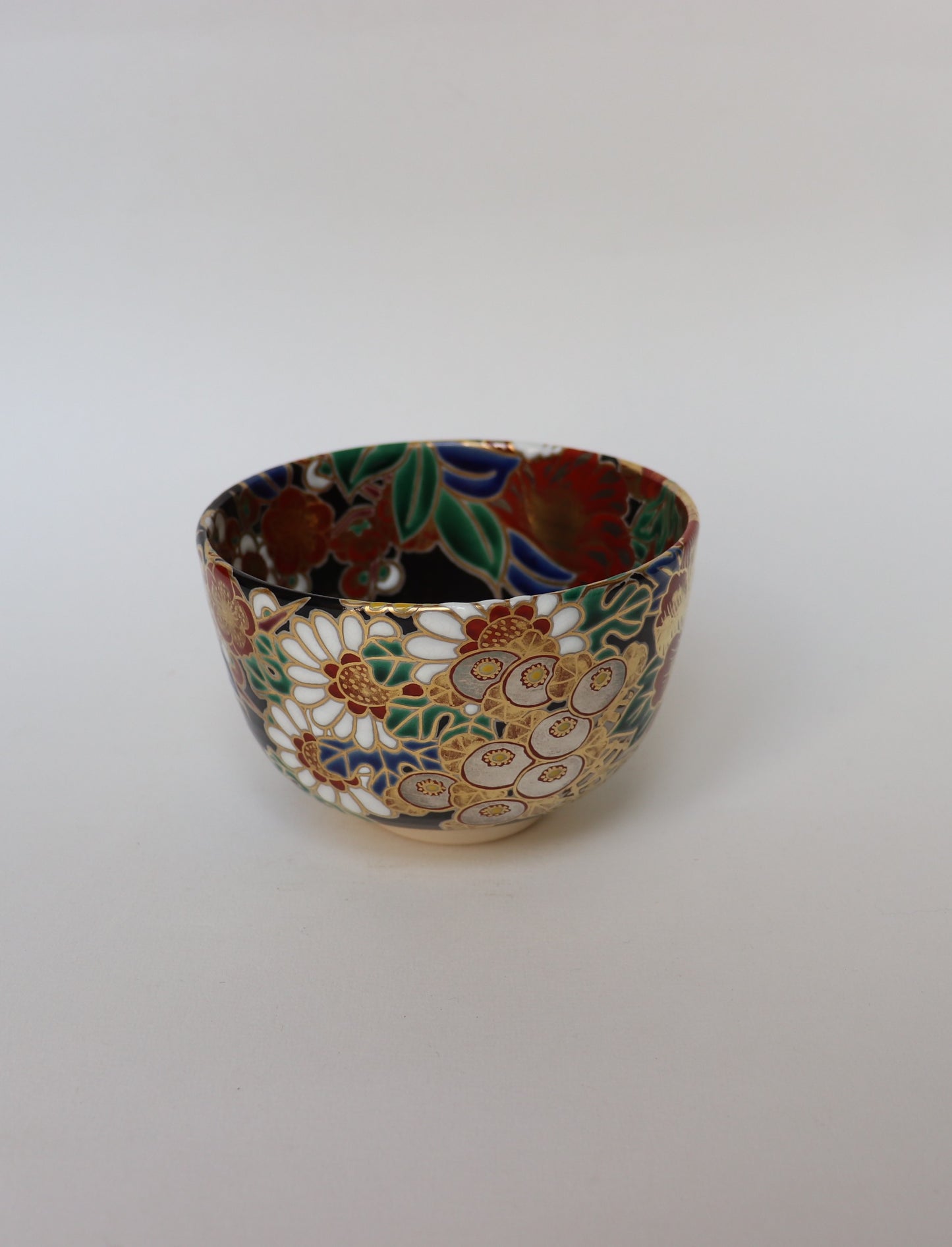
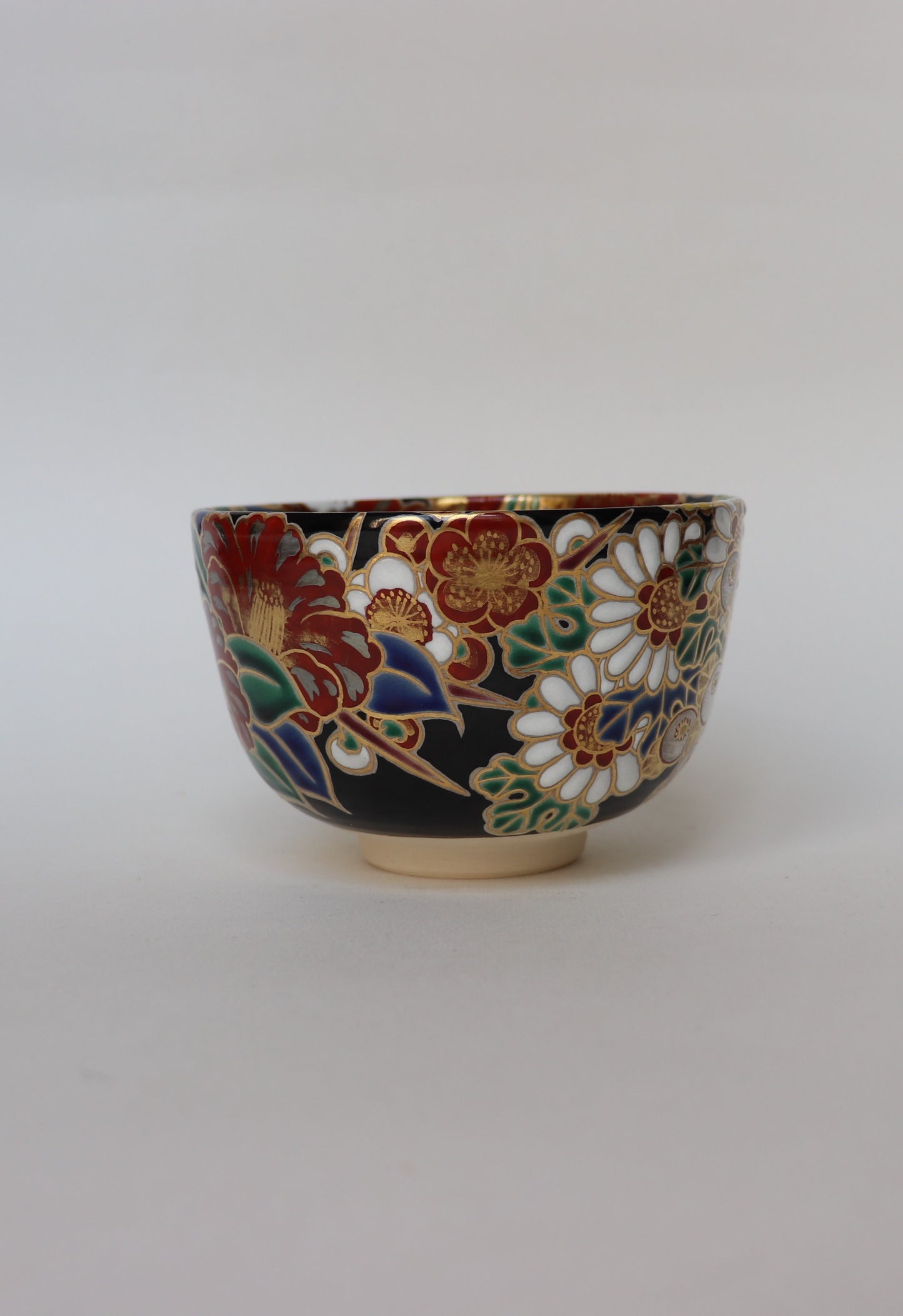
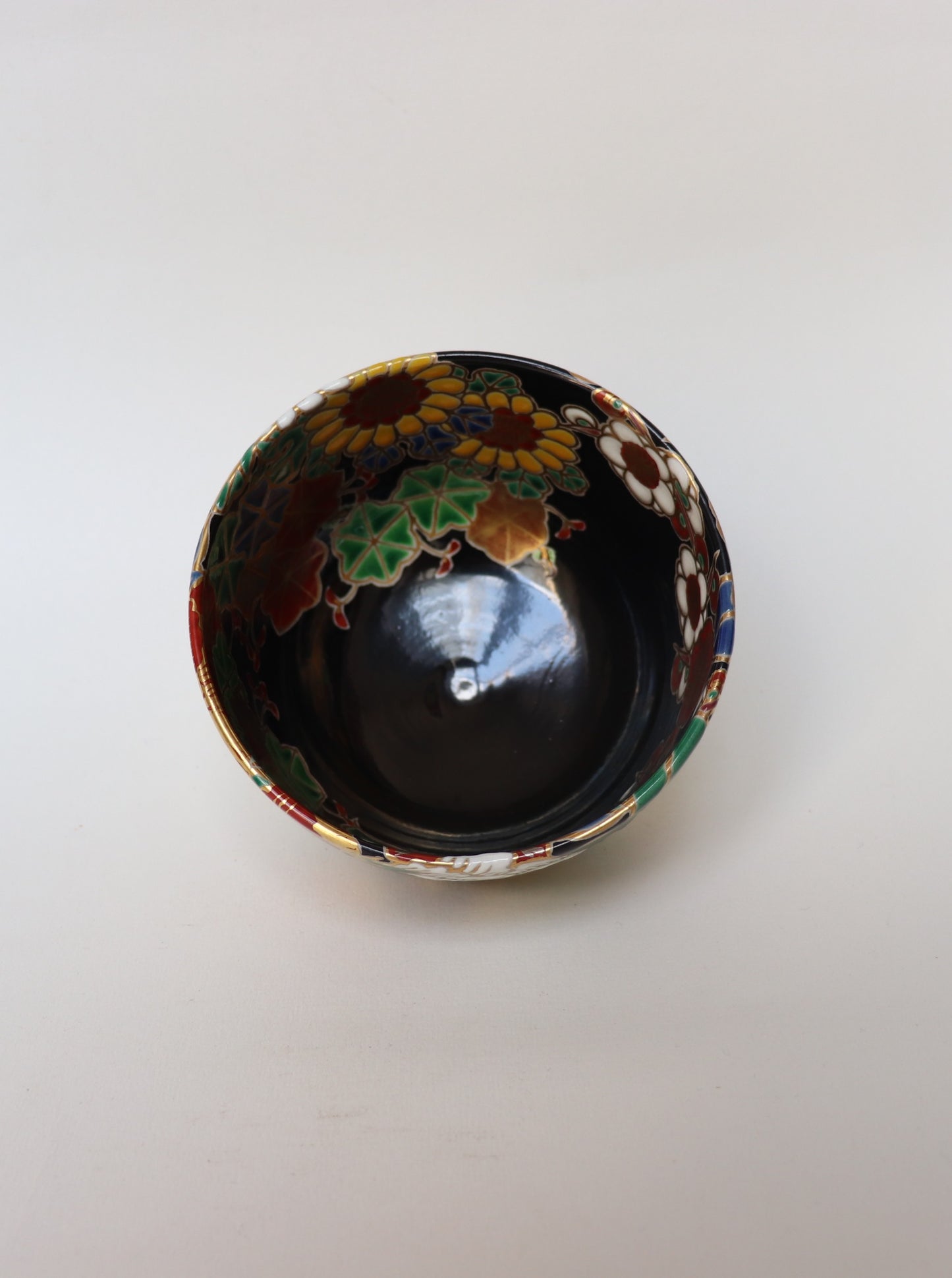
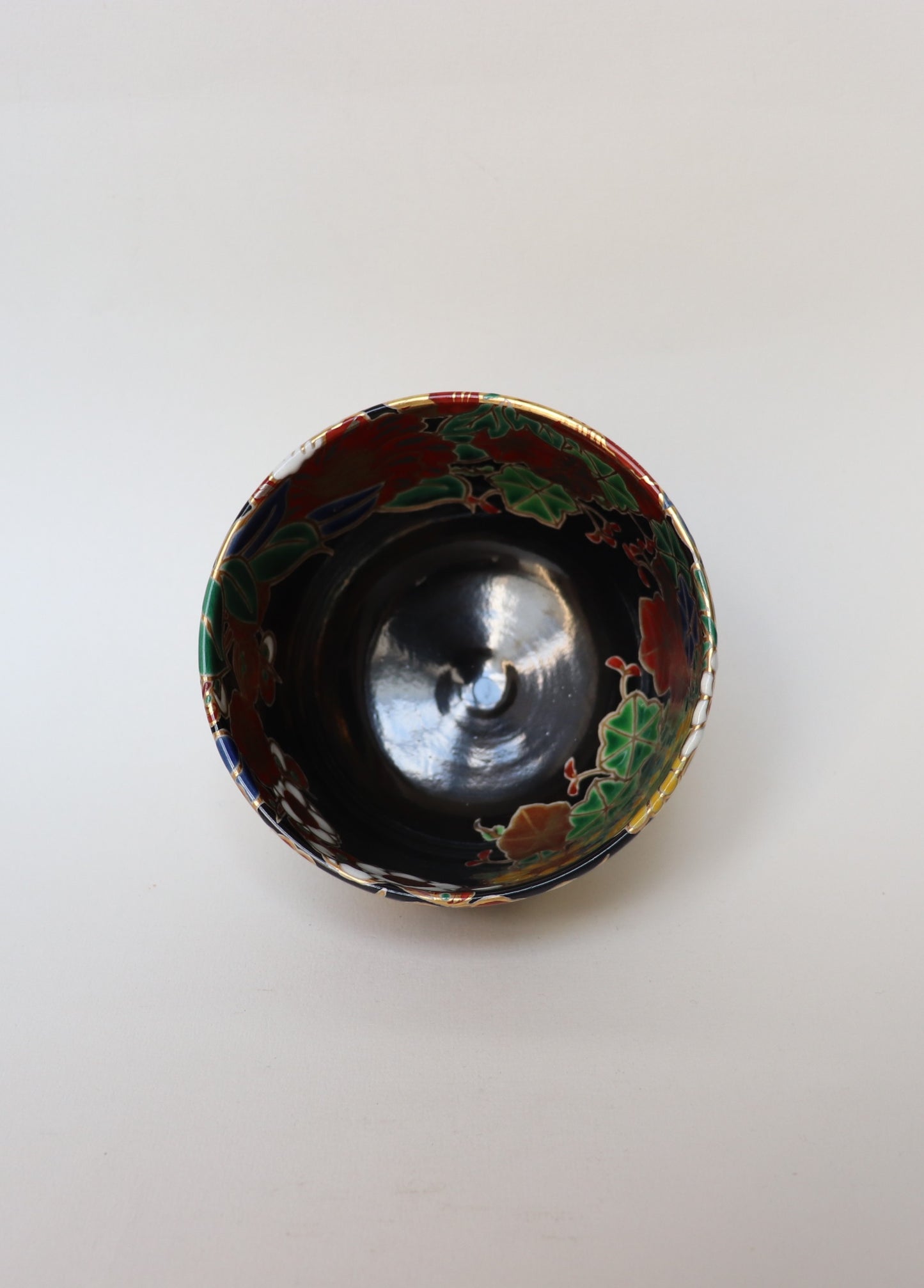
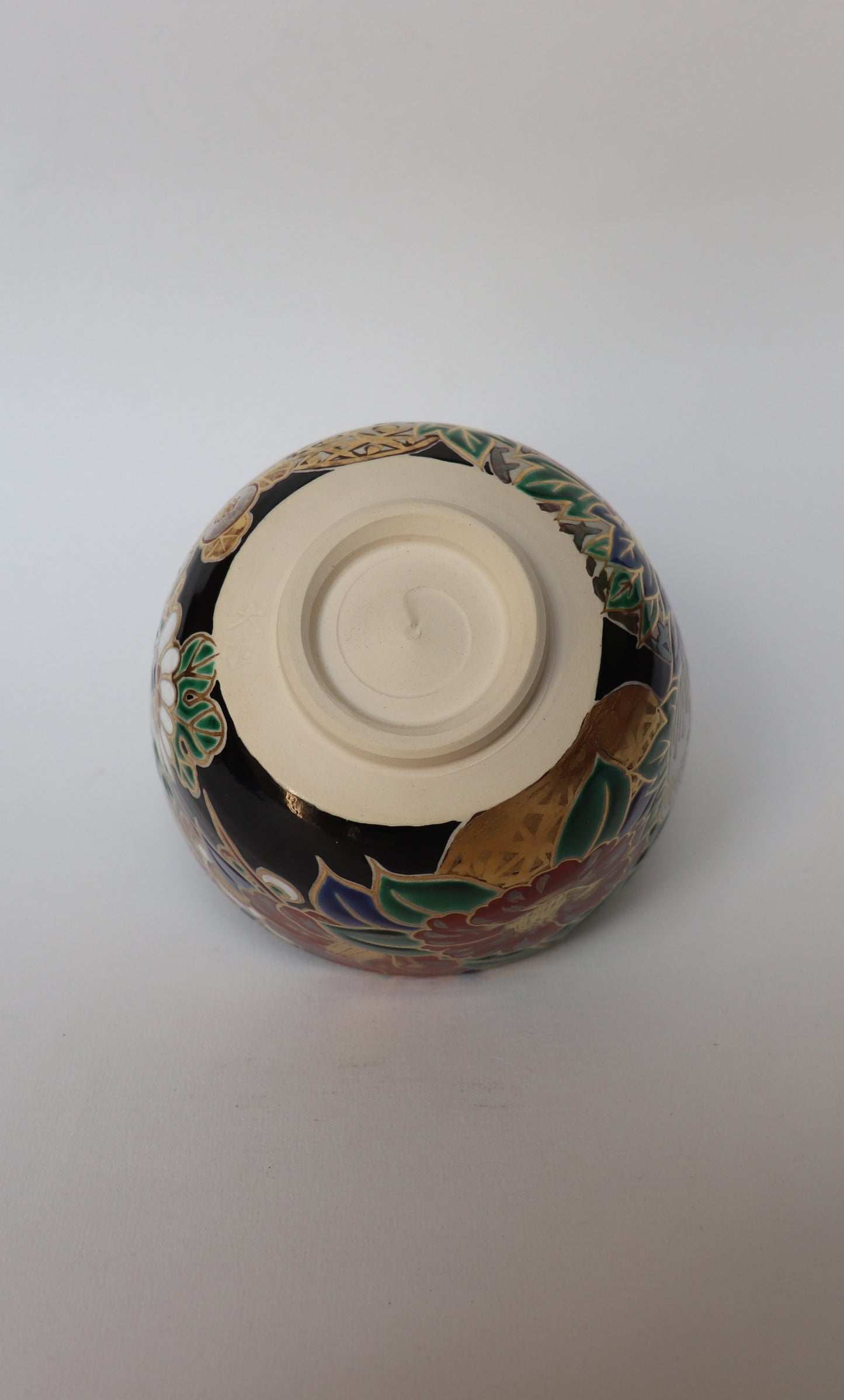
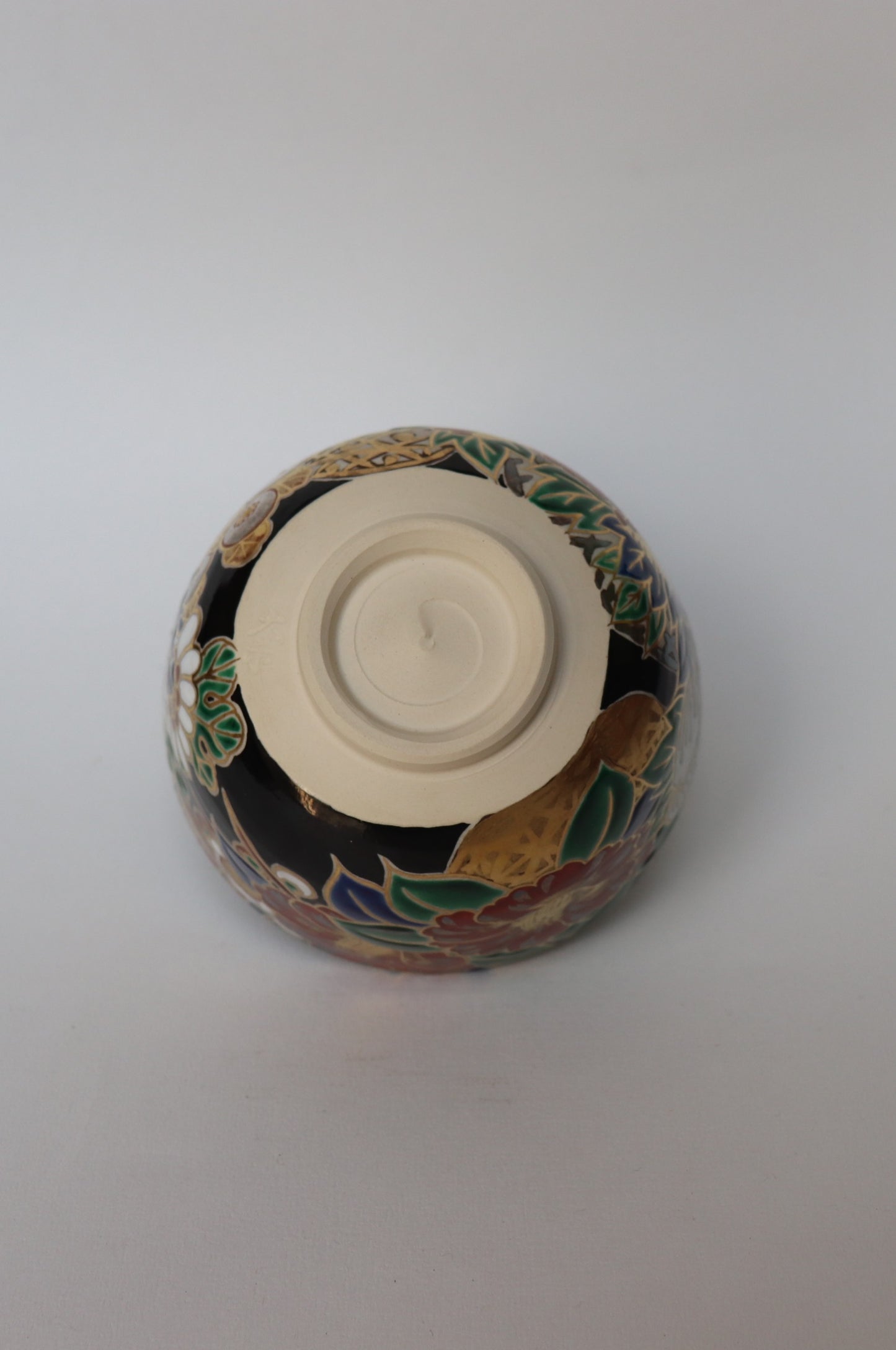
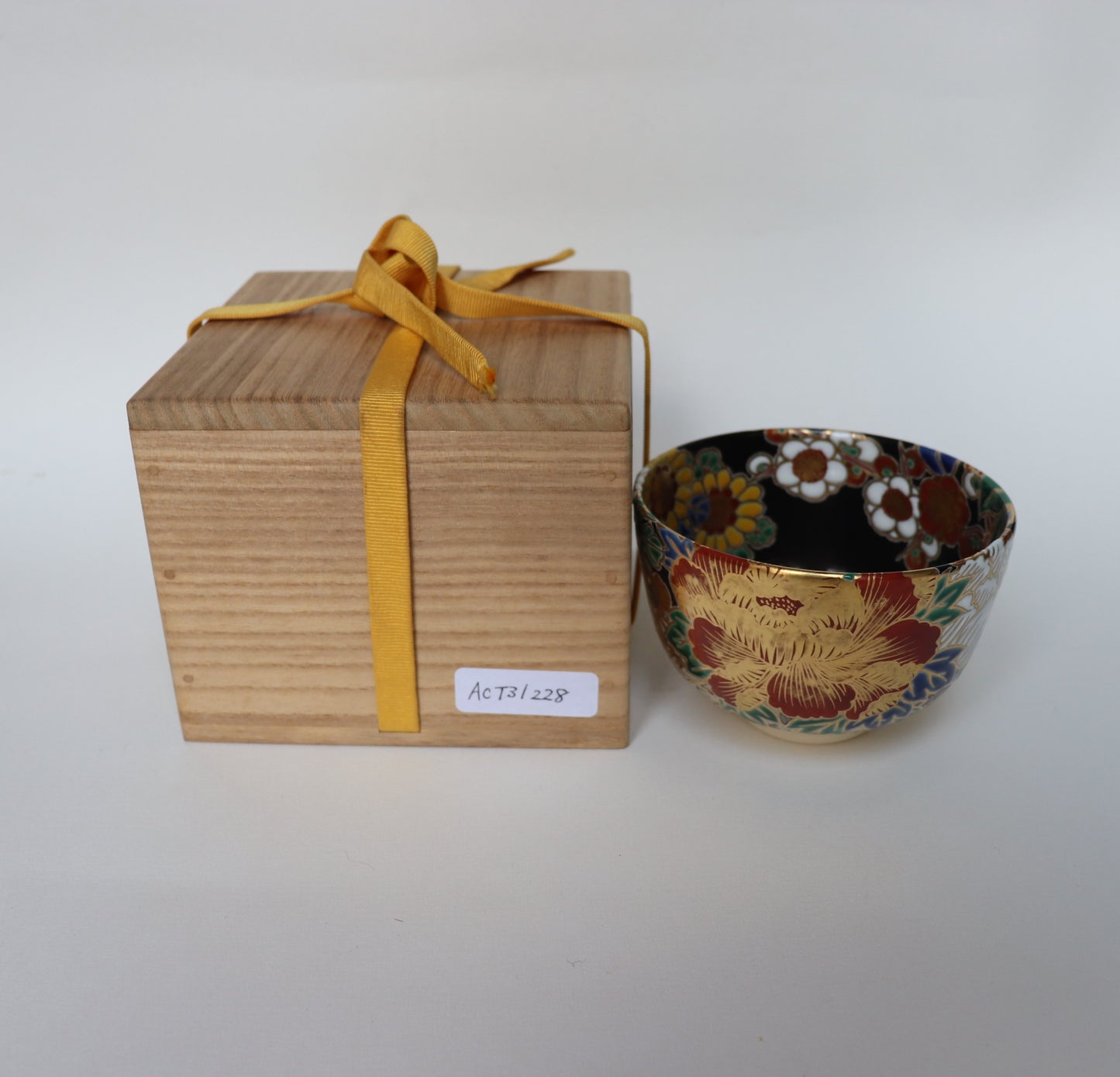
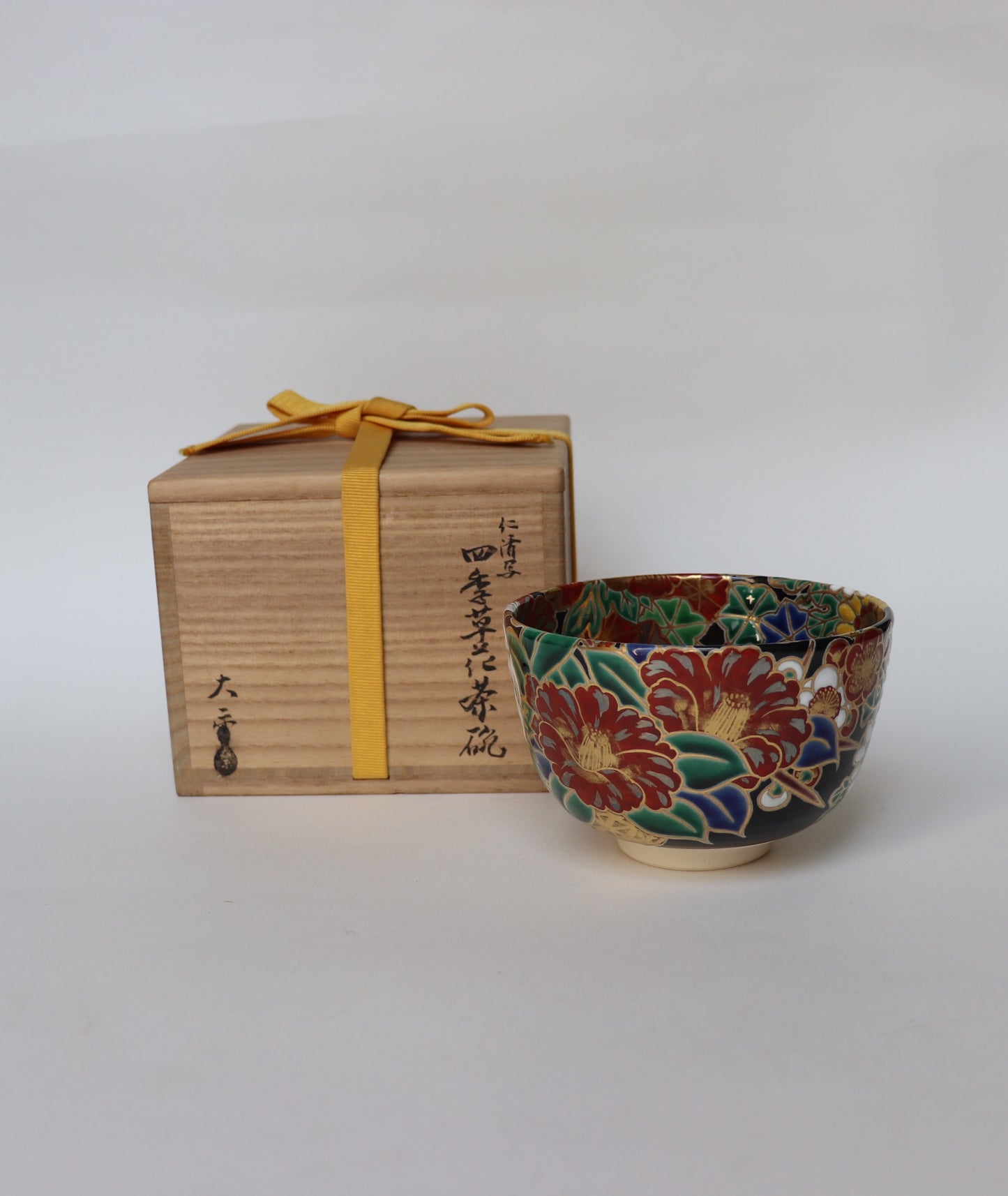
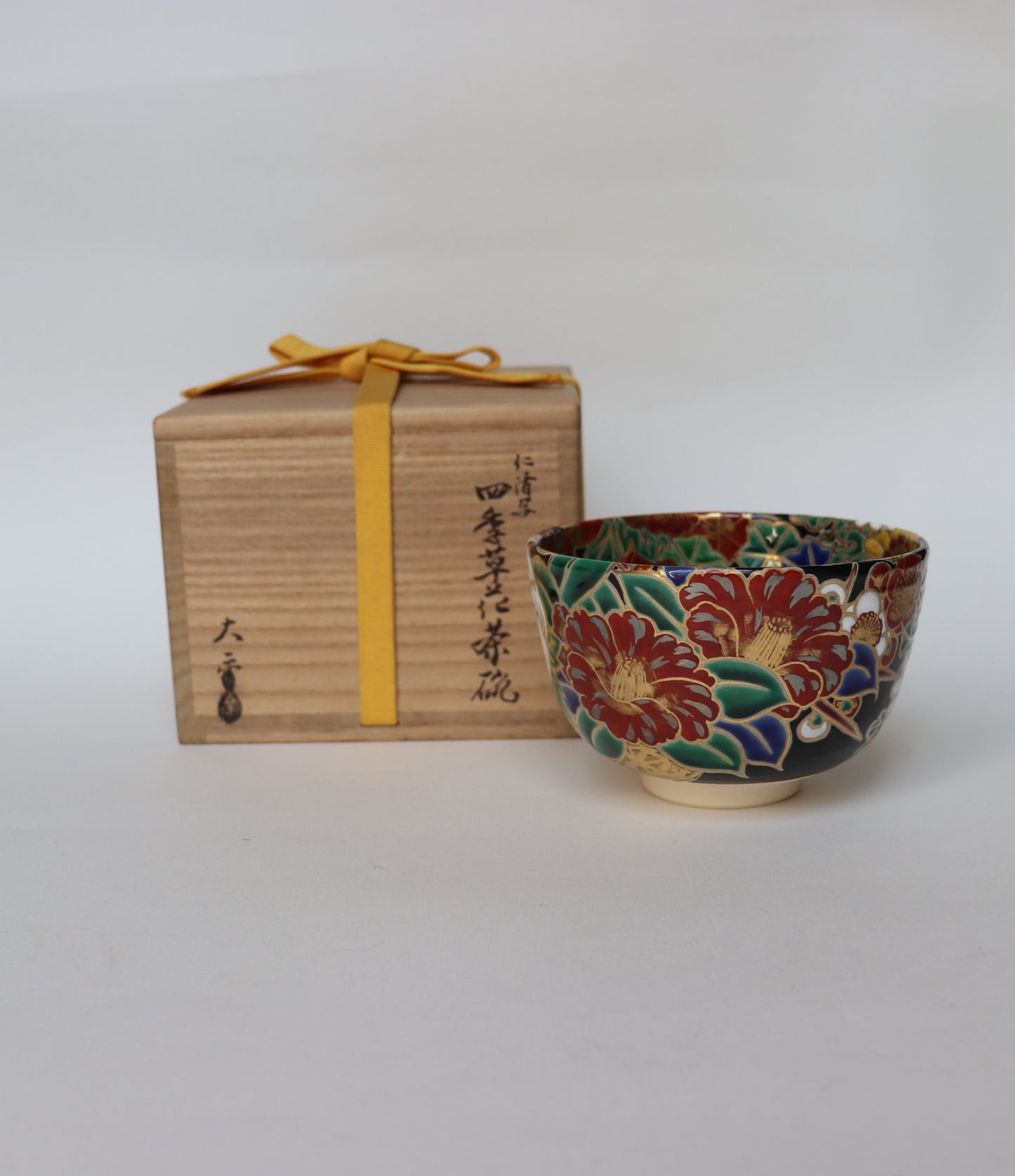
The pattern Shikikusabana-mon (Flowers and Herbs of the Four Seasons) — literally “flowers and herbs of the four seasons” — depicts plants characteristic of each time of year: plum and cherry blossoms in spring, irises and chrysanthemums in summer and autumn, and bamboo or pine in winter. This motif, frequently used in ceremonial textiles and art objects, expresses the beauty of the natural cycle and the harmony between the seasons. In this bowl, the delicately painted flowers evoke the continuity of time and the sensitivity inherent in the Way of Tea.
Matcha Bowl Ninsei Shikikusabana
Tezuka Daiji — Momoyama Kiln
This matcha bowl was crafted by Tezuka Daiji, master potter of the Momoyama Kiln in Kyoto. Born in 1937 as the third son of the kiln’s founder, Gyokudō, he succeeded his father in 1967 and continues the refined tradition of Kyōyaki / Kiyomizuyaki ceramics. Recognized as a “Traditional Craftsperson” in 1977 and awarded the Grand Prize at the Kyōyaki / Kiyomizuyaki Exhibition in 1981, Tezuka Daiji is widely regarded as one of Kyoto’s leading ceramic artists.
The Momoyama Kiln was founded in the 1950s in Fushimi-Momoyama, following its origins in Higashiyama. Continuing his father’s vision, Tezuka Daiji blends influences from ancient Chinese ceramics with traditional Japanese aesthetics, mastering celadon, sancai, and vividly colored overglaze techniques. His works are known for their refined brushwork and harmonious use of color.
The Shikikusabana-mon (四季草花文) pattern, meaning “flowers and grasses of the four seasons,” depicts seasonal plants symbolizing the changing beauty of nature — plum and cherry blossoms in spring, irises and chrysanthemums in summer and autumn, bamboo and pine in winter. This timeless motif, often used in kimono and ceremonial art, represents continuity, balance, and appreciation for the passing seasons, perfectly in tune with the spirit of tea.
Blog posts
-

New Year in the world of Japanese tea
Au Japon, on dit que le nouvel an du thé a lieu en novembre et non le 1er janvier. Cela s’explique par la saisonnalité des feuilles de thé et plus...
New Year in the world of Japanese tea
Au Japon, on dit que le nouvel an du thé a lieu en novembre et non le 1er janvier. Cela s’explique par la saisonnalité des feuilles de thé et plus...
-

Maintenance and cleaning of tea utensils and ac...
Our advice for maintaining your kyusu, your chasen and other tea utensils and accessories.
Maintenance and cleaning of tea utensils and ac...
Our advice for maintaining your kyusu, your chasen and other tea utensils and accessories.
-

The birth of the Maruyama Nori house in 1854 in...
The birth of the Maruyama Nori house in 1854 in the world historical context If we can imagine that 1854 was now almost 200 years ago, it can be...
The birth of the Maruyama Nori house in 1854 in...
The birth of the Maruyama Nori house in 1854 in the world historical context If we can imagine that 1854 was now almost 200 years ago, it can be...


